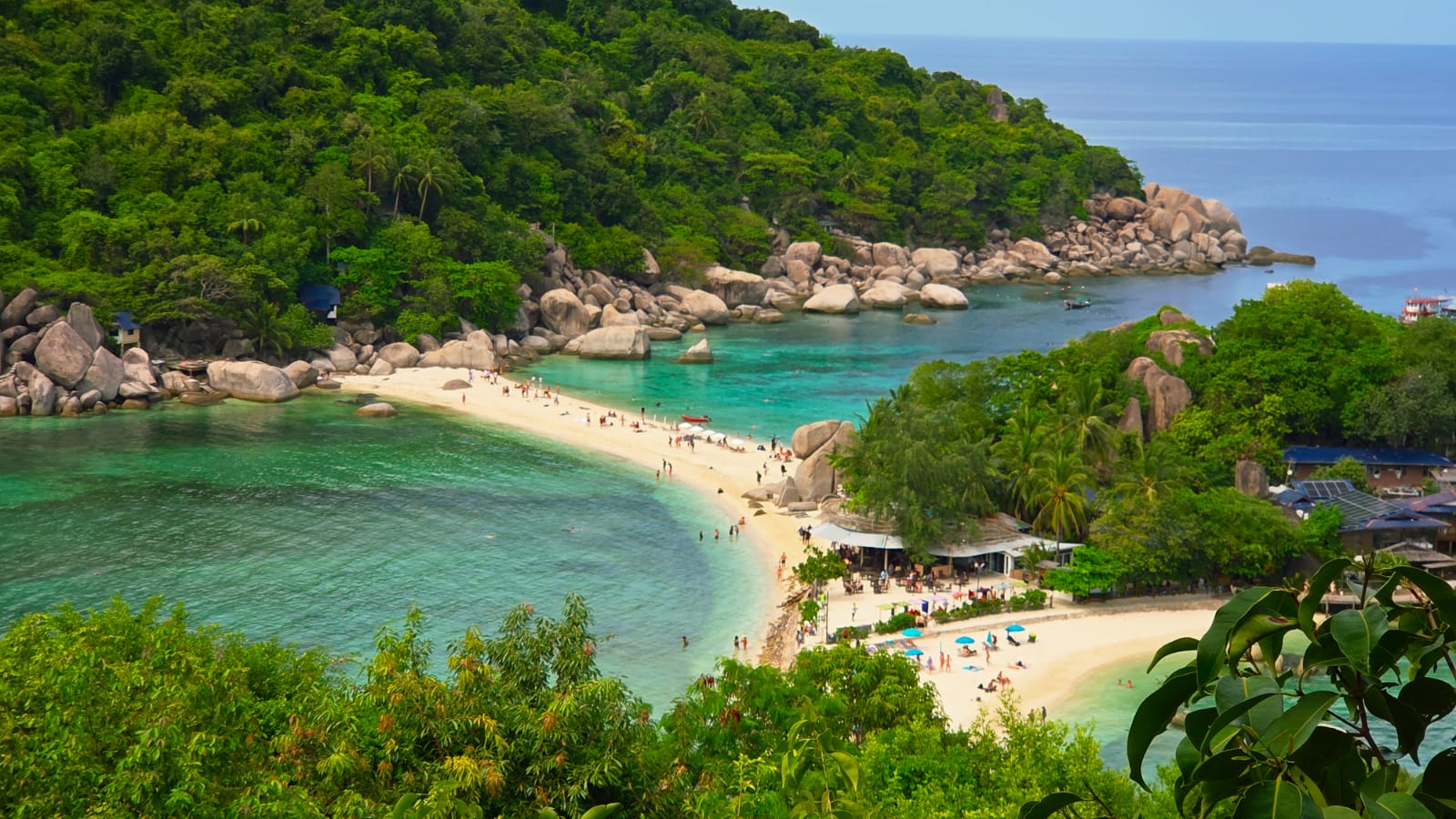
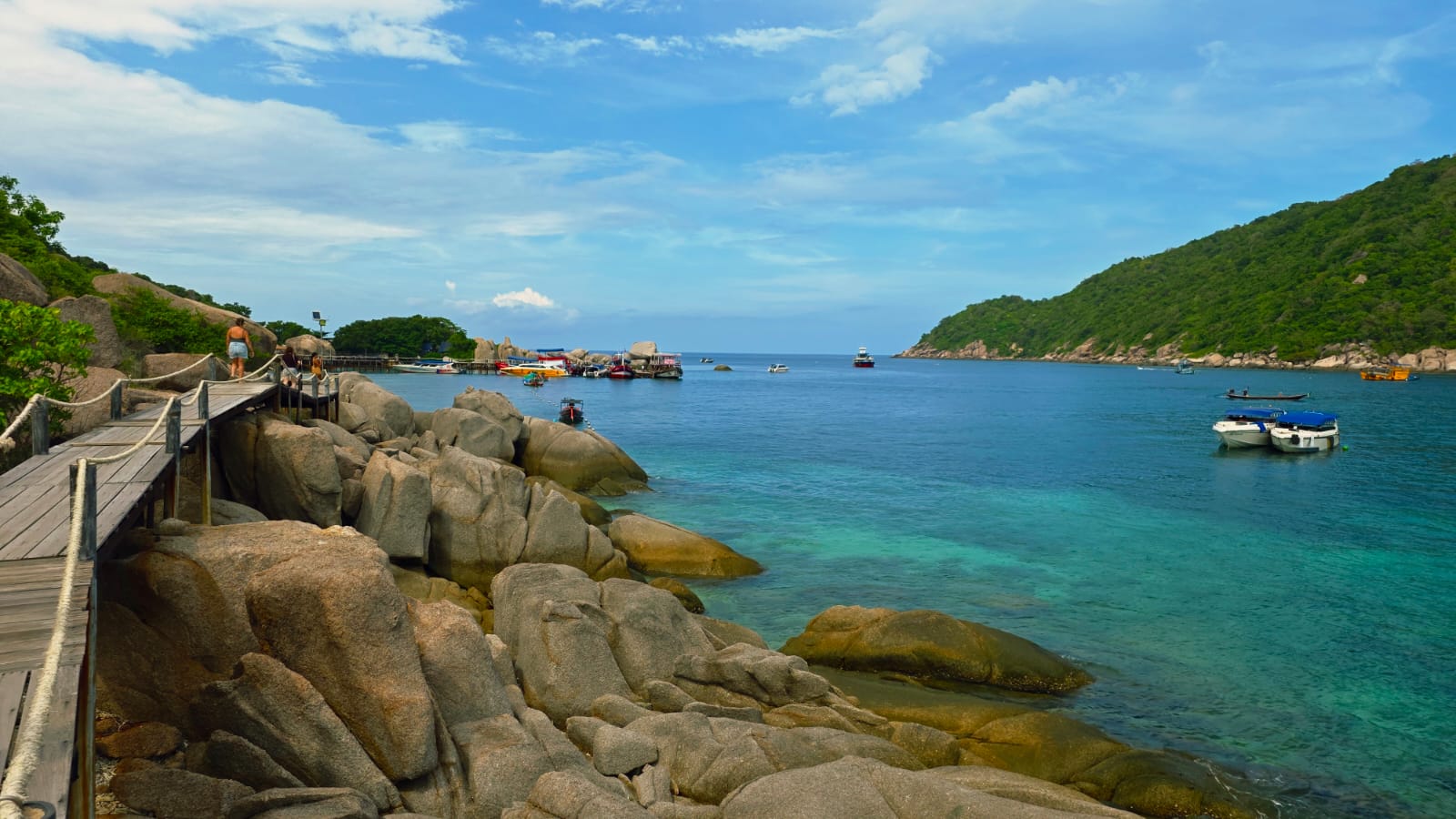
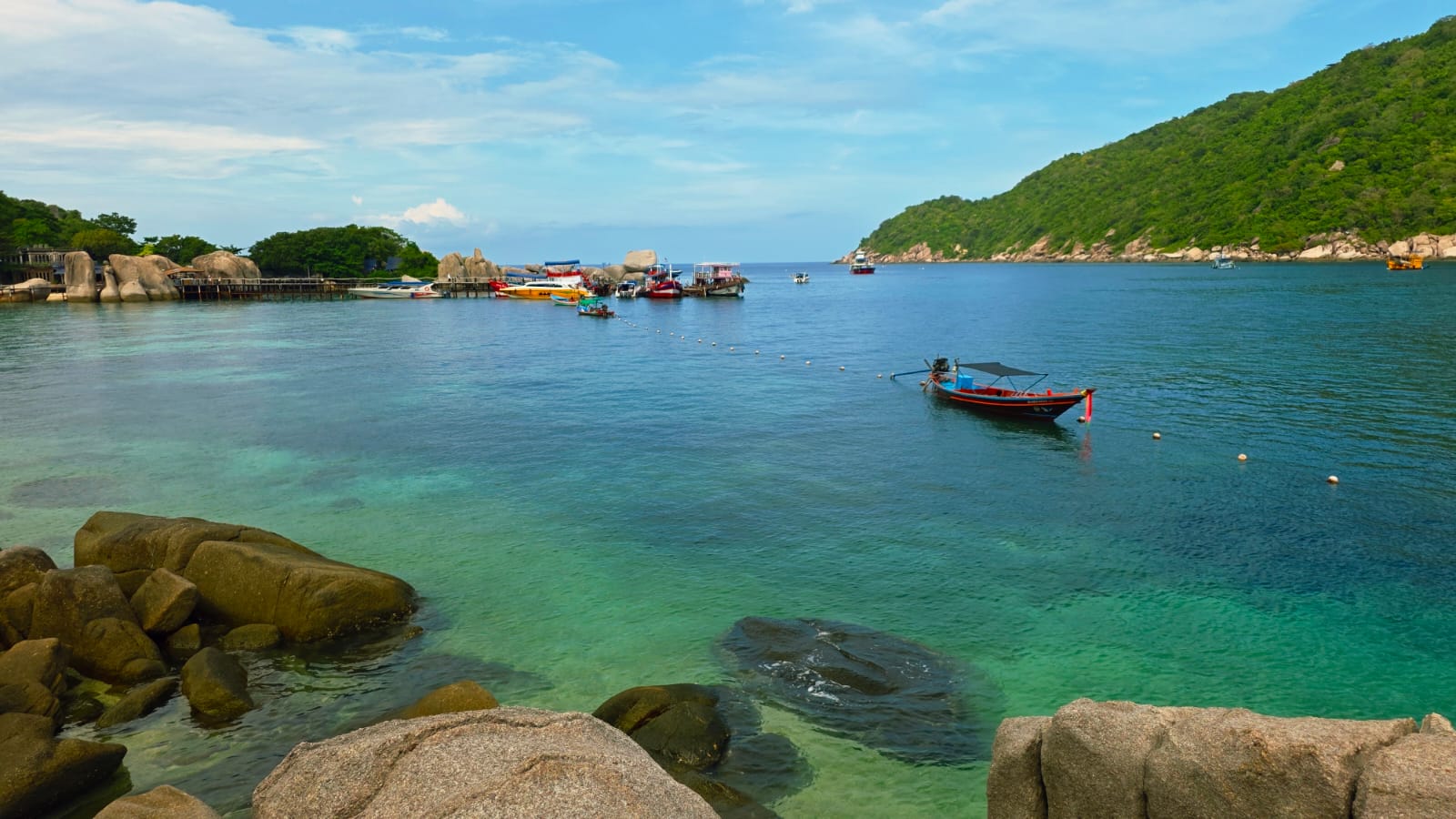
Koh Nang Yuan sits just off the northwest coast of Koh Tao in the Gulf of Thailand. Three small islets, joined by a slender strip of white sand that shifts a little with the tide. It looks like a desktop wallpaper brought to life, and the first thing you notice from the boat is the water. Pale mint near the shore, then luminous turquoise, then a deep glassy blue running out to the horizon. Smooth granite boulders sit along the edges like someone placed them there for the view.
The island is state land leased to one business, the Nangyuan Island Dive Resort, which runs it, charges day visitors to land and sets the rules. That shapes the day more than anything else here, so it is worth knowing before you step off the boat.
Photograph hosted by TravelMktg.com.
The Sandbar
The sandbar is the signature. From above it is a bright, creamy ribbon slicing between two shallow lagoons, dotted with swimmers, kayaks and a few people hiding under umbrellas. At low tide it widens and you can walk it end to end in a few minutes. At high tide parts of it go under and the three islands feel more separate. A salty breeze rolls through every few minutes, rattling the palms and carrying voices from one end of the beach to the other.
Food and drink come from the resort’s restaurant and café near the pier. Expect island prices. There are no ATMs, so bring enough Thai baht in cash for the landing fee, the boat and lunch.
Photograph hosted by TravelMktg.com.
The Viewpoint Climb
The famous view comes from the top of the southern islet. The climb is short and steep, roughly fifteen minutes of wooden steps and rock, and it gets hot fast after mid-morning. Wear shoes with some grip. At the top you get the picture everyone came for: the whole sandbar below, white against aquamarine, framed by green hills and open sea. It is a small platform, so at busy times you queue for your turn at the edge.
Photograph hosted by TravelMktg.com.
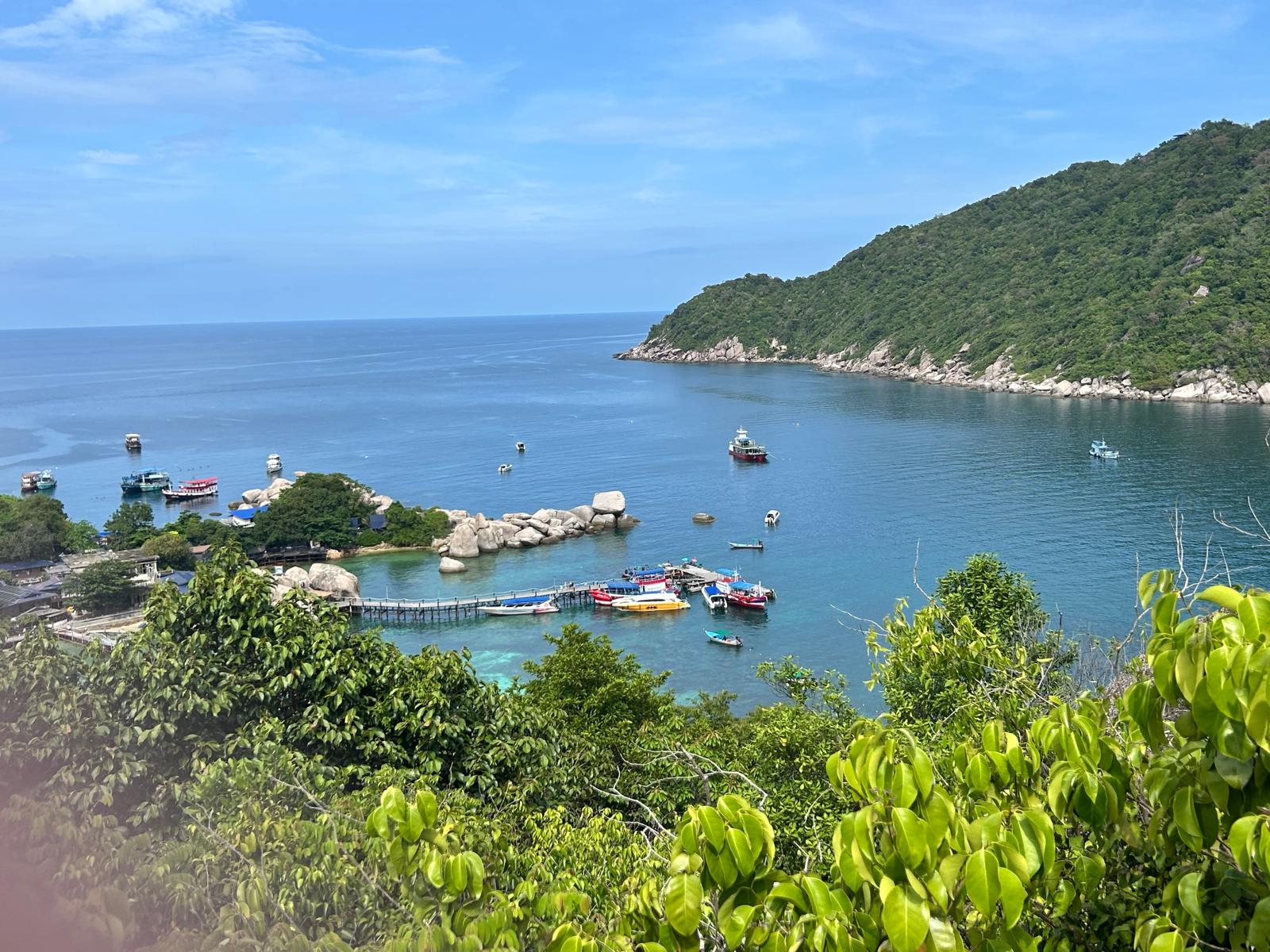
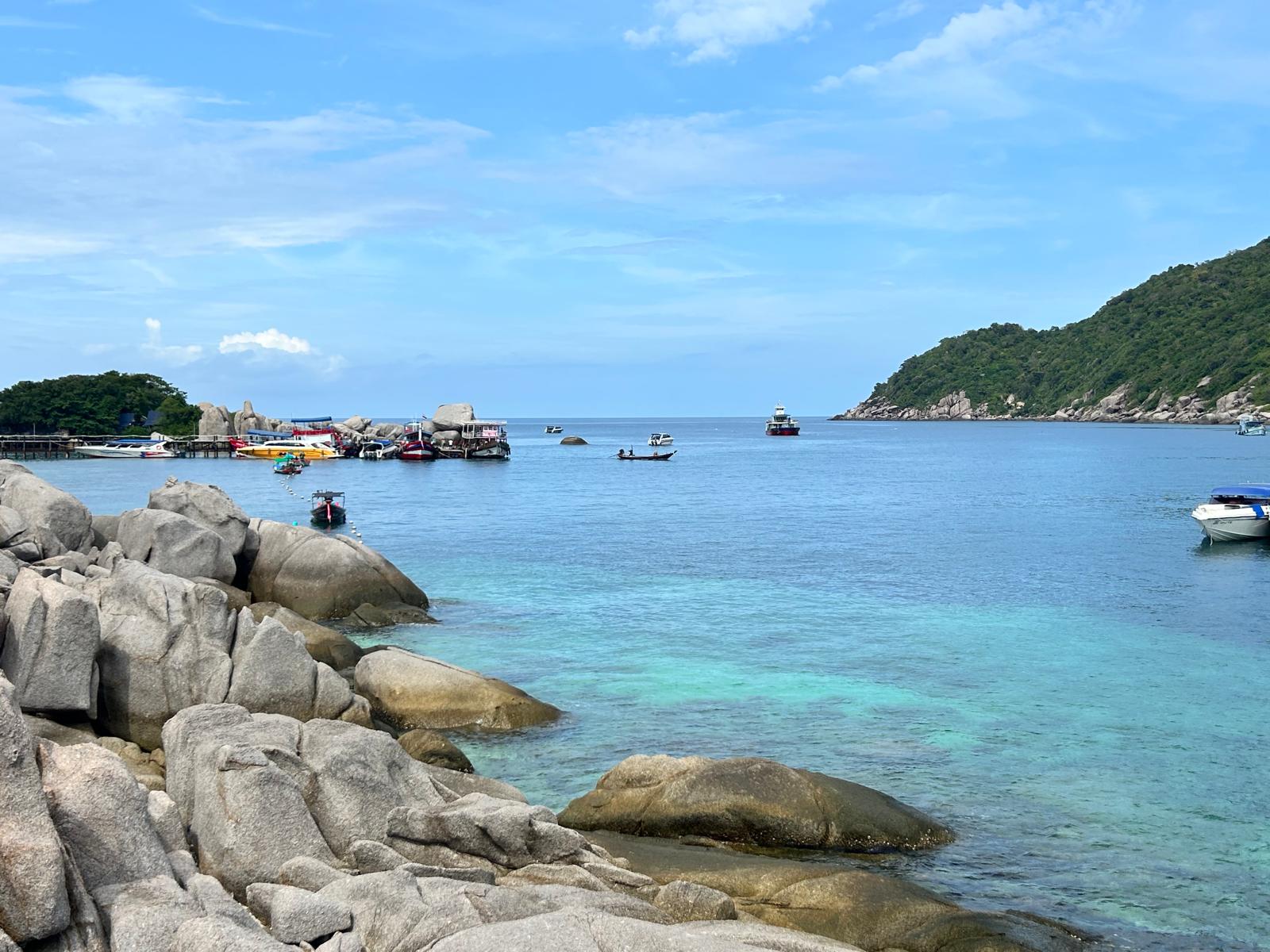
A wooden boardwalk also winds around the rocks on the other side. The boards creak and the path feels a bit precarious in places. It is worth it. Suddenly you are looking out at the open gulf, with dive boats rocking in calm water and rocks dropping into shallows so clear you can watch fish dart between them.
Snorkeling Around the Island
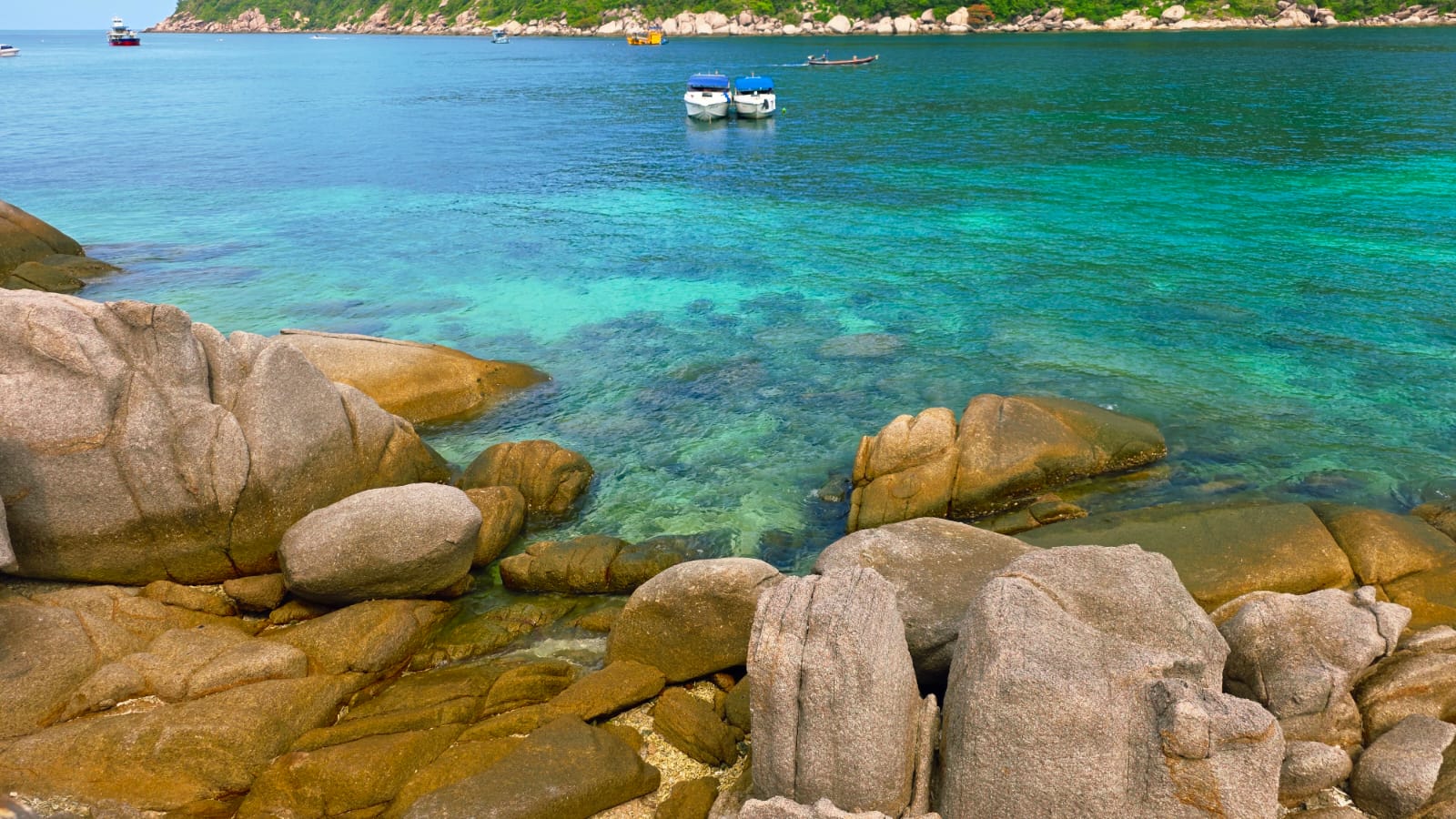
The water around Nang Yuan is one of the reasons Koh Tao became a dive training hub. Shallow coral sits close to shore, and the reef on the eastern side known as the Japanese Gardens is the usual snorkel stop for boats. Every few minutes a snorkeler pops up grinning, pointing back down at something. Bring your own mask if you can. Fins are not allowed in the swimming areas, a rule meant to stop people kicking the coral.
Photograph hosted by TravelMktg.com.
Landing Fee and Island Rules
Day visitors pay a landing fee in cash at the pier. Recent visitors report 250 baht for adults and 120 baht for children, with overnight resort guests exempt. Some tour packages include the fee and some don’t, so check before you book.
The rules are enforced. Plastic bottles and cans are banned and staff check bags on arrival, so fill a metal or glass bottle on Koh Tao or leave the plastic one on the boat. Drones stay behind too. Fins, as above, are off limits in the snorkel zones. Day visitors have to leave by late afternoon when the island closes to them.
How to Get There
From Koh Tao it is easy. Taxi boats and longtails leave from Sairee Beach and the Mae Haad pier area, and the crossing from Sairee takes about fifteen minutes. A return trip usually runs a few hundred baht, depending on season and how well you bargain. Agree on a pickup time before the boat leaves.
From Koh Samui or Koh Phangan you need a day tour. Speedboat trips usually combine snorkel stops around Koh Tao with a few hours on Nang Yuan, and typically cost around 2,000 to 2,500 baht with lunch and the landing fee. Ferry operator Lomprayah also runs catamaran day trips. From Samui it is a long day with less time on the island, so staying a night or two on Koh Tao gives you more room.
Photograph hosted by TravelMktg.com.
When to Go
The tour boats arrive mid-morning and leave mid-afternoon, and that is when the sandbar and the viewpoint are packed. Go on the first taxi boat from Koh Tao or come back late in the afternoon. The light is better then anyway. The calmer, drier months on this side of the gulf usually run from about February to September, while the northeast monsoon brings rougher seas around November and December.
Koh Nang Yuan is tiny. It still holds a lot: coral gardens, gentle tides and just enough seclusion early in the day to feel like a secret. If you are building a Gulf of Thailand trip around it, see our posts on Pig Island, Koh Madsum, Koh Samui and flying to Bangkok from Koh Samui.
Photograph hosted by TravelMktg.com.