You know those moments when the world finally catches up to something you’ve always sensed instinctively? That’s exactly how it feels reading that UNESCO has granted Italy its first official gastronomic style recognition — and then looking at that photo on the table, the unpretentious little still life of a Margherita pizza, a bowl of torn bread, two small bottles of olive oil, and a glass of red wine catching a bit of natural window light. It’s almost comical how perfectly it embodies what UNESCO is now formally celebrating: the everyday poetry of Italian cooking, the kind that doesn’t need theatrics or ornamentation to feel complete.
The pizza itself tells the story better than any press release ever could. The blistered, leopard-spotted crust with its airy swell, the lazy melt of mozzarella drifting into that bright tomato base, and a lone basil leaf lounging in the center like it’s entirely aware of its symbolic importance. Nothing fancy. Nothing forced. Just technique, balance, and tradition showing up as they have for generations. Those small amber and gold bottles of oil — one probably infused, one not — sit there like quiet guardians of the meal, while the bread in the bowl looks torn by hand, not styled. Even the outdoor chairs visible through the window echo that Italian café DNA, a hint of a place where food is eaten slowly and without apology.
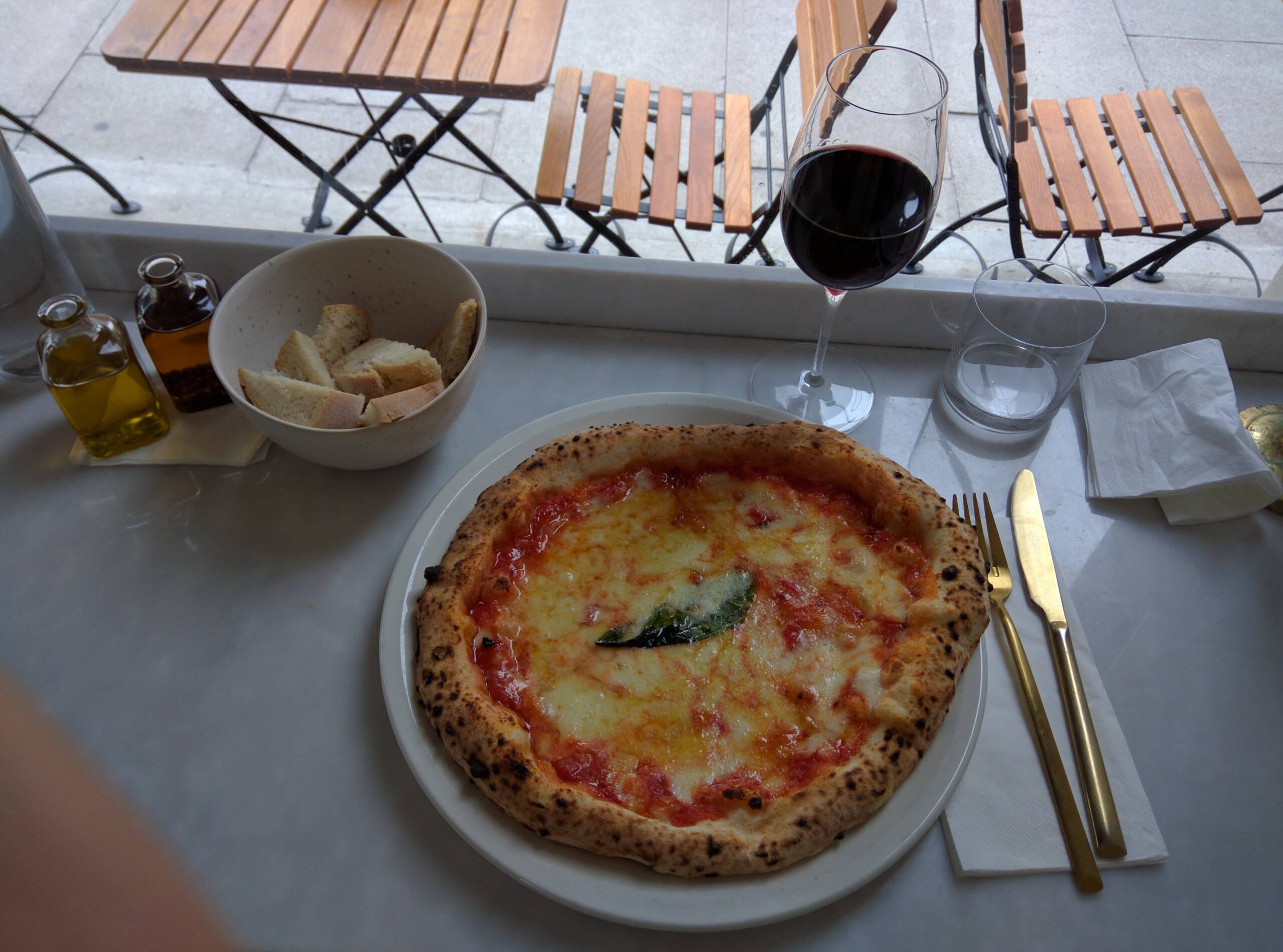
Shot with Canon R100 and a TTArtisan 50mm f/1.2
So when UNESCO finally steps in and says, essentially, *this deserves safeguarding*, it feels like a global nod to what has been obvious for centuries. Italian cuisine isn’t just a category of food; it’s a worldview. It’s the insistence that ingredients matter, that simplicity isn’t a limitation but a discipline, that a meal is built as much from memory and regional pride as from flour or tomatoes. It’s the cultural confidence of doing a dish one precise way because your nonna’s nonna did it that way, and somehow the cosmos didn’t object.
What’s fascinating is how this recognition comes at a time when food trends spin faster than ever, as if the algorithm itself has a craving schedule. Meanwhile, Italian cuisine just… stays steady, anchored in seasonality, technique, and that almost stubborn belief in letting things taste like what they are. UNESCO didn’t elevate Italy so much as underline a truth: this is a living heritage, one that people from every corner of the world connect to in their own intimate way. Everyone remembers some Italian meal that grounded them — a trattoria lunch, a homemade attempt using the wrong cheese, or a pizza exactly like the one in this photo, eaten alone but somehow feeling communal.
And that’s the real beauty of this moment. One simple lunch, one quiet table scene, and one global recognition all align to remind us that Italian cuisine has never needed to shout. Its power lies in subtlety, craft, and the way a single basil leaf can say more about culture and continuity than a hundred official statements. The world just finally put a UNESCO stamp on what that Margherita has been whispering all along.
Leave a Reply