• Skip to main content
  • Skip to secondary menu
  • Skip to footer

Travel Marketing

Travel and Tourism Trends

  • Sponsored Post
  • Travel Event Calendar
  • Travel Market
  • Travel Magazine
  • About
  • Contact

Italy’s UNESCO Gastronomy Status, Seen Through One Quiet Lunch and a Much-Needed Global Recognition

December 11, 2025 By admin Leave a Comment

You know those moments when the world finally catches up to something you’ve always sensed instinctively? That’s exactly how it feels reading that UNESCO has granted Italy its first official gastronomic style recognition — and then looking at that photo on the table, the unpretentious little still life of a Margherita pizza, a bowl of torn bread, two small bottles of olive oil, and a glass of red wine catching a bit of natural window light. It’s almost comical how perfectly it embodies what UNESCO is now formally celebrating: the everyday poetry of Italian cooking, the kind that doesn’t need theatrics or ornamentation to feel complete.

The pizza itself tells the story better than any press release ever could. The blistered, leopard-spotted crust with its airy swell, the lazy melt of mozzarella drifting into that bright tomato base, and a lone basil leaf lounging in the center like it’s entirely aware of its symbolic importance. Nothing fancy. Nothing forced. Just technique, balance, and tradition showing up as they have for generations. Those small amber and gold bottles of oil — one probably infused, one not — sit there like quiet guardians of the meal, while the bread in the bowl looks torn by hand, not styled. Even the outdoor chairs visible through the window echo that Italian café DNA, a hint of a place where food is eaten slowly and without apology.
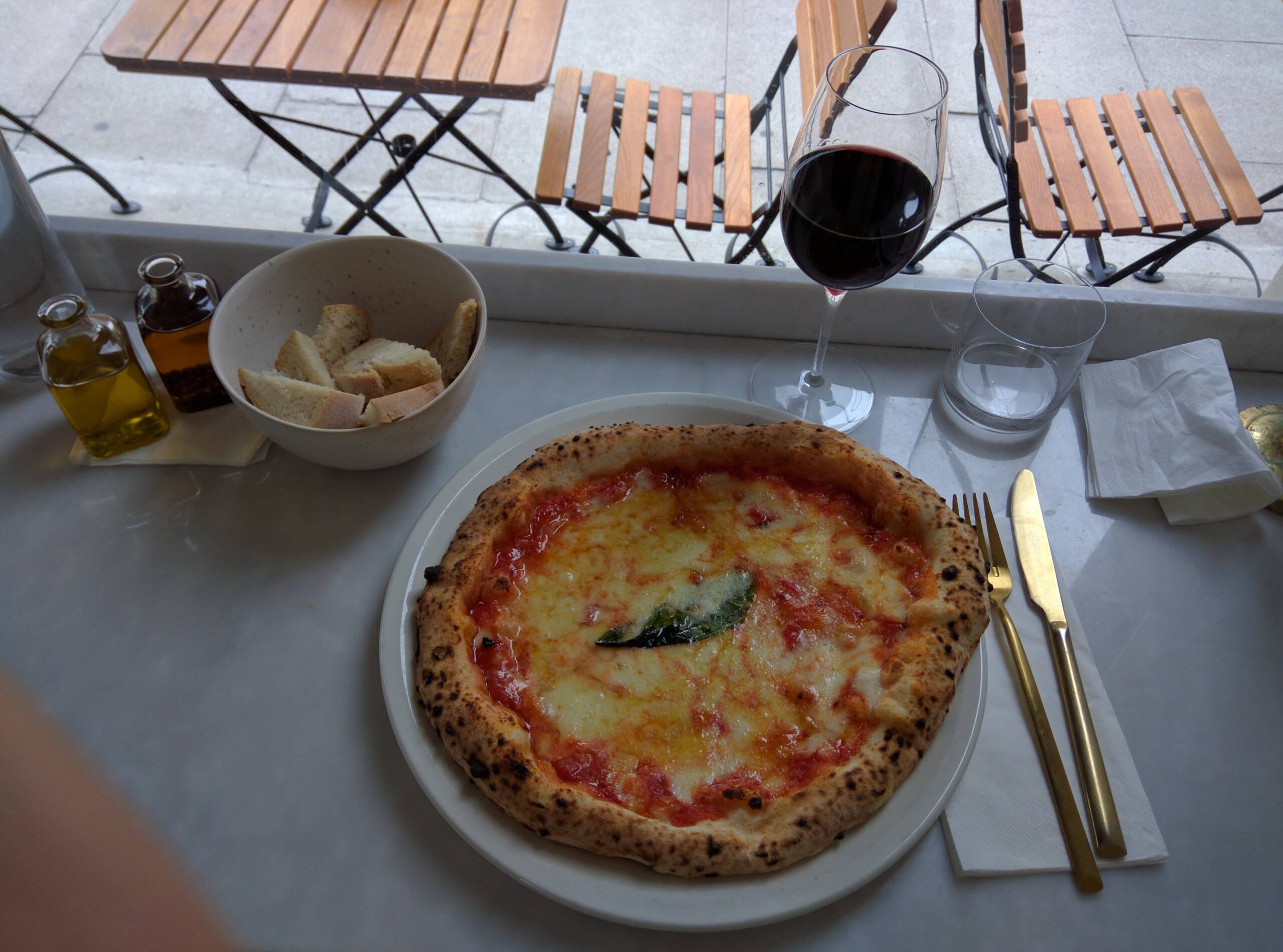
The pizza itself tells the story
Shot with Canon R100 and a TTArtisan 50mm f/1.2

So when UNESCO finally steps in and says, essentially, *this deserves safeguarding*, it feels like a global nod to what has been obvious for centuries. Italian cuisine isn’t just a category of food; it’s a worldview. It’s the insistence that ingredients matter, that simplicity isn’t a limitation but a discipline, that a meal is built as much from memory and regional pride as from flour or tomatoes. It’s the cultural confidence of doing a dish one precise way because your nonna’s nonna did it that way, and somehow the cosmos didn’t object.

What’s fascinating is how this recognition comes at a time when food trends spin faster than ever, as if the algorithm itself has a craving schedule. Meanwhile, Italian cuisine just… stays steady, anchored in seasonality, technique, and that almost stubborn belief in letting things taste like what they are. UNESCO didn’t elevate Italy so much as underline a truth: this is a living heritage, one that people from every corner of the world connect to in their own intimate way. Everyone remembers some Italian meal that grounded them — a trattoria lunch, a homemade attempt using the wrong cheese, or a pizza exactly like the one in this photo, eaten alone but somehow feeling communal.

And that’s the real beauty of this moment. One simple lunch, one quiet table scene, and one global recognition all align to remind us that Italian cuisine has never needed to shout. Its power lies in subtlety, craft, and the way a single basil leaf can say more about culture and continuity than a hundred official statements. The world just finally put a UNESCO stamp on what that Margherita has been whispering all along.

Filed Under: Travel Magazine

Reader Interactions

Leave a Reply Cancel reply

Your email address will not be published. Required fields are marked *

Footer

Recent Posts

  • EasyJet Agrees £5.7bn Apollo Takeover: What Changes for Passengers and What Doesn’t
  • Taormina Beach Guide: Mazzarò, Isola Bella, and What Nobody Tells You About the Pebbles
  • Juliet’s Balcony in Verona Was Added in the 1930s and the Crowds Do Not Care
  • St Mark’s Basilica in Venice: The Gold Mosaics Are Dimmer Than the Photographs Suggest
  • China Fines Trip.com $770 Million for Locking Hotels Into Exclusive Deals
  • Château de Monbazillac, Dordogne: A difficult childhood. One château too many.
  • Fora Hits $1 Billion Valuation as AI Transforms the Future of Travel Planning
  • The Open Kitchen Experience: Dining Where You Can Watch the Cooking
  • Holland America Line Adds Flåm and Hellesylt to Five 2027 Norway Fjord Cruises
  • La Cité du Vin, Bordeaux: The Building That Looks Like Wine in a Glass

Media Partners

  • Virtual Travel Guide
  • Ancient Rome
Venice at Night Is the Version No Access Fee Covers
The 18th-Century Fountain Hidden Inside Bordeaux’s Customs Museum Courtyard
The Bilbao Effect, 500 Years Early: Jerónimos Monastery And The Guggenheim
Bilbao’s Quiet Renaissance: From Industrial Port to Design Destination
Lisbon’s Seven Hills: A Walking Guide That Tells You the Truth
New Orleans: An American City That Plays by Different Rules
Ha Long Bay Without the Cruise Brochure
Istanbul at the Threshold: A City That Has Always Been Two Things at Once
Iceland’s Ring Road: What the Drive Teaches You That No Photograph Can
Marrakech’s Medina: How to Read a City That Was Not Designed for You
Sponsored Post
About
Contact
Roman Concrete in Museum Fragments: What the Cross-Section Actually Shows
Roman Sarcophagi Spent More Time as Fountains and Church Tombs Than as Graves
Aquincum Museum Reconstructs 16 Roman Faces From Skulls Found on Budapest's Danube Frontier
Roman Public Latrines Reveal an Empire That Built Sanitation Without Achieving Hygiene
The Pont du Gard: Rome's Most Perfect Structure
Water Across the Empire: Roman Aqueducts and the Hydraulic Logic of Conquest
Who Cleaned Roman Rome: The Social Economy of Waste

Media Partners

The Immersive Experience in the Museum World
Japan, China, and Taiwan: A New Triangle of Risk — and a Window of Opportunity for Japan
Ghost Kitchens as Infrastructure: The Shift from Restaurants to Intelligent Food Networks
The Zoom Divide Nobody Saw Coming
The Perfect Budget Content-Creator Kit
Reimagining Prague’s Tourism Future Through Immersive Media and VR Museums
Israel’s Urban Paradox: Tel Aviv Moves, the Rest Stand Still
American Express Global Business Travel (GBTG): Understanding the Business and the Investment Case
Why the Canon R8 Paired With the New RF 45mm f/1.2 Lens Quietly Becomes the Content Creator’s Sweet-Spot
The Future of Travel: A $15.5 Trillion Industry

Copyright © 2026 Travel Marketing

Media Partners: Timey · Publishing House · Ancient Rome · Photography · Calendarial · Transportational