The image feels like a small city compressed into a single indoor moment: people drifting past a bright booth, bodies angled in half-turns, eyes split between screens and conversations, hands brushing glossy surfaces almost without thinking. A large digital backdrop looms above everything, projecting classical arches and fresco colors that look almost Italian, almost Venetian, the kind of visual shorthand travel marketing loves because it works instantly. Below it, the human layer is restless and tactile. A woman seated behind the counter looks slightly to her left, alert but calm, surrounded by neat rows of identical devices that suggest order and system. To the right, a tall, curved interactive screen glows like a portal, its surface reflecting faces and fingers as a young woman reaches out, testing it, curious but cautious. People wear lanyards, jackets, backpacks, trade-show armor. No one is static. Everyone is moving, scanning, deciding in seconds whether this stand is worth stopping for. That’s the environment travel trade shows now live in, crowded, visually loud, competitive, and very human.
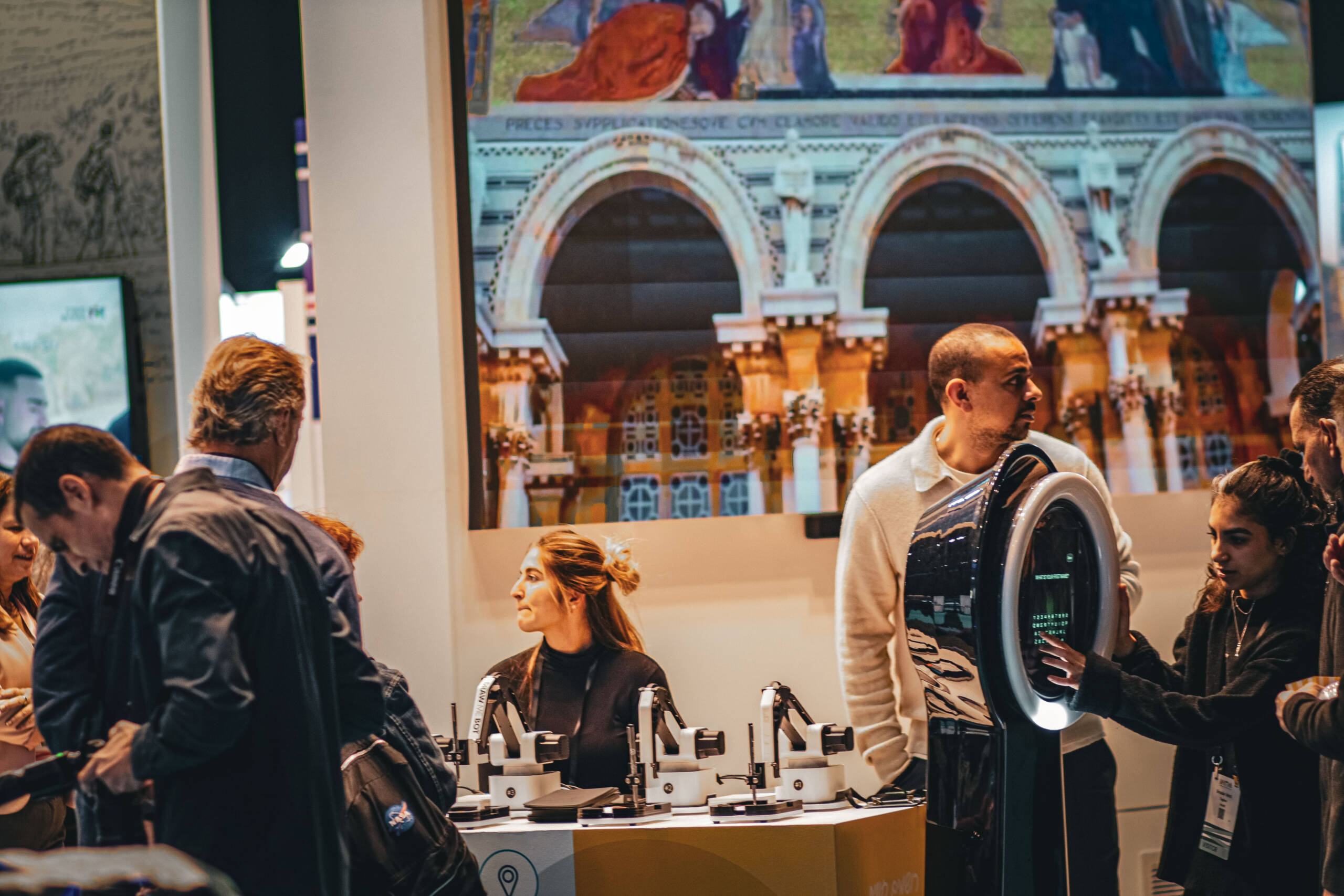
Promoting a travel trade show today starts long before the doors open and continues long after the carpet is rolled up, and the image quietly proves why. Attention is the rarest currency in that hall. A giant screen helps, sure, but the real hook is the promise of relevance. Successful promotion doesn’t sell square meters of booths or a list of exhibitors; it sells access. Access to decision-makers, access to future routes, access to emerging destinations, access to data, access to conversations that don’t happen on Zoom. The messaging has to be sharp and unapologetic about who the show is for and who it isn’t. When everyone is invited, no one feels chosen, and travel professionals, especially buyers and senior marketers, want to feel that this is time well spent, not just another badge and tote bag.
Visual storytelling is doing heavy lifting now, and the projected arches in the image hint at that instinctively. Destinations should be teased like trailers, not brochures. Short video loops, strong photography, and live demos work because they compress meaning into seconds. But promotion can’t stop at aesthetics. The most effective travel trade shows build narratives months in advance: why this edition matters more than last year, what has changed in the market, which trends will be impossible to ignore if you skip it. Aviation recovery, overtourism backlash, new source markets, AI in travel marketing, sustainability pressure, geopolitics reshaping routes, these themes need to be framed early so attendees feel they’re stepping into a conversation already in motion.
The human interactions in the photo also point to another truth that’s easy to forget when planning campaigns from spreadsheets. People don’t attend shows just to learn; they attend to be seen, to reconnect, to recalibrate their sense of where the industry is going. Promotion should lean into that social gravity. Highlighting who will be there is often more powerful than listing what will be there. Not vague logos, but real people, buyers, speakers, founders, tourism board heads, airline planners. Even better when those people speak in their own voices ahead of time, short interviews, informal clips, slightly imperfect takes that feel real rather than polished PR. That sense of authenticity lowers the psychological barrier to showing up.
Finally, the interactive screen in the image is a quiet reminder that engagement beats information overload. The best-promoted travel trade shows don’t promise everything; they promise participation. They invite attendees to touch, test, ask, and shape outcomes, whether through matchmaking tools, curated meetings, live polling, or workshops that produce something tangible by the end. Promotion should mirror that interactivity, using email, social, and partner channels not just to announce, but to involve. Ask questions. Tease choices. Let people feel, even before arrival, that they’re not walking into another generic hall, but into a temporary ecosystem where their presence actually matters. That feeling, more than any banner or slogan, is what fills aisles like the one in the image, shoulder to shoulder, with people who chose to be there rather than just wandered in.
Leave a Reply