This is one of those streets where you don’t really walk so much as drift, pulled forward by noise and color and smell, and the photo captures it exactly right. Red brick buildings lean inward like they’re sharing secrets, fire escapes zigzagging down the façades, their black metal ladders casting thin shadows that feel permanently etched into the walls. Strings of lights stretch overhead, not decorative so much as practical, a reminder that this street lives just as hard at night as it does in the afternoon. Shop signs stack vertically, Chinese characters glowing or peeling depending on how long the business has survived here, and English sneaks in almost apologetically. A hair salon window hums with fluorescent light, a dumpling place advertises with laminated photos taped near the door, and somewhere just out of frame you can already smell something frying that definitely wasn’t meant to be rushed.
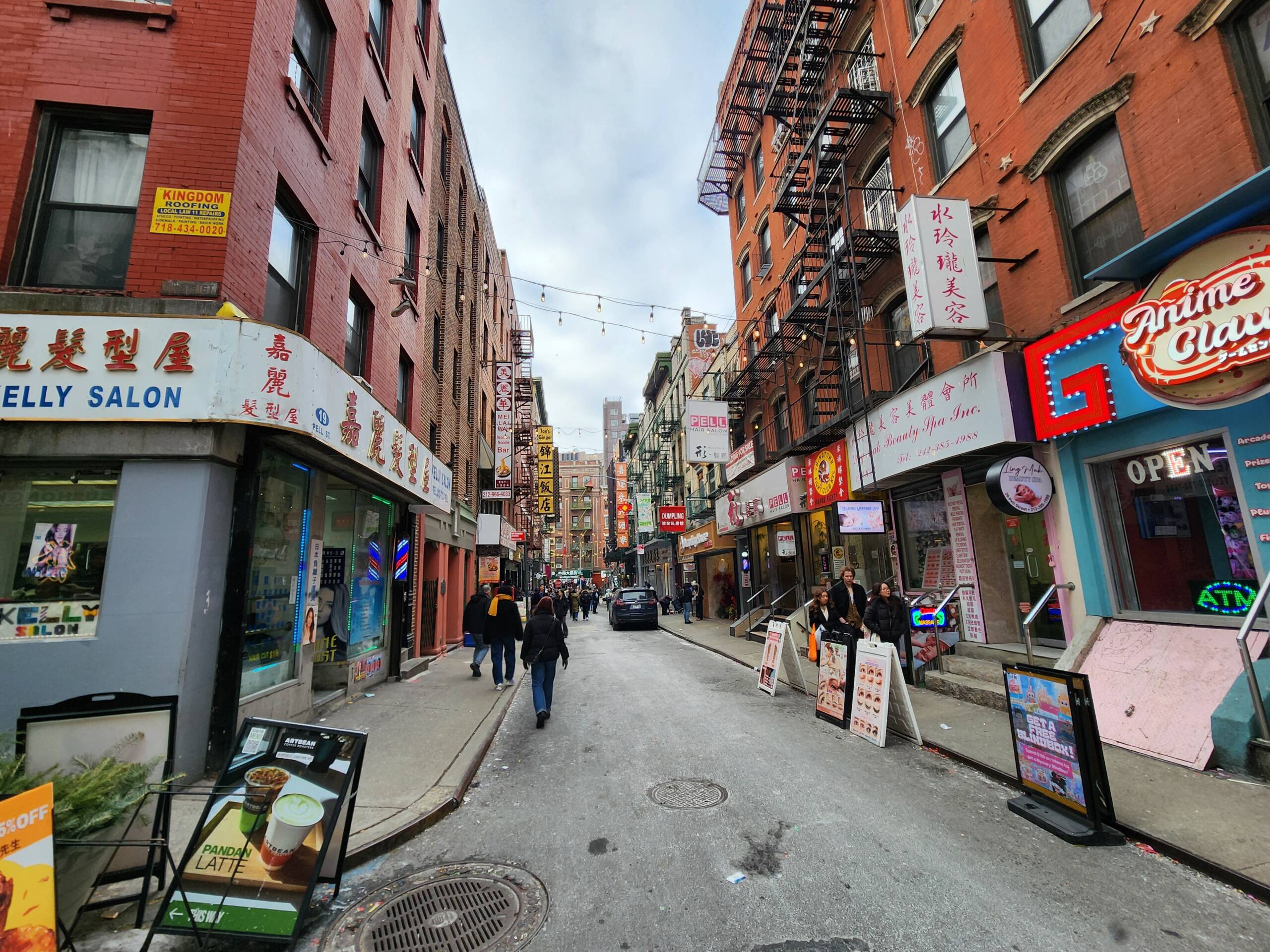
Walking through Chinatown as a local means accepting that this neighborhood doesn’t explain itself. You don’t come here for polished storefronts or tidy narratives. You come because it’s real, layered, sometimes messy, and deeply functional. The street in the photo looks like a shortcut, and it probably is, but shortcuts here are rarely empty. Delivery vans idle half-blocked, pedestrians weave without apology, and menus stand on the sidewalk daring you to judge dinner by a picture. That’s normal. If you’re waiting for someone to tell you where to go, you’ve already missed the point. You follow appetite, curiosity, or just the sound of a room that seems too loud to ignore.
Food is the obvious entry point, but the trick is not to chase hype. If a place has photos that look ten years old and a menu that feels overwhelming, you’re in the right zone. Dim sum spots in the morning feel like organized chaos, carts rattling, conversations overlapping in three languages, tea poured without asking. By afternoon, bakeries take over the rhythm of the street, egg tarts cooling in metal trays, sponge cakes fogging up glass cases. At night, the neighborhood tightens its focus. Noodle shops glow warmer, seafood tanks bubble near the door, and late dinners stretch longer than planned. Eat where families eat, where no one is rushing you out, where the receipt is handwritten or the register looks like it’s seen better decades.
Between meals, look up. Chinatown rewards vertical attention. Old signage clings to brick long after the business has changed, faded characters painted directly onto walls, ghost advertisements you can’t Google your way into understanding. Fire escapes aren’t just architecture here, they’re social infrastructure. People step out for air, conversations float down, laundry hangs like punctuation. These buildings weren’t designed to be aesthetic, but they’ve aged into something quietly cinematic. Even the sidewalks tell stories, cracked concrete patched and re-patched, carrying decades of foot traffic that never really slowed down.
If you’re shopping, think practical before trendy. Groceries spill onto the street because space inside is precious. You’ll see vegetables you don’t recognize, dried seafood stacked in bins, teas labeled with promises instead of instructions. Ask questions if you want, or don’t. Pointing works. So does smiling. For souvenirs, skip anything that looks mass-produced. Instead, look for things people actually use: teapots, kitchen tools, incense, paper goods. They’ll cost less, mean more, and won’t pretend to be something they’re not.
The rhythm here is constant but never rushed. Chinatown doesn’t perform for visitors, and that’s why it stays interesting. You blend in by not trying too hard, by walking with purpose even if you don’t have one, by accepting that getting slightly lost is part of the experience. This street, with its signs and lights and unspoken rules, isn’t asking for your attention. It assumes you’ll figure it out eventually. And honestly, that’s the best kind of welcome.
Leave a Reply