A Morning Detour in Brooklyn: Paris Baguette as an Urban Pause
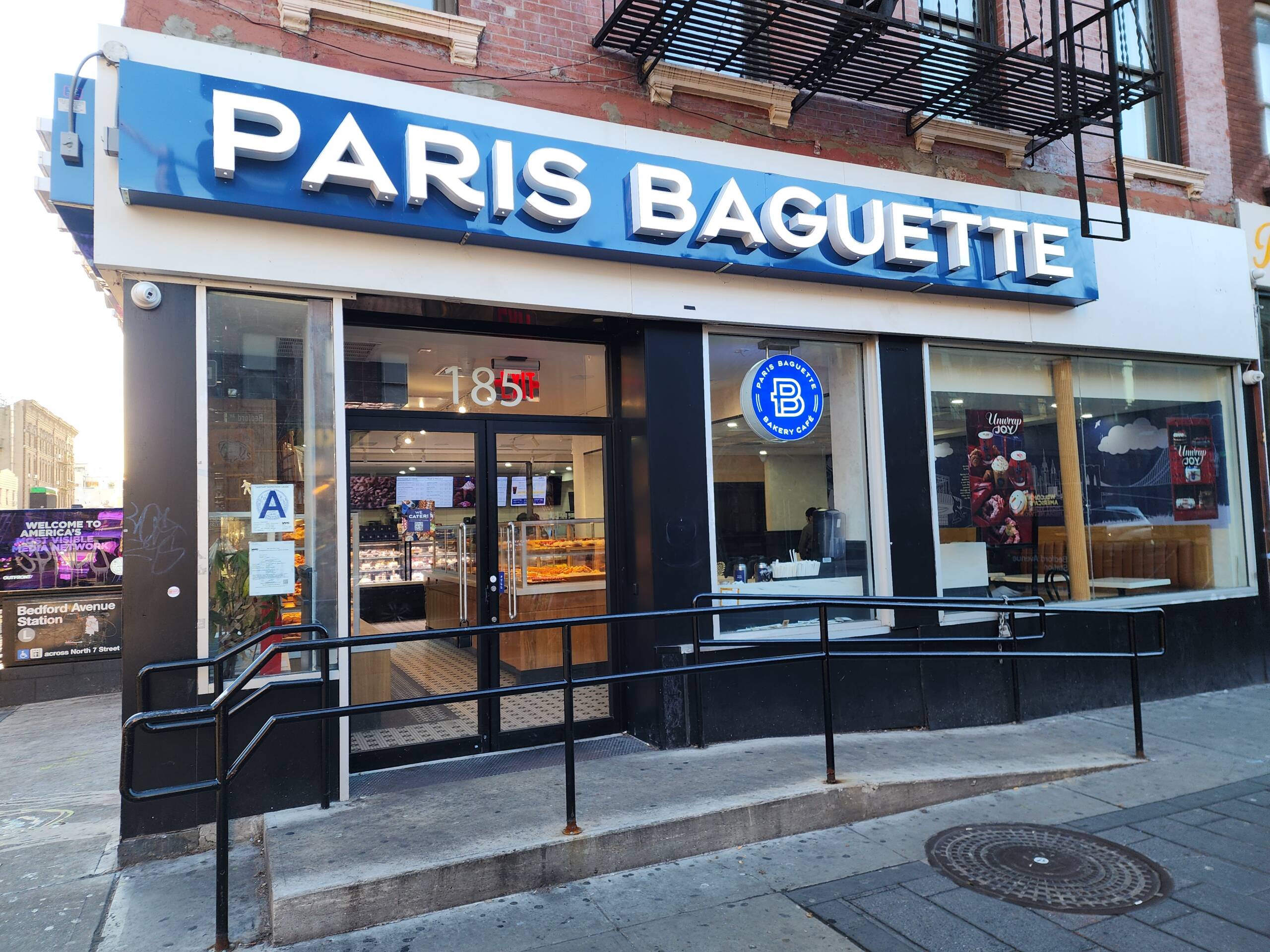
Brooklyn has a way of absorbing global brands and sanding off their edges until they feel oddly local, and this Paris Baguette does exactly that. From the outside, the storefront is clean and assertive, the blue-and-white sign cutting through brick and fire escapes with a confidence that feels almost European in its refusal to blend in. The sidewalk slopes slightly, metal railings guide you toward the entrance, and the glass façade lets you see straight into the heart of the place, trays of pastries glowing under warm lights like a quiet promise before you even open the door. It’s not theatrical, more matter-of-fact, the kind of place that assumes you’ll step in because you’re already curious.
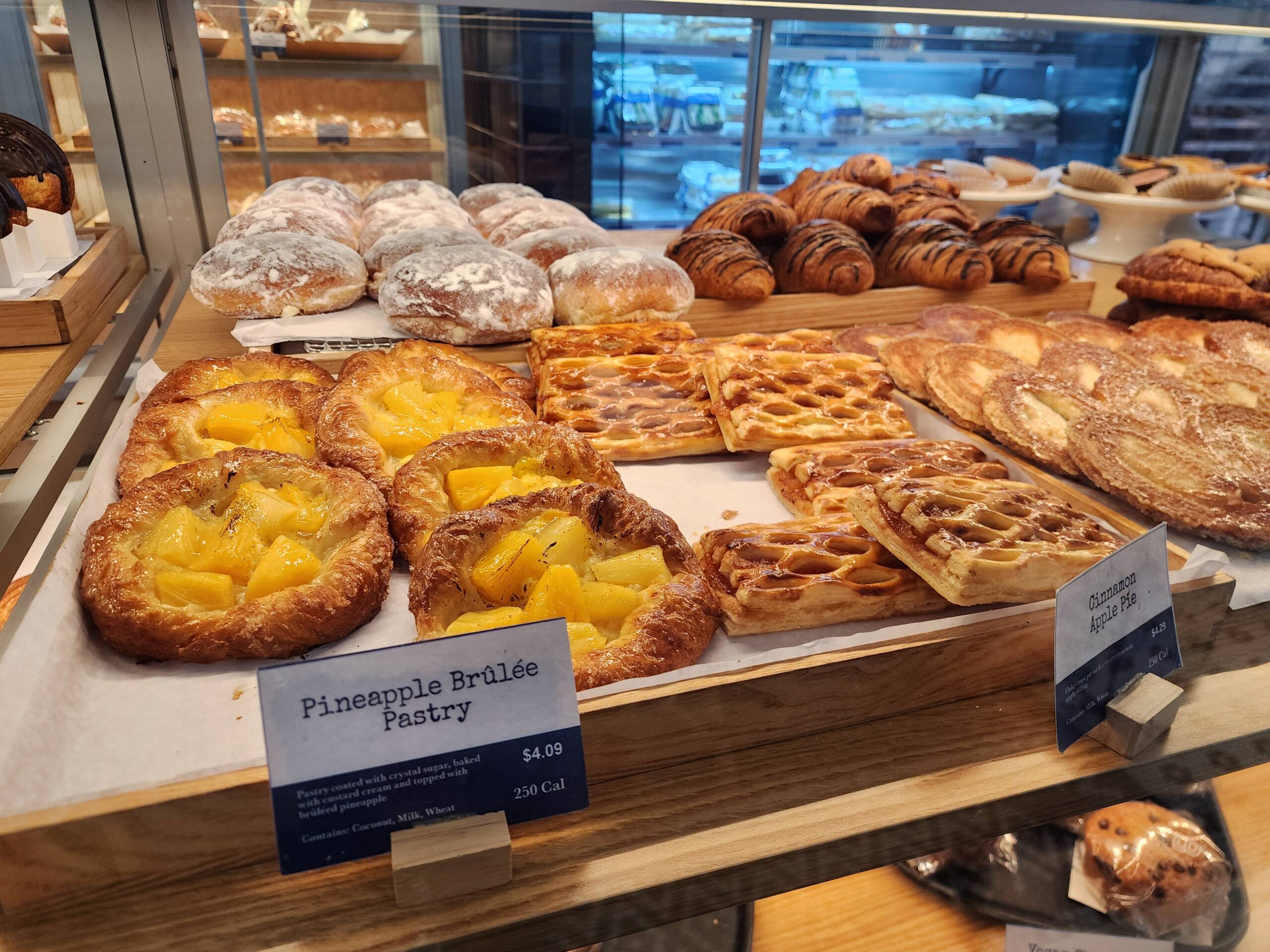
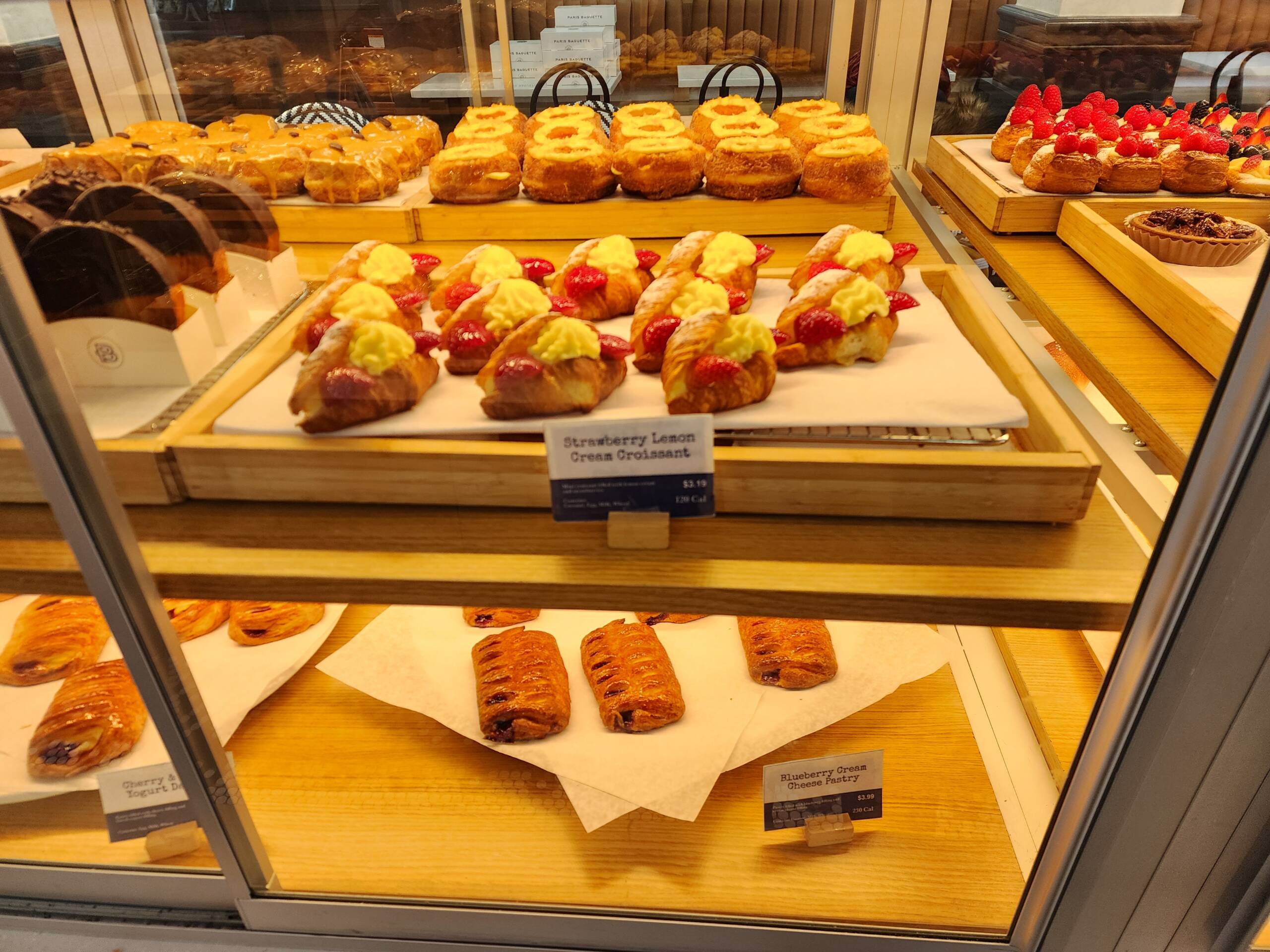
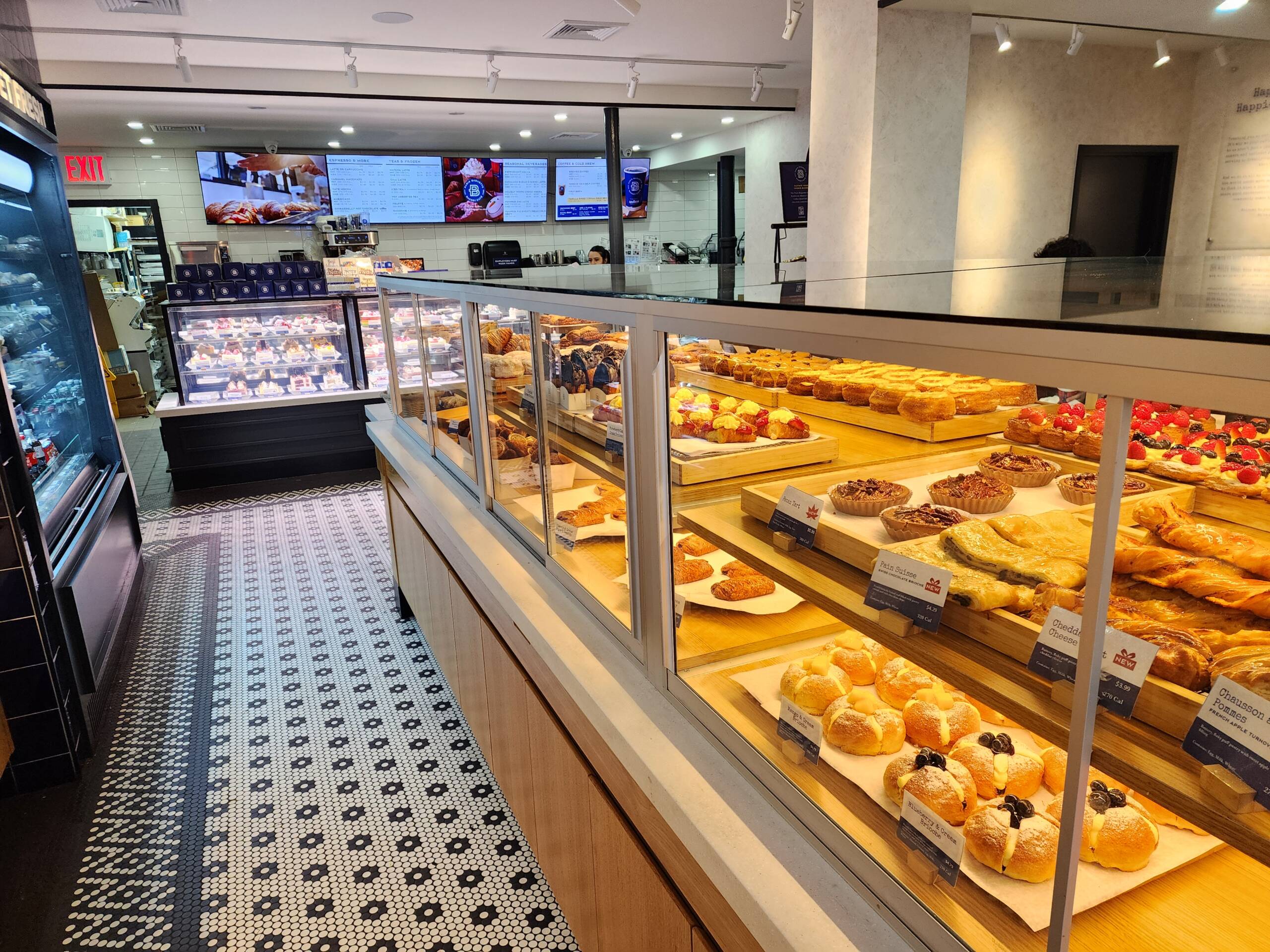
Inside, the space opens into a carefully choreographed flow. Long glass cases run parallel to the floor’s patterned tiles, each shelf stacked with pastries arranged just far enough apart to let you see their individual personalities. Strawberry lemon cream croissants sit front and center, their powdered tops lightly dusted, sliced open to reveal pale cream and bright red fruit pressed into flaky layers. Nearby, pineapple brûlée pastries glow golden, their caramelized tops catching the light, while apple pies and chocolate-filled pastries anchor the display with something more familiar, more grounded. The smell is unmistakable, butter-forward, warm, slightly sweet, the kind that makes you slow your pace without realizing it.
The rhythm here feels distinctly Brooklyn. People drift in alone, phones in hand, or in pairs mid-conversation, already negotiating which pastry is “too much” for a weekday morning. Behind the counter, the menu boards glow softly, efficient but not aggressive, while staff move with the calm repetition of a place that knows its rushes and trusts them to pass. There’s no pressure to perform café culture here. You order, you wait, you watch the case again, maybe reconsider, maybe not. That pause is the luxury.
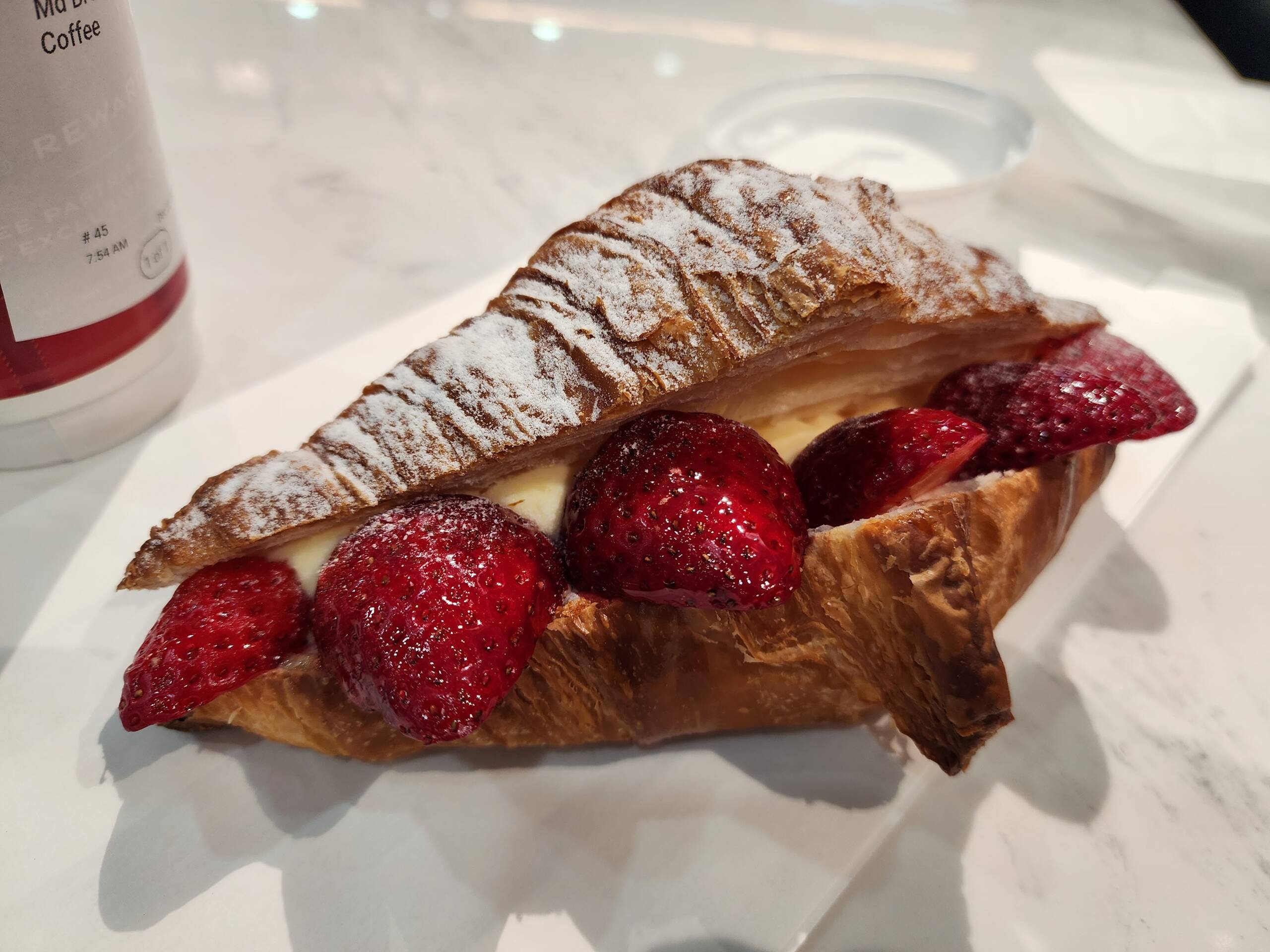
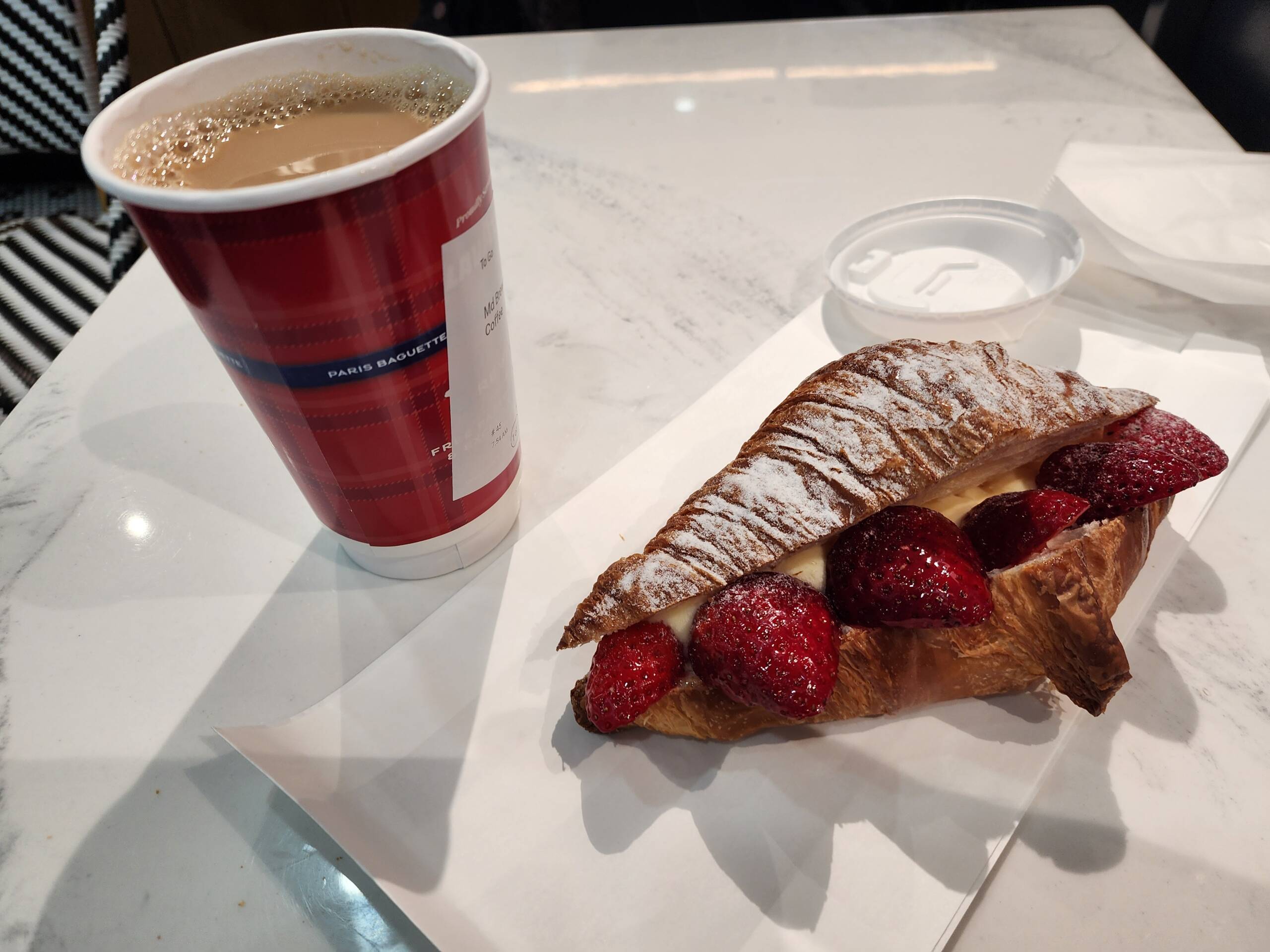
At the table, the experience tightens into something almost intimate. A paper cup of coffee, red with a subtle tartan pattern, steams gently, the surface just beginning to settle. Beside it, a strawberry-filled croissant rests on white paper, its layers visibly crisp, the fruit glossy and unapologetically ripe. Powdered sugar clings to the ridges of the pastry, already marking your fingers if you’re careless. It’s the kind of breakfast that feels slightly indulgent but not reckless, a small reward folded into the middle of an ordinary day.
What makes this Brooklyn outpost of Paris Baguette interesting as a travel moment isn’t novelty, but consistency. The brand’s global polish is still here, but it’s softened by the neighborhood’s tempo. Nobody lingers for hours, nobody rushes you out. It functions as a pause point, a brief recalibration between subway rides, errands, meetings, and whatever comes next. In a borough defined by movement and overlap, that’s enough.
As a standalone destination, Paris Baguette in Brooklyn isn’t trying to compete with legacy bakeries or cult cafés. It occupies a different lane, one that feels modern, predictable in the best way, and quietly comforting. For travelers passing through the city, it’s not a must-see, but it’s a useful marker, a place that shows how international food culture settles into New York life without fanfare. You step back outside with coffee in hand, pastry finished or saved for later, and Brooklyn immediately resumes around you, louder, faster, but just a little sweeter than before.
Paris Baguette Arrives in Richardson, Texas
Travel doesn’t always mean airports and passports. Sometimes it’s about noticing how global ideas quietly settle into ordinary neighborhoods and change their rhythm just a little. Richardson, a suburb just north of Dallas, gets one of those moments on February 27, 2026, when Paris Baguette opens a new bakery café at 7615 Campbell Rd., Suite 106. On paper, it’s another store opening from a brand with more than 4,000 locations worldwide. On the ground, it feels more like a small cultural import, a slice of international café life landing between strip malls, offices, and family neighborhoods.
Walking into a Paris Baguette almost anywhere in the world carries a familiar sensory script. Glass cases lined with glossy pastries and layered cakes, the smell of butter and fresh bread, espresso machines humming in the background, tables designed for lingering rather than rushing. In North America, that atmosphere has been spreading fast, with more than 280 bakery cafés already open and many more in development. Texas has embraced the concept enthusiastically, and this Richardson café becomes the brand’s 25th in the state, reinforcing how the bakery café fits into everyday American suburbia surprisingly well.
What gives this particular location a travel-story quality is the people behind it. The Richardson café is led by Sweta Goyal, Puneet Mittal, Mamta Singhal, and Rajneesh Singhal, two Dallas-based couples whose shared history stretches back to the same region of India. Years later, settled in North Texas, Paris Baguette became a regular stop for their families, a place associated with weekends, casual meetups, and familiar comfort. Over time, those visits turned into a bigger idea: bringing that same café experience into their own community. Richardson is the first chapter in a five-unit development agreement, with four more locations planned, but this opening carries the weight of something personal rather than purely strategic.
For a traveler passing through Dallas, Richardson might not be an obvious stop. Yet this is where modern travel blogging increasingly lives, in the everyday places that reveal how cities actually function. A neighborhood bakery café tells you more about local habits than a landmark ever could. Paris Baguette’s appeal lies in being premium without being formal, international without feeling distant. It’s designed for daily life: parents meeting after school drop-offs, remote workers claiming a corner table, couples sharing dessert without an occasion to justify it. These are the moments that define how a place feels once the novelty wears off.
The brand itself is on an ambitious trajectory, aiming for 1,000 locations across the United States and Canada by 2030. That kind of scale could easily flatten identity, but Paris Baguette continues to frame its growth around neighborhood presence and local franchise partners. Programs like “Love Baked In,” which focus on community involvement and charitable initiatives, reinforce the idea that each café should feel rooted, not replicated. Whether that balance holds at 1,000 locations remains to be seen, but in places like Richardson, the intention still feels intact.
For travel writers, cafés like this matter because they map the quieter shifts in how places connect. A French-inspired bakery concept, scaled in South Korea, expanding through North America, opened by partners with Indian roots, in a Texas suburb. That layering of cultures isn’t flashy, but it’s deeply contemporary. Sitting with a coffee and pastry in Richardson next spring won’t feel like tourism in the traditional sense, yet it captures exactly how travel works now, through food, shared spaces, and the small comforts that make unfamiliar places feel briefly like home.