% Arabica Dumbo Brooklyn, Brooklyn Bridge Views, Plant-Milk Rituals
Two figures sit shoulder to shoulder at a narrow window counter, backs turned, faces hidden, which somehow makes them even more readable. Puffy winter jackets in soft pink dominate the frame, one trimmed with a plush white faux-fur hood, the other quilted and slightly oversized, the kind of coat you buy knowing you’ll spend half the winter indoors but near glass. Outside, a muted city slides by — asphalt, a passing SUV, faint street markings — all blurred into a neutral backdrop, like New York agreeing to stay quiet for a moment. Between the coats, resting on the counter like an intentional afterthought, lies a Sony camera with a long white telephoto lens, serious, almost out of place among paper cups and condensation rings. The camera isn’t being used right now. It’s waiting, which is the point.
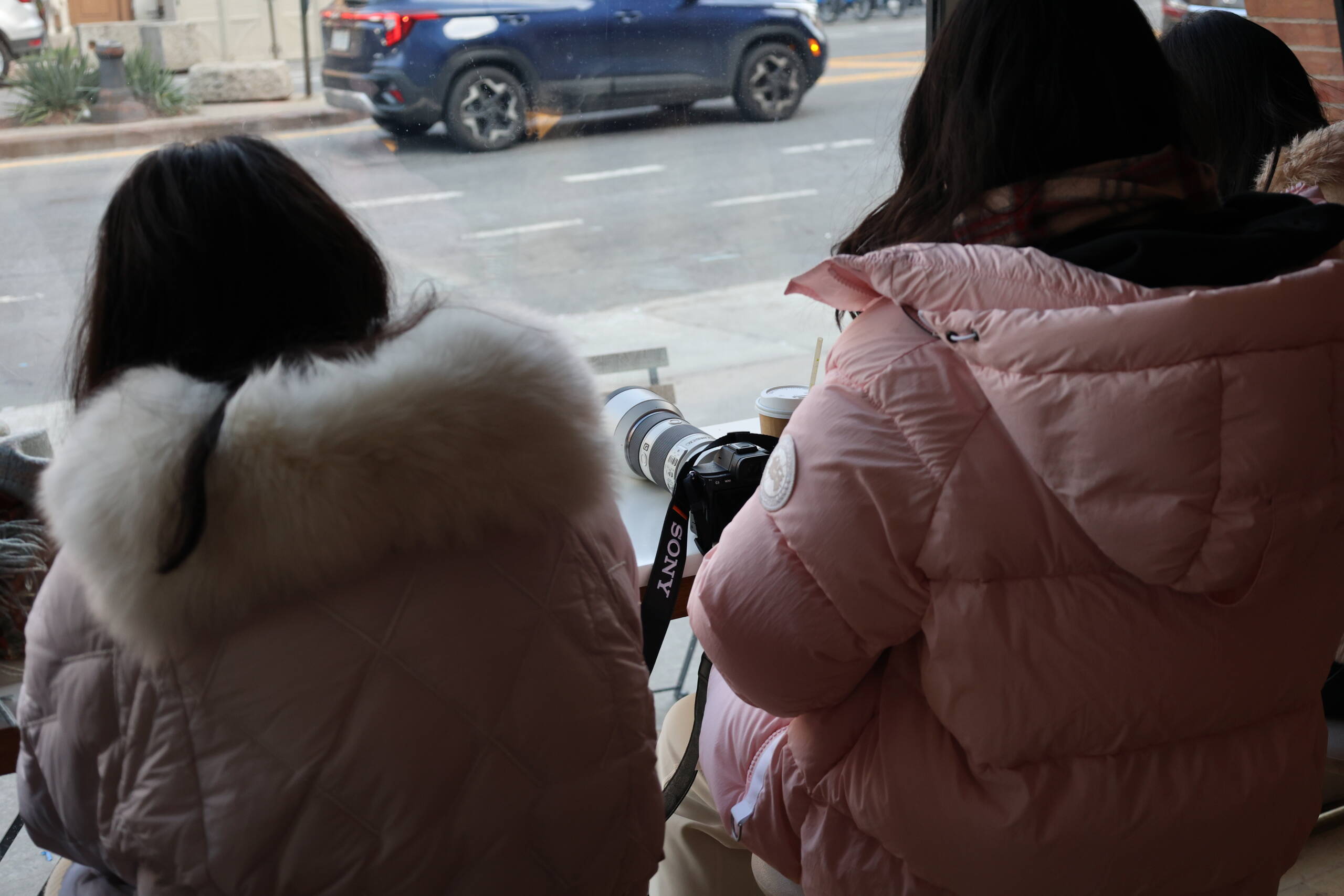
This is modern urban coffee culture distilled into a single frame: the café as observation deck, the street as content feed, the drink as prop more than sustenance. No one is talking loudly. No plates, no sandwiches, no clatter of forks. Just takeaway cups with wooden stirrers and the soft hum of traffic beyond the glass. The photographer-influencer hybrid doesn’t rush anymore; urgency would ruin the aesthetic. Instead, they sit facing outward, harvesting moments passively, letting the city perform for them. New York becomes something to be watched, not navigated, a loop of movement framed by the window like a live wallpaper. You can almost feel the warmth inside contrasting with the grey chill outside, that tiny luxury cities sell so well.
What’s interesting — and a little funny, if you linger on it — is how expensive and minimal this whole setup is. The coats are substantial, the camera isn’t cheap, the coffee likely cost more than it should, yet the experience itself is stripped down to almost nothing. No menu exploration, no lingering meal. Just presence, posture, readiness. The café isn’t a place to stay; it’s a place to be seen staying, briefly. The long lens hints at ambition, maybe street photography, maybe social content, maybe both, but for now it rests unused, as if the act of owning it already fulfills part of the narrative.
Scenes like this explain why these cafés thrive. They sell insulation from chaos, curated pauses, a front-row seat without participation. The city rushes by, unbothered, while inside the glass bubble, pink coats and quiet concentration turn everyday urban life into something worth documenting. Not everything needs to happen immediately. Sometimes the coffee cools a little, the camera stays on the table, and New York does the work on its own. That, oddly enough, is the product.
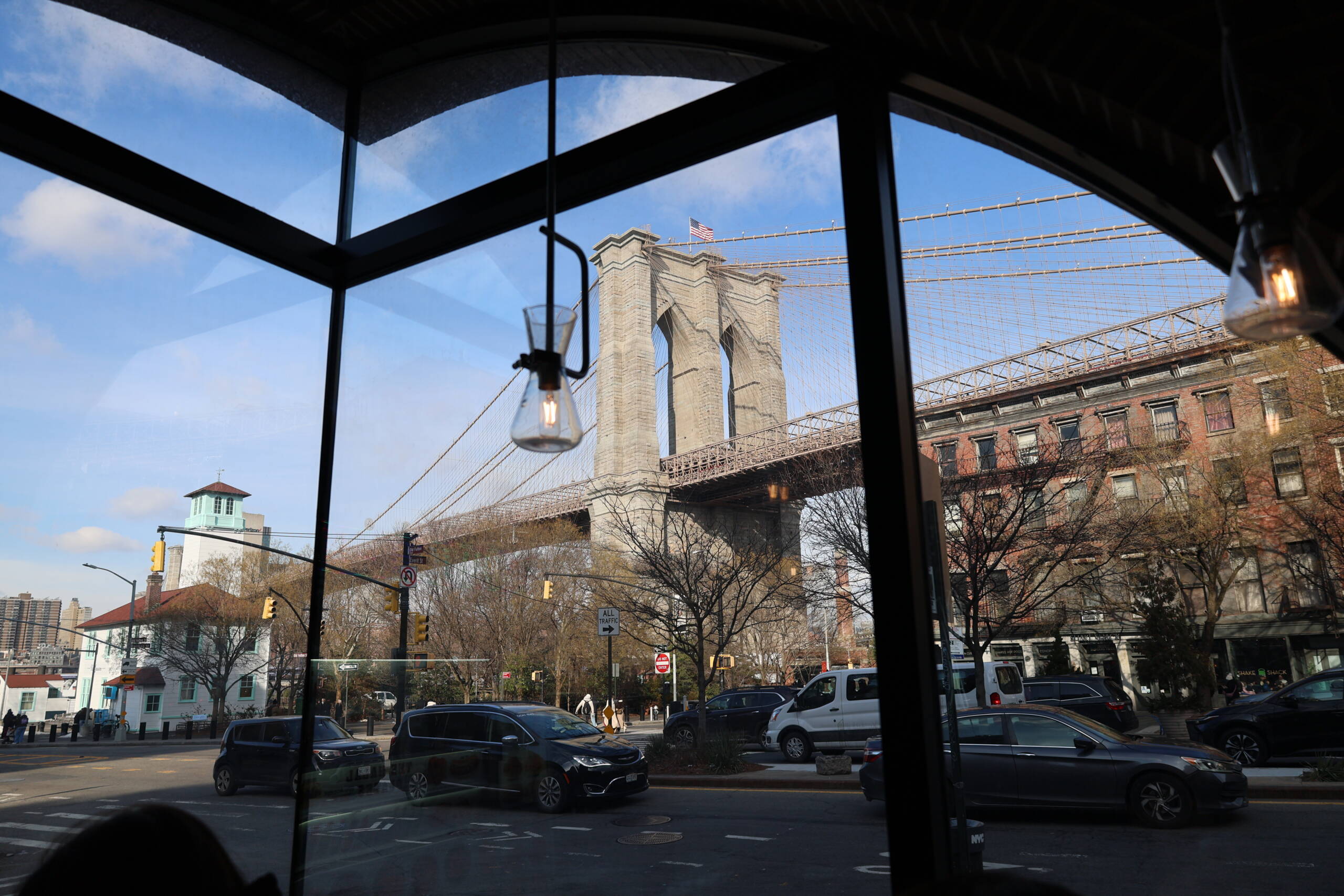
The second image pulls you in quietly, almost politely, as if the city is aware it’s being watched. Framed through tall café windows, the Brooklyn Bridge rises with that unmistakable stone gravity, its cables fanning outward like a diagram you’ve seen a thousand times but still stop for. Cars drift through the intersection below, indifferent and slightly messy, while the bridge holds its posture, monumental and calm. Inside, a single hanging bulb floats near the glass, warm and decorative, doing nothing functional except reminding you that you’re indoors, safe, caffeinated, protected from the wind. It’s the classic New York contrast—history outside, lifestyle inside—and the glass acts less like a barrier and more like a screen. The city becomes content, endlessly scrollable, without you having to step into it.
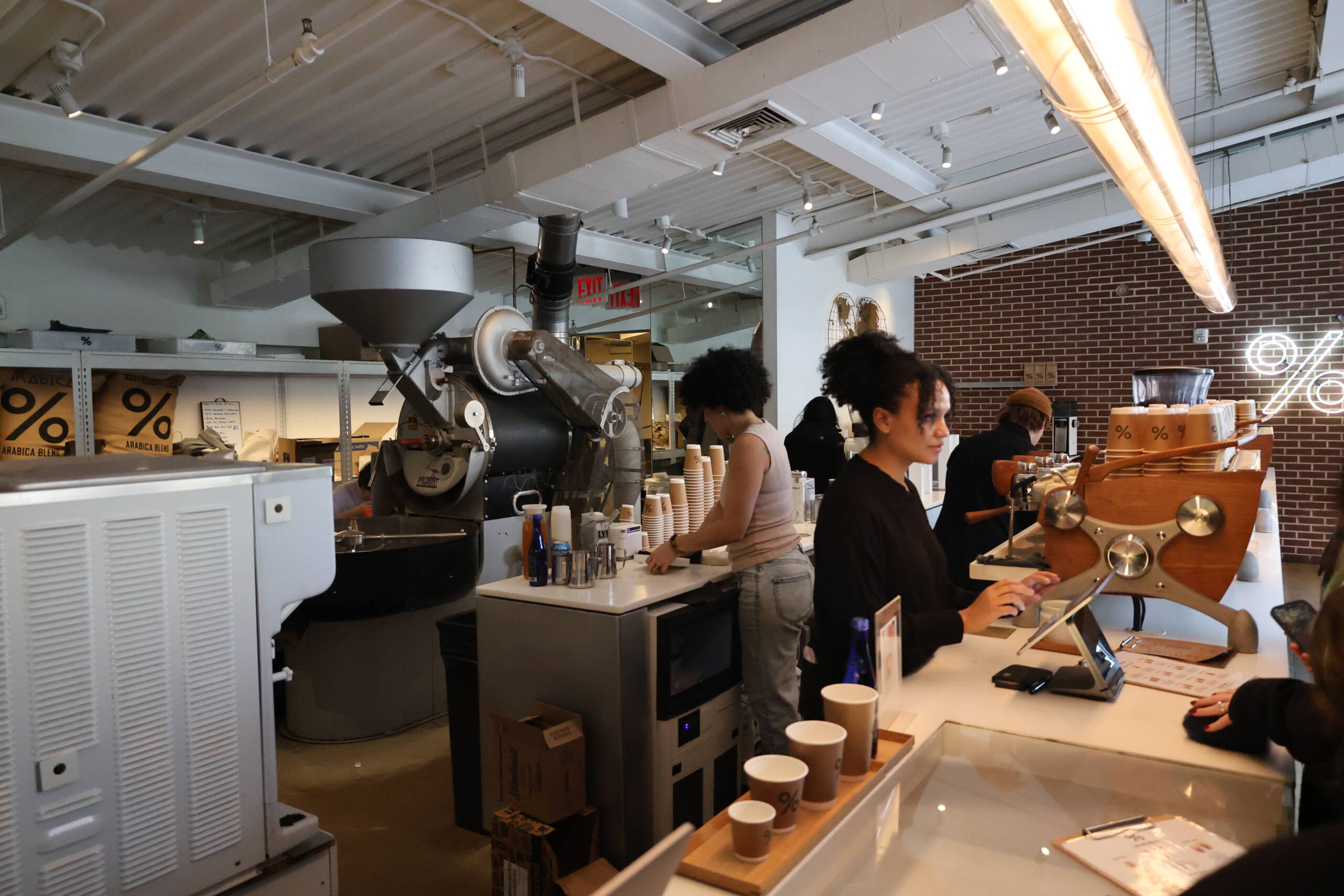
The third image flips the perspective inward, into the choreography behind the counter at % Arabica. White dominates everything: ceilings, counters, machines, cups, light itself. A massive roaster squats in the background like a piece of industrial art, pipes and funnels exposed on purpose, because hiding process would break the spell. Baristas move with practiced efficiency, not rushed but not relaxed either, tapping screens, stacking cups, pulling shots that feel more ceremonial than practical. The branding is everywhere yet oddly restrained—those minimalist percent symbols stamped onto cups, bags, and walls, repeating until they feel like punctuation marks in a sentence about taste, precision, and restraint. This is coffee as design language, not just a drink.
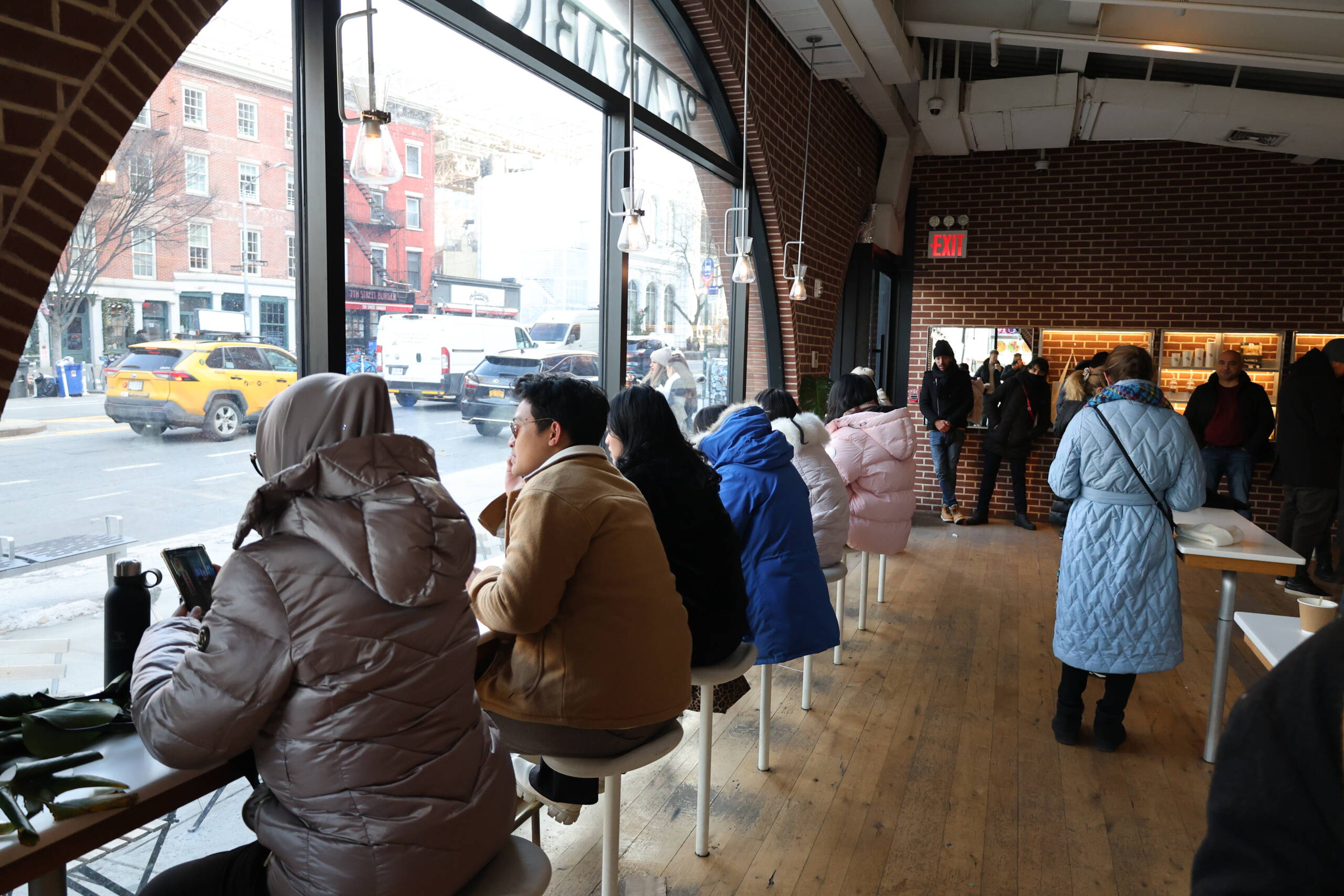
And yes, the coffee is fancy. Very fancy. It arrives in clean paper cups, carefully poured, beautifully bitter, slightly acidic, the kind that makes you nod instinctively even if you’re not entirely sure why. Cow milk doesn’t exist here, at least not socially. Only substitutes—oat, almond, maybe soy—each one a quiet declaration of values rather than preference. Nobody argues about it; it’s simply understood. This is part of the deal. You’re not here for comfort or abundance. You’re here for alignment. The absence of “regular milk” isn’t an inconvenience; it’s a signal, subtle but firm, that this space knows exactly who it’s for.
What makes the whole scene work is the location. Sitting inside, coffee in hand, you don’t just look at Brooklyn Bridge—you borrow its authority. The bridge lends weight to the moment, makes the cup feel earned, almost historic, even though you’ll be done with it in ten minutes. Tourists wander outside, phones raised, while inside the café, nobody seems particularly impressed. That indifference is part of the aesthetic. The bridge is just “there,” like good light or reliable Wi-Fi. You sip, you watch, you exist in a curated pause between movement and meaning.
This is your typical New York fancy coffee shop, and that’s not a dismissal. It’s a formula refined to near perfection: great view, expensive beans, disciplined minimalism, and just enough friction—no cow milk, limited seating, deliberate pacing—to make the experience feel intentional. You’re not meant to linger too long, but you’re definitely meant to remember being here. The bridge outside keeps moving people across the river. Inside, the coffee keeps people still, if only briefly, long enough to feel like they’re exactly where they’re supposed to be.
Leave a Reply