• Skip to main content
  • Skip to secondary menu
  • Skip to footer

Travel Marketing

Travel and Tourism Trends

  • Sponsored Post
  • Travel Event Calendar
  • Travel Market
  • Travel Magazine
  • About
  • Contact

Thames Reflections: London’s Past and Future Through the Lens of a Cruise

December 1, 2024 By admin Leave a Comment

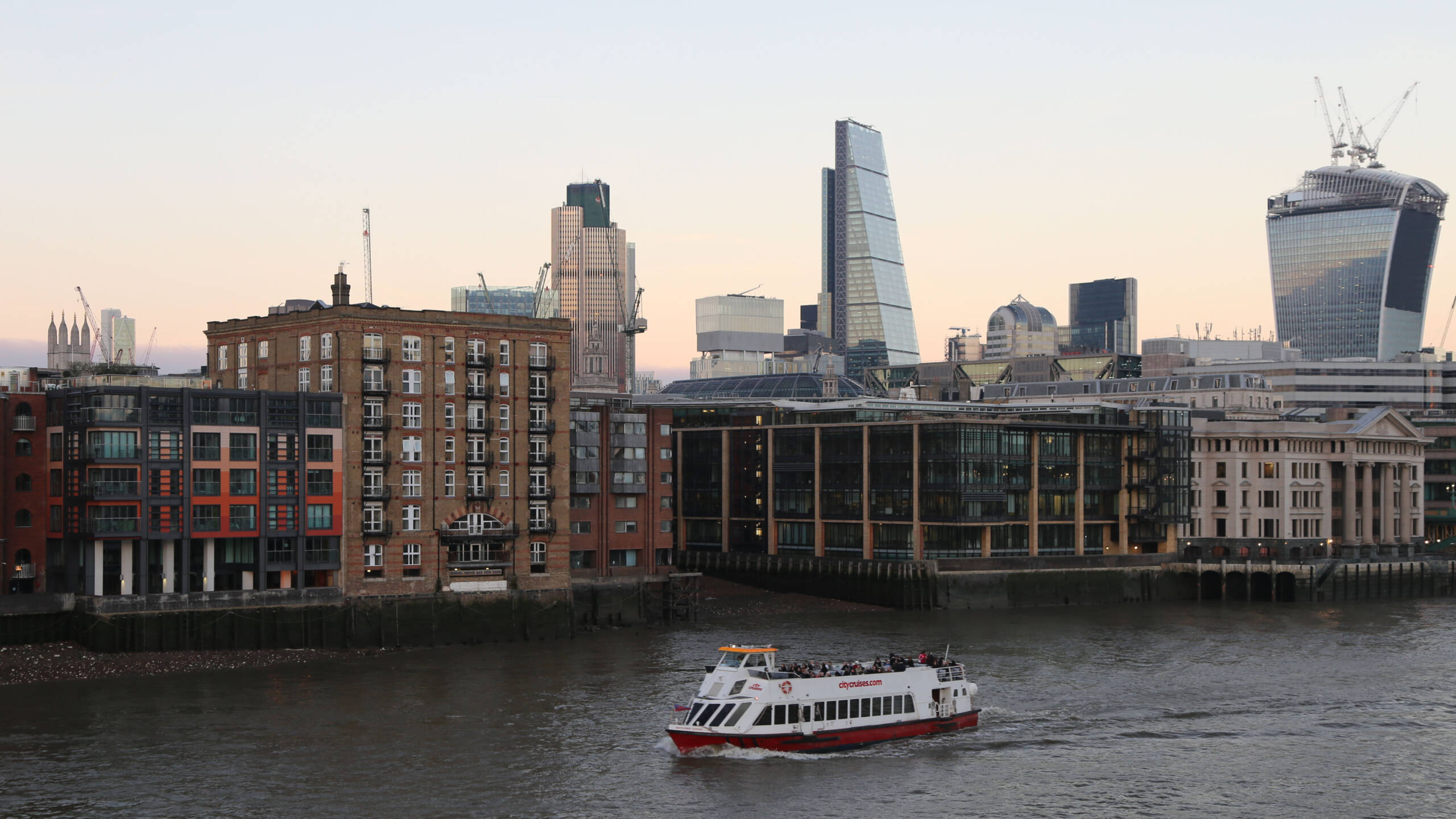
There’s a cinematic quality to the Thames that captivates every visitor, and this image, framed in the evocative 16:9 aspect ratio, captures that allure perfectly. The wide frame feels like a still from a movie, drawing the viewer into the scene and offering a sweeping perspective of London’s iconic skyline and its relationship with the historic river. The composition evokes a sense of storytelling, with the bustling river, towering landmarks, and timeless architecture all playing leading roles in a narrative of evolution and identity.
Thames Reflections: London’s Past and Future Through the Lens of a Cruise

Front and center is a City Cruises vessel, its bold red-and-white paint contrasting beautifully against the muted tones of the Thames. The ship glides effortlessly through the water, filled with passengers experiencing London from one of the most dynamic vantage points imaginable. Framed within this cinematic aspect ratio, the cruise ship feels like a protagonist on a journey, connecting the viewer to the rhythm of the city’s waterways. For travelers, this is more than just a scenic boat ride—it’s an immersive way to uncover the stories of a city that has grown and thrived along the banks of the river.

The wide frame showcases the balance of old and new that defines London. To the left, the historic riverside warehouses anchor the composition with their weathered brick and sturdy design, remnants of the city’s industrial past. Meanwhile, the skyline unfolds in the background, dominated by modern icons like The Shard and the Walkie-Talkie building. The Shard, with its sharp, soaring peak, feels almost sculptural, while the Walkie-Talkie’s curving façade adds a sense of playfulness. The aspect ratio emphasizes their dramatic forms, capturing the juxtaposition between the historic and the contemporary in a way that feels almost theatrical.

The Thames itself takes on a central role in the frame, its flowing water leading the viewer’s eye across the scene. The reflections and ripples add texture and movement, contrasting with the still solidity of the architecture. The cinematic 16:9 crop accentuates the river’s expansiveness, allowing the viewer to feel its vastness and its importance as the lifeblood of the city. It’s a perspective that mirrors the experience of standing by the river in person, where the view feels panoramic, almost larger than life.

As a travel photographer, this format allows me to tell a richer, more immersive story. The 16:9 aspect ratio isn’t just about capturing a wider scene; it’s about evoking emotion and context, offering the viewer a sense of place that feels intimate yet grand. The scene unfolds like a narrative, inviting the viewer to imagine the lives behind the windows of the buildings, the stories of the people on the cruise ship, and the history embedded in every brick and beam.

If you visit London, don’t miss the chance to experience this cinematic perspective for yourself. A cruise along the Thames offers an unparalleled view of the city’s evolution—from the enduring charm of its historic riverbanks to the bold ambitions of its modern skyline. The wide frame of the river offers not just a view, but a story, one that invites you to step into the scene and become part of London’s ever-unfolding narrative. With the 16:9 frame in mind, each shot feels like a moment from a film—one where you’re not just watching the story but living it.

Filed Under: News

Reader Interactions

Leave a Reply Cancel reply

Your email address will not be published. Required fields are marked *

Footer

Recent Posts

  • Why Lisbon Cafés Are Putting Up No Laptops Signs: Coffee, Instagram, and the Remote Work Terrace
  • Four in Ten Travelers Visit Landmarks Mainly for the Photo: How Instagram and Reels Reshaped Tourism
  • Why Comporta Still Feels Empty: The Rice Estate Behind Portugal’s Most Coveted Beaches
  • Travel in 2026: Five Photos That Explain the Year’s Real Trends
  • Tiny Tourism: Why Travellers Are Choosing Towns Nobody Photographs
  • In Defence of the Hop-On Hop-Off Bus
  • EasyJet Agrees £5.7bn Apollo Takeover: What Changes for Passengers and What Doesn’t
  • Taormina Beach Guide: Mazzarò, Isola Bella, and What Nobody Tells You About the Pebbles
  • Juliet’s Balcony in Verona Was Added in the 1930s and the Crowds Do Not Care
  • St Mark’s Basilica in Venice: The Gold Mosaics Are Dimmer Than the Photographs Suggest

Media Partners

  • Virtual Travel Guide
  • Ancient Rome
Porto’s Chestnut Season Is the Shoulder Season Worth Booking
Venice at Night Is the Version No Access Fee Covers
The 18th-Century Fountain Hidden Inside Bordeaux’s Customs Museum Courtyard
The Bilbao Effect, 500 Years Early: Jerónimos Monastery And The Guggenheim
Bilbao’s Quiet Renaissance: From Industrial Port to Design Destination
Lisbon’s Seven Hills: A Walking Guide That Tells You the Truth
New Orleans: An American City That Plays by Different Rules
Ha Long Bay Without the Cruise Brochure
Istanbul at the Threshold: A City That Has Always Been Two Things at Once
Iceland’s Ring Road: What the Drive Teaches You That No Photograph Can
Sponsored Post
About
Contact
Roman Concrete in Museum Fragments: What the Cross-Section Actually Shows
Roman Sarcophagi Spent More Time as Fountains and Church Tombs Than as Graves
Aquincum Museum Reconstructs 16 Roman Faces From Skulls Found on Budapest's Danube Frontier
Roman Public Latrines Reveal an Empire That Built Sanitation Without Achieving Hygiene
The Pont du Gard: Rome's Most Perfect Structure
Water Across the Empire: Roman Aqueducts and the Hydraulic Logic of Conquest
Who Cleaned Roman Rome: The Social Economy of Waste

Media Partners

  • Media Forum
  • Market Analysis
Micron $MU and SanDisk $SNDK Sold Off on a Weibo Post: Why I Think the Market Priced the Wrong Thing
AI Companies Are Paying Two Different Prices for the Same Books: License or Settlement
Bessent Promises an Economic D-Day for Iran While Hormuz Runs at 20% of Normal Traffic
Big Tech Will Spend About $700 Billion on AI Infrastructure in 2026. The Revenue Is Not Close.
Carney Answers With Dollar-for-Dollar Tariffs on US Steel, Dairy and Electronics From September 8
ChatGPT Referrals to Publishers Grew 200% and Still Account for Under 1% of Traffic
Congress Is Drafting Bills With AI, and AI Is Bad at the Part That Matters
Fed Minutes Show a Hiking Bias, and Traders Cut September Odds Anyway
Google Referrals Fell 60% for Small Publishers and 22% for Large Ones, and That Gap Is the Point
Indiana Enters a Second Week Without Power While the Wildfire Story Moves On
The Immersive Experience in the Museum World
Japan, China, and Taiwan: A New Triangle of Risk — and a Window of Opportunity for Japan
Ghost Kitchens as Infrastructure: The Shift from Restaurants to Intelligent Food Networks
The Zoom Divide Nobody Saw Coming
The Perfect Budget Content-Creator Kit
Reimagining Prague’s Tourism Future Through Immersive Media and VR Museums
Israel’s Urban Paradox: Tel Aviv Moves, the Rest Stand Still
American Express Global Business Travel (GBTG): Understanding the Business and the Investment Case
Why the Canon R8 Paired With the New RF 45mm f/1.2 Lens Quietly Becomes the Content Creator’s Sweet-Spot
The Future of Travel: A $15.5 Trillion Industry

Copyright © 2026 Travel Marketing

Media Partners: Timey · Publishing House · Ancient Rome · Photography · Calendarial · Transportational