Palermo has a way of making a short walk feel like a tour through several different cities. A cathedral wall gives way to a busy street, a modest doorway opens onto an elegant courtyard, and a few minutes later the stonework becomes almost theatrical. The attraction is partly the city’s layered history, but it is also the way these buildings remain part of everyday life.
For visitors and travel publishers alike, that variety is Palermo’s great advantage. It rewards the obvious itinerary, certainly, yet it also rewards the person who turns into a courtyard simply because the light looks good.
Photograph hosted by VirtualTravelGuide.com.
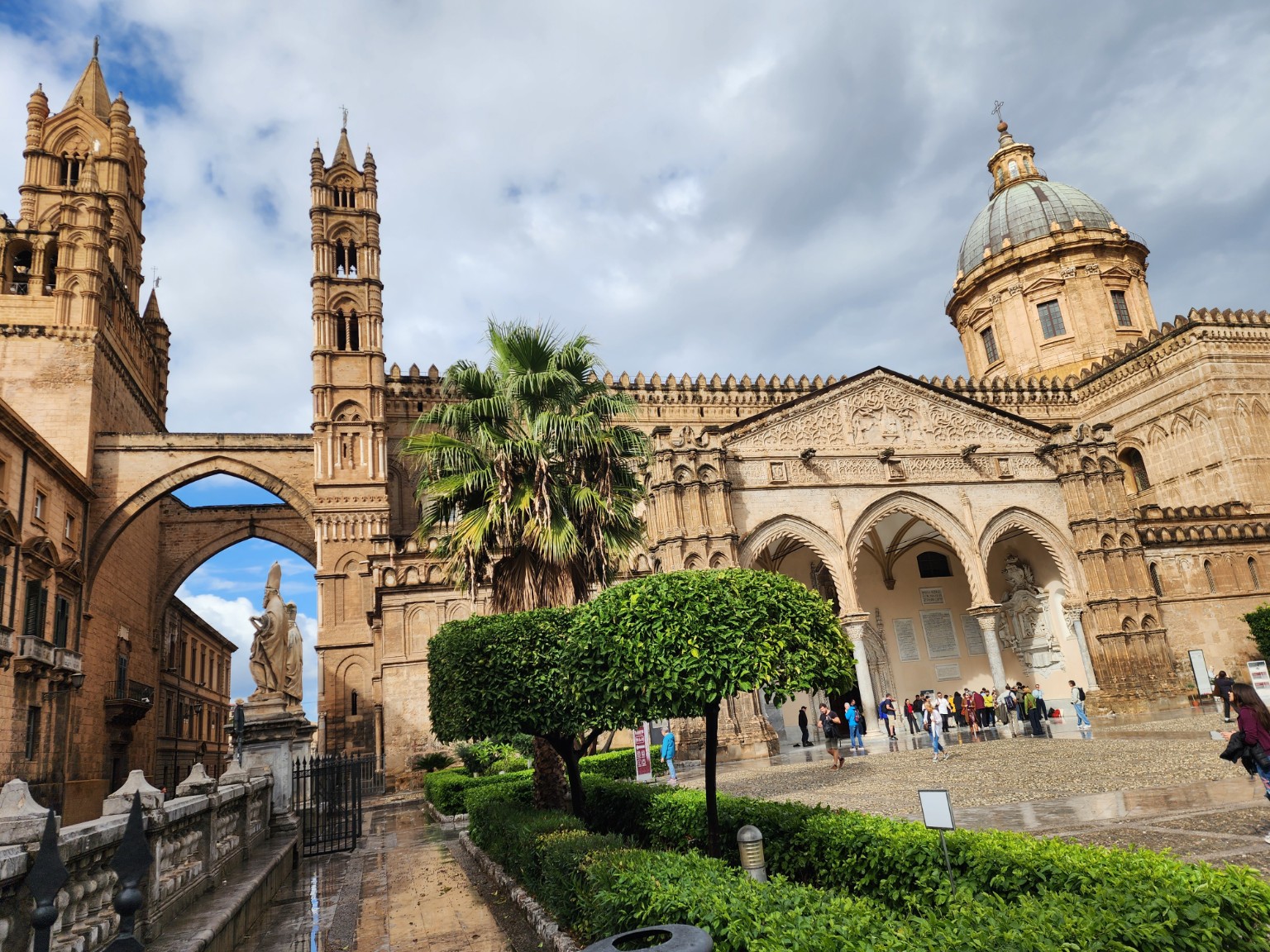
The cathedral is a particularly vivid example. Its exterior combines features accumulated across centuries, with towers, battlements and decorative stonework that resist any simple architectural label. A single view rarely tells the whole story. Walk around it and the building changes character.
Photograph hosted by VirtualTravelGuide.com.
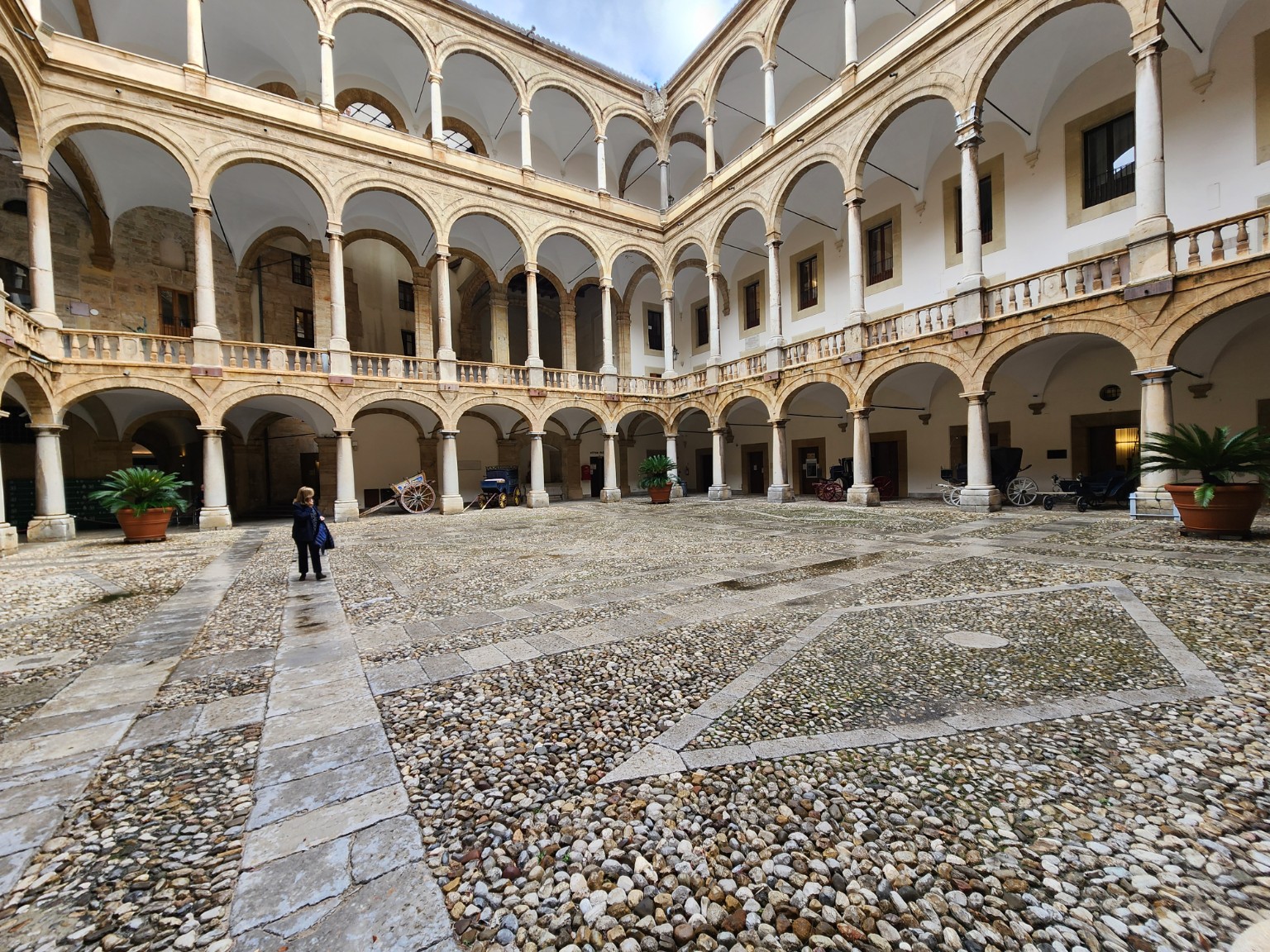
Courtyards offer a different rhythm. Their arches and sheltered spaces provide a welcome contrast to the noise outside, and they show why Palermo is best explored on foot. Sometimes the memorable part of a visit is the transition between the two.
Photograph hosted by VirtualTravelGuide.com.
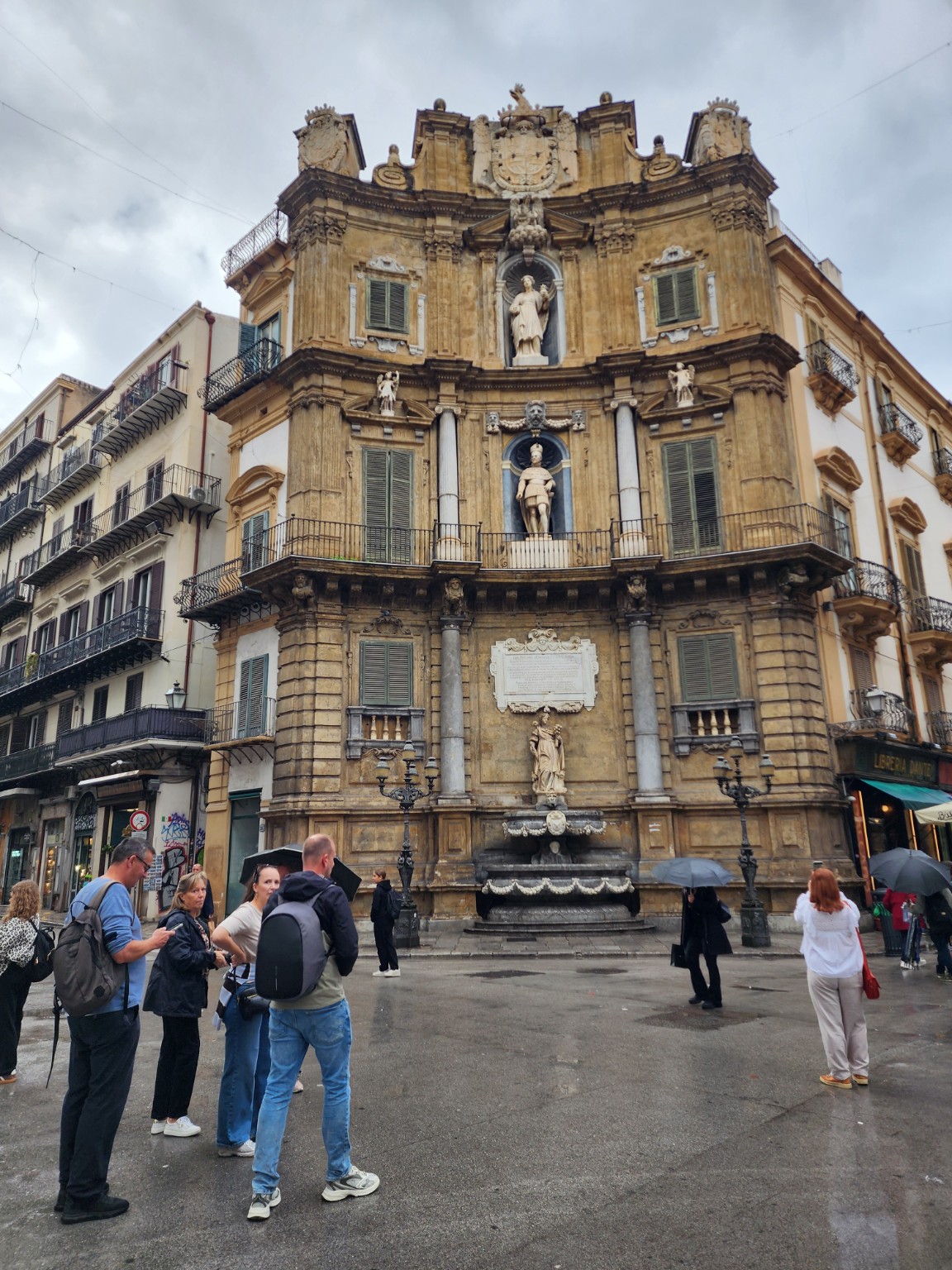
At Quattro Canti, architecture becomes urban theatre. The curved façades frame a crossroads, making the intersection itself the attraction. Nearby, Piazza Pretoria provides another kind of spectacle with its monumental fountain and surrounding buildings.
For a first visit, start with the Palermo must-see guide and leave extra time between stops. The city has too many small architectural surprises to experience as a checklist. Its strongest travel image may be the one you did not plan to take.