Vitoria-Gasteiz rarely receives the same attention as Bilbao or San Sebastián, but the capital of Spain’s Álava province has some remarkable cultural attractions. One of the most interesting is the Museo de Armería de Álava, a museum devoted to the history of arms, armour and warfare, where visitors can encounter the equipment of medieval and Renaissance warriors at remarkably close range.
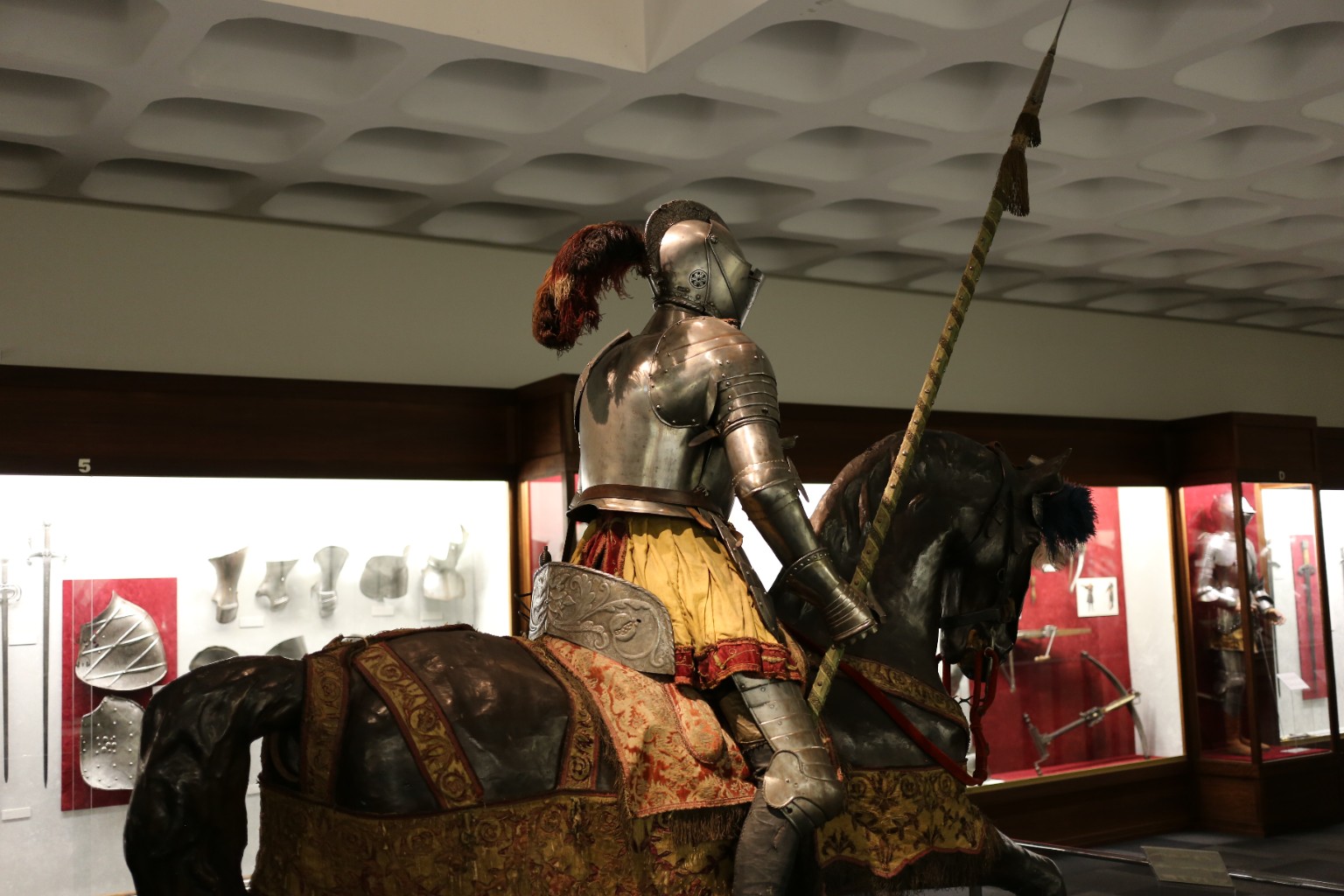
The museum’s most striking exhibits include a mounted knight in polished steel armour, holding a long decorated lance. A dark red plume extends from his helmet, while the horse beneath him is covered with elaborate patterned textiles and ornamental equipment. The combination of shining metal, rich fabric and imposing cavalry equipment creates an almost theatrical impression. Yet this is more than a decorative display. It illustrates an era when armour represented military technology, craftsmanship, social status and considerable wealth.
The surrounding galleries contain helmets, breastplates, swords and other weapons that trace the evolution of European warfare. Looking at these objects, visitors can appreciate the extraordinary skill of historical armourers, who had to balance protection, mobility and appearance. Every joint, fastening and carefully shaped steel plate had a practical purpose.
The Álava Armoury Museum also offers a broader perspective on the military history of the Basque Country, including the region’s connections to major European conflicts. Its collections make it an excellent destination for travellers interested in history, craftsmanship and museums that go beyond the usual tourist circuit.
Vitoria-Gasteiz itself deserves more attention. Its beautifully preserved medieval quarter, historic squares, green spaces and relaxed atmosphere make it an appealing alternative to the busier destinations of northern Spain. The armoury museum adds another reason to spend a day exploring the city rather than treating it as a brief stop between Bilbao and elsewhere in the Basque Country.
For photographers, the museum offers fascinating subjects: reflections on centuries-old steel, intricate metalwork, dramatic mounted displays and the contrast between dark armour and richly coloured fabrics. Photographing through glass cases can be challenging, however. Avoiding flash, positioning the lens close to the glass when permitted and carefully controlling reflections can make a substantial difference.
The Museo de Armería de Álava is a reminder that some of Spain’s most memorable cultural experiences are found outside its most famous museums. Sometimes a single exhibit, like a fully armoured horseman standing silently beneath the gallery lights, is enough to bring an entire historical period to life.