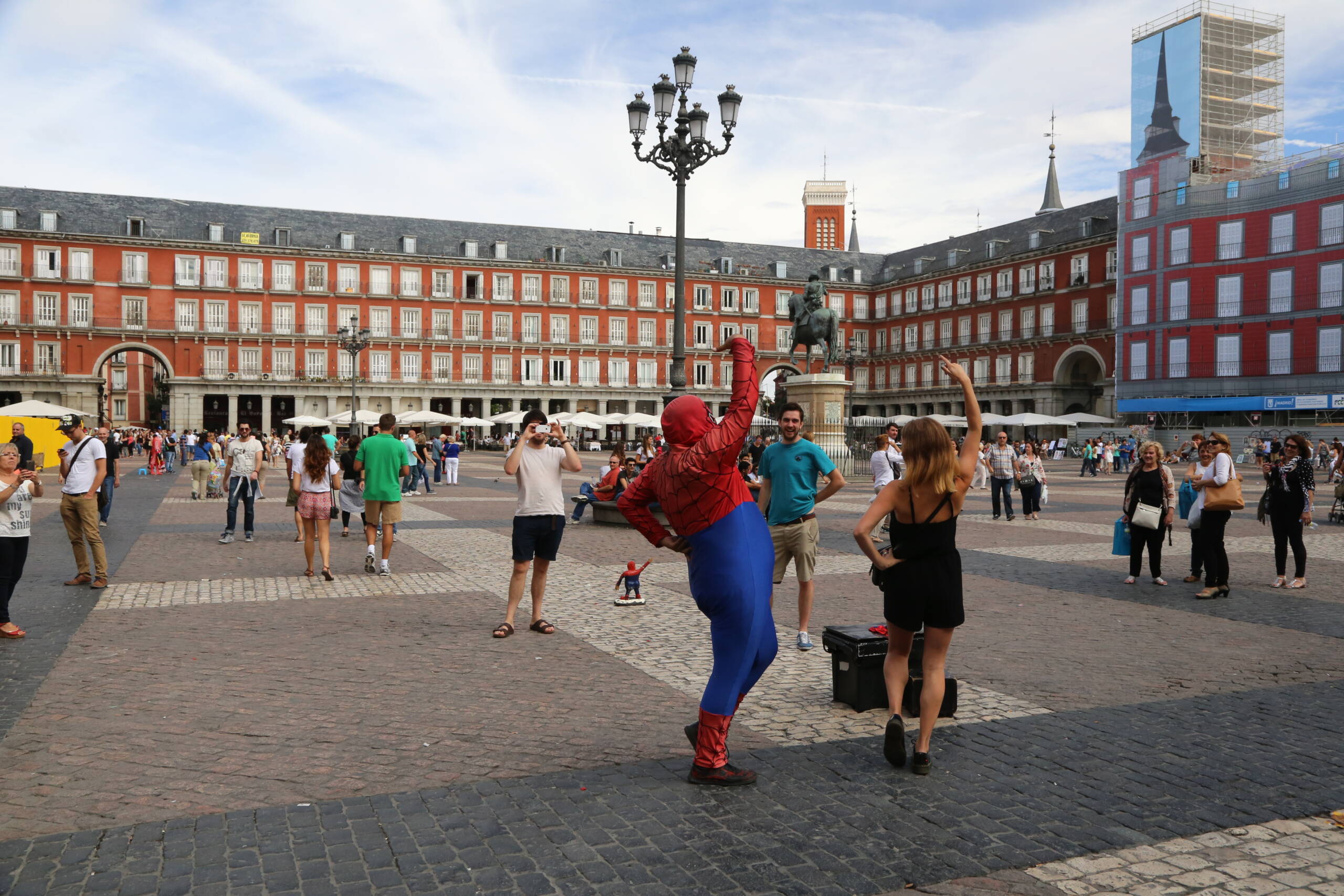
In the heart of Madrid’s Plaza Mayor, the scene unfolds like a metaphor for Spain’s supposed economic miracle. A man in a Spider-Man costume poses for photos, tourists cheer and laugh, and money exchanges hands in small, fleeting bursts of entertainment. It feels lively, colorful, even prosperous—just like Spain’s headline numbers. But beneath the surface, it is all performance, spectacle mistaken for substance.
The Spanish government boasts of strong growth, powered by record-breaking tourism numbers and foreign investment. Credit rating agencies have obliged with upgrades, pointing to Spain’s resilience compared to other European economies. Yet strip away the sheen, and what remains is fragile. Tourism is not an engine of sustainable prosperity but a sugar rush. Millions of short-term visitors inflate GDP figures, strain housing markets, and overwhelm public services, but they do not generate durable innovation or productivity. Cities like Barcelona and Palma de Mallorca have seen riots and protests against the flood of tourists, locals furious at being priced out of their own neighborhoods. Tourism produces crowds, not stability.
The same is true for immigration, hailed by Prime Minister Pedro Sánchez as a strength of the Spanish economy. In reality, immigrants often struggle to integrate into the labor market, many ending up in low-wage, precarious work while placing pressure on schools, healthcare, and welfare systems. The German lesson should serve as a warning: mass immigration does not automatically translate into economic vigor, but can just as easily deepen social strain, raise crime, and fracture cohesion. Spain is repeating the same mistake, dressing it up as a policy of compassion and growth.
Even the applause of credit rating agencies should be viewed with suspicion. Their upgrades reward short-term fiscal optics—lower deficits, rising consumption—while ignoring Spain’s chronic weaknesses: sky-high youth unemployment, low productivity, and an overreliance on temporary service-sector jobs. The real structural problems remain untouched, buried beneath the shallow glow of restaurant receipts and hotel bookings.
And while the government parades success, corruption scandals fester around Sánchez’s leftist administration. Instead of enacting reforms to strengthen the economy’s foundations, the political class spends its energy shielding itself from allegations of favoritism and shady deals. The image projected to investors and tourists is carefully curated; the rot beneath is ignored.
The truth is that Spain’s so-called boom is a masquerade, much like the Spider-Man street performer in Plaza Mayor. Entertaining, profitable for a moment, but ultimately ephemeral. A nation cannot live forever on tips from tourists. Real prosperity demands innovation, industry, and trust in institutions—none of which Spain is securing while it clings to the illusion of a tourism-driven golden age.