A chilly evening settled over Barcelona yesterday, the kind that makes you breathe a bit slower just to take it all in, and the Basilica of the Sagrada Família felt more alive than ever. The night marked a century since the completion of the tower of Barnabas — the very first of Gaudí’s planned eighteen towers, and the only one he lived to see fully rise from paper to stone. That detail alone gives the event a kind of emotional gravity; it’s not just another anniversary, it’s the moment the dream first became real. The ceremony leaned into that symbolism beautifully. Castellers from the local neighbourhood formed a human tower in the square outside — that almost poetic Catalan art form echoing Gaudí’s own architectural ascent — while the historic tower itself glowed warmly against the dark sky, illuminated as if briefly waking up the past.
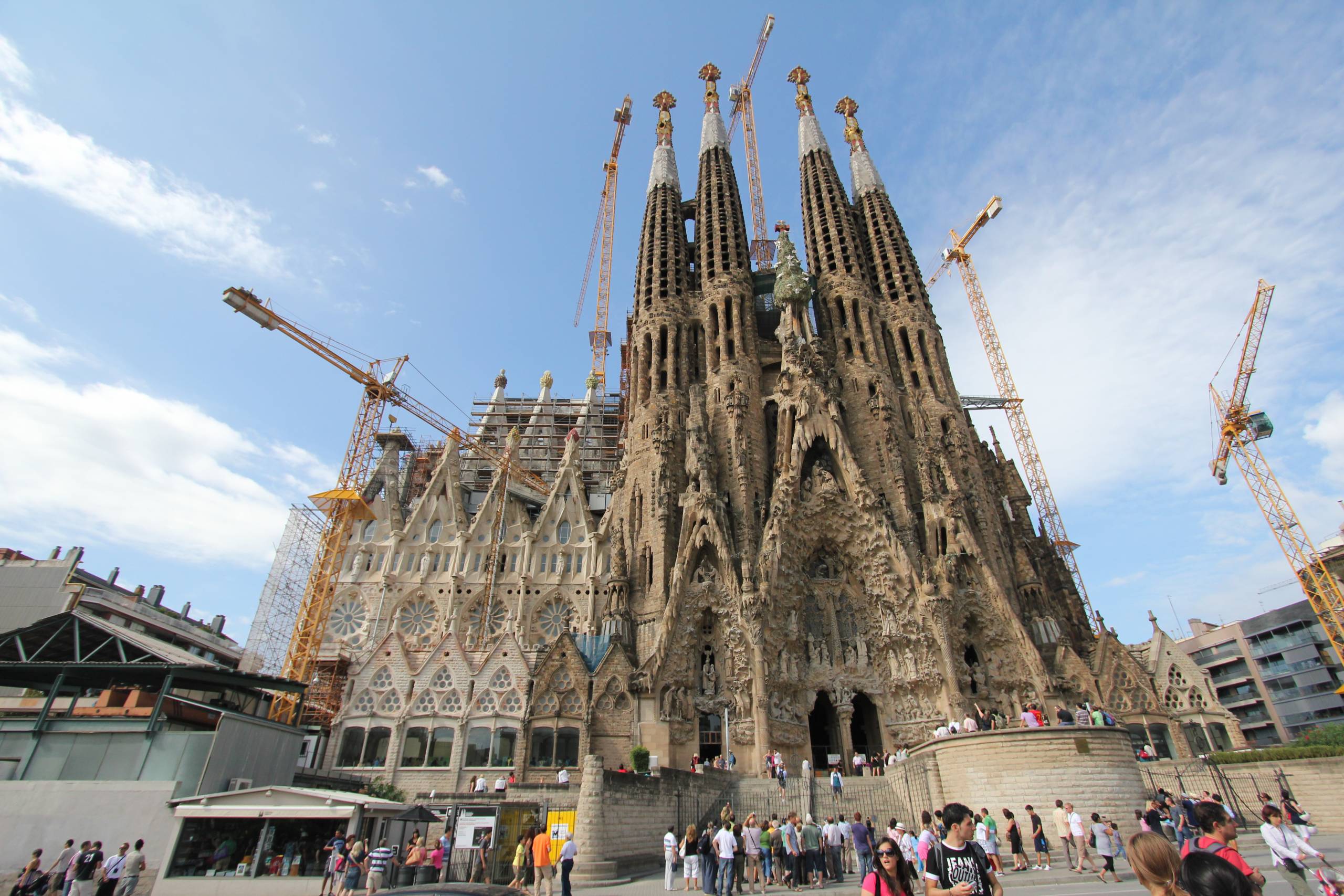
A quiet seriousness fell during the on-stage dialogue between Dr. Jordi Faulí, the current chief architect of the basilica, and Dr. Chiara Curti, whose research and architectural insight gave the moment a kind of scholarly heartbeat. They spoke less like lecturers and more like caretakers of a legacy that still isn’t finished. At one point, Dr. Faulí reflected on how this first tower became a tangible signal that the project was more than a vision — it was a beginning, and ultimately the foundation for everything still to come, including the monumental central tower dedicated to Jesus Christ, now finally nearing completion.
The evening closed with the opening of a new exhibition inside the basilica: 1925–2025. A hundred years of the completion of the tower of Barnabas. Gaudí’s first witness at the Sagrada Família. The title feels almost cinematic — the idea that this tower, silent and steady, has been observing every phase of Barcelona’s changing identity, every promise and every delay, every craftsman and every visitor. The exhibition will run through May 26, 2026, giving people time to linger with the story rather than rush through it.
Walking away, the basilica still lit behind you, the feeling isn’t simply celebration — it’s continuity. A century after one tower reached the sky, the work continues, almost stubbornly, defiantly, beautifully. And somehow, that slow, generational building feels like the most modern idea of all.
Leave a Reply