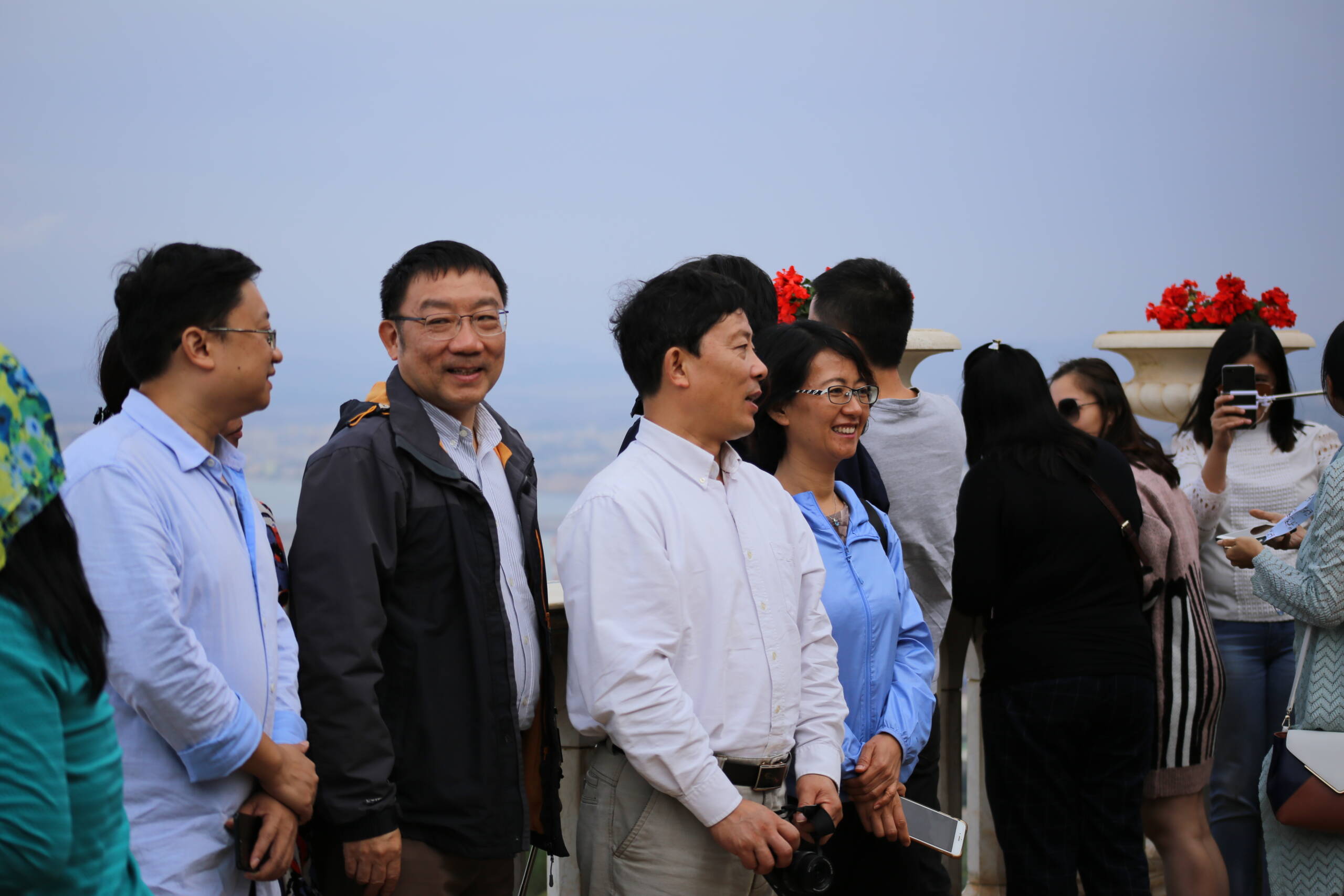
There’s a strange duality in the way Chinese tourism interacts with the global travel economy, and honestly, you can almost see it reflected in the photo — smiling tourists, relaxed, curious, phones held high as if collecting pieces of the world to bring home. On the surface, they look like any other group of travelers soaking in Venice’s soft morning light or the selfie-ready drama of European architecture. The image captures ease, friendliness, harmlessness — the human face of a rising superpower that prefers soft steps, not loud declarations. But underneath that cheerful exterior sits something more deliberate, and in some places, more strategically coordinated than most casual observers realize.
As China’s political stance has hardened in recent years — whether over Taiwan, the South China Sea, trade dependency, or territorial claims — its tourism footprint has increasingly become a tool rather than just an economic phenomenon. Where Chinese tourists go in volume, local businesses, retailers, hospitality chains and even mayors adapt. Visa policies quietly bend. Payment systems change. Government tourism boards reposition messaging to align with Chinese sensitivities. And when Beijing dislikes a political decision, the flow can tighten instantly, almost like someone closing a faucet. South Korea saw it over THAAD missile deployment. Taiwan saw it as cross-strait relations cooled. The Philippines and Japan have both felt it after maritime disputes. This wasn’t coincidence — it was policy through tourism.
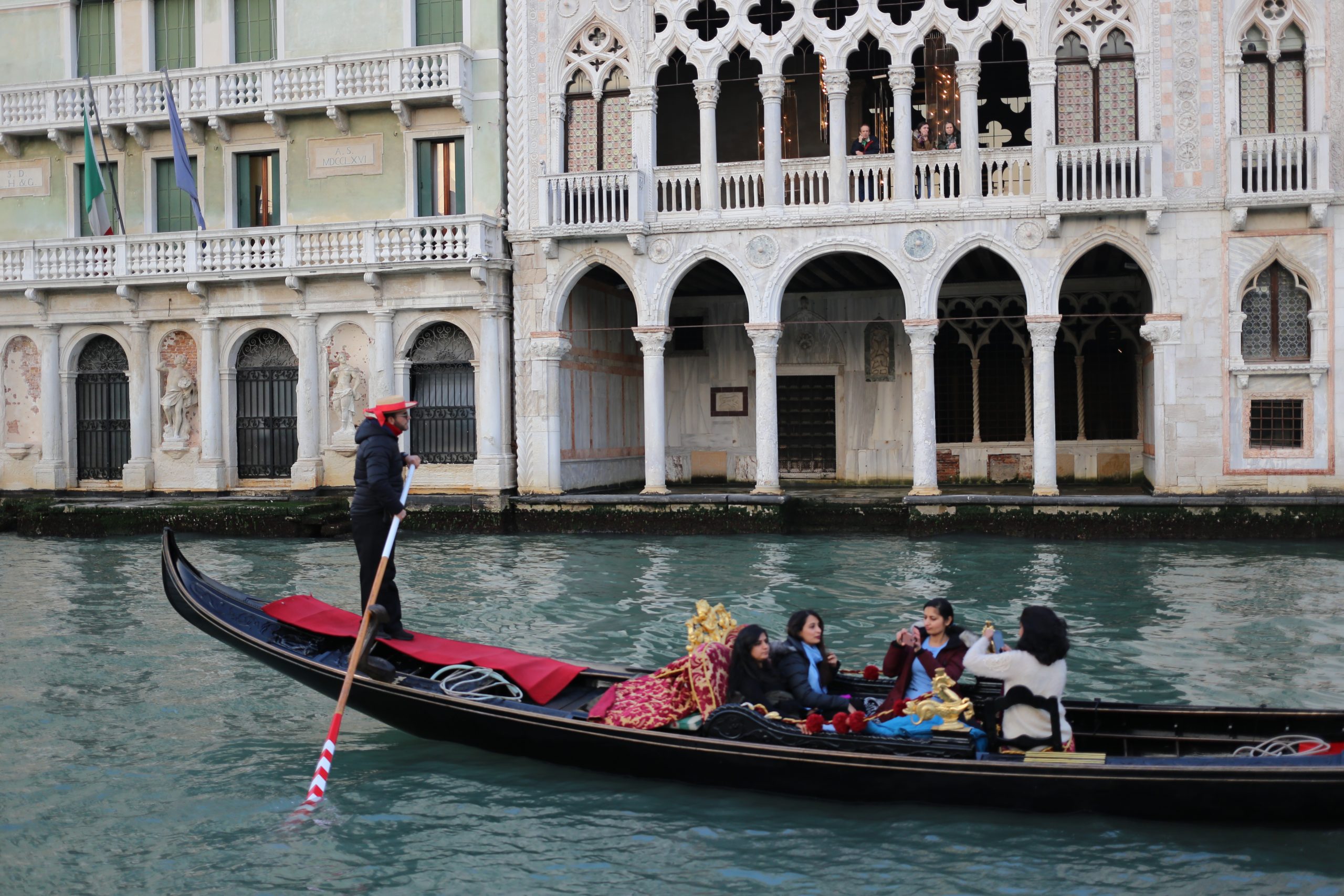
The smiling traveler, spending freely on luxury labels in Milan or snapping gondolas in Venice, becomes—perhaps unknowingly—a messenger. Their presence signals approval. Their absence signals punishment. It’s an extraordinarily effective form of leverage because tourism is local, emotional and financially immediate. No think tank report or naval posture leaves a mark as quickly as an empty cruise pier or shuttered souvenir district. Governments soften positions not because diplomats spoke, but because hotel occupancy fell.
At the same time, tourism becomes a vector for influence. Group tours — especially state-linked ones — follow carefully curated itineraries shaped by Beijing’s cultural, ideological and informational priorities. Local narratives get rewritten. Historic disputes get softened. Museums adjust text panels or add nuanced disclaimers to avoid offending one powerful customer base. Universities offering Mandarin-friendly exchanges sometimes find themselves rewriting riskier academic topics. Even media language around Tibet, Xinjiang, Hong Kong or Taiwan often shifts tone when a destination wants to remain “China-friendly.”
With all that said, the photo still matters. The travelers aren’t aggressors. They’re ordinary people experiencing the world. Some come to shop, others to eat, some just to see what exists beyond the Great Firewall. Most aren’t thinking geopolitically when they pose beside Venetian palazzi or snap pictures of European bridges. Yet the state that issues their passports is increasingly using their movement as a lever of power — turning wanderlust into geopolitical currency.
Travel, in theory, should be the great equalizer — the humanizing force that softens borders and broadens minds. But when one nation treats outbound tourism not just as leisure but as a strategic pressure valve, destinations can lose agency. Markets grow dependent, narratives bend, and suddenly smiling tourists aren’t just travelers; they’re signals, metrics, incentives and, at times, warning shots.
The real question isn’t whether Chinese tourism will influence global travel markets — it already does. The question is whether the next decade turns tourism into a subtle geopolitical battlefield where presence and absence speak louder than diplomats ever could.