The image already tells half the story before a single word is added: a winter sidewalk in Manhattan clogged not by chaos but by patience. People stand shoulder to shoulder in thick down jackets, wool hats pulled low, scarves wrapped tight, faces slightly flushed from cold and anticipation. A red delivery bike rests casually against a pole in the foreground, its crate strapped down as if even it knows it will be waiting a while. The brick wall behind the line feels heavy, old, absorbent of decades of conversations, complaints, jokes, and hunger. Overhead, the CVS heart glows with corporate cheerfulness, while just down the façade the vertical red KATZ’S sign cuts through time, refusing to modernize, refusing to apologize. Traffic lights blink at the corner, cars pass, life moves on, yet this line stays. No one looks shocked to be here. This is deliberate waiting, the New York kind.
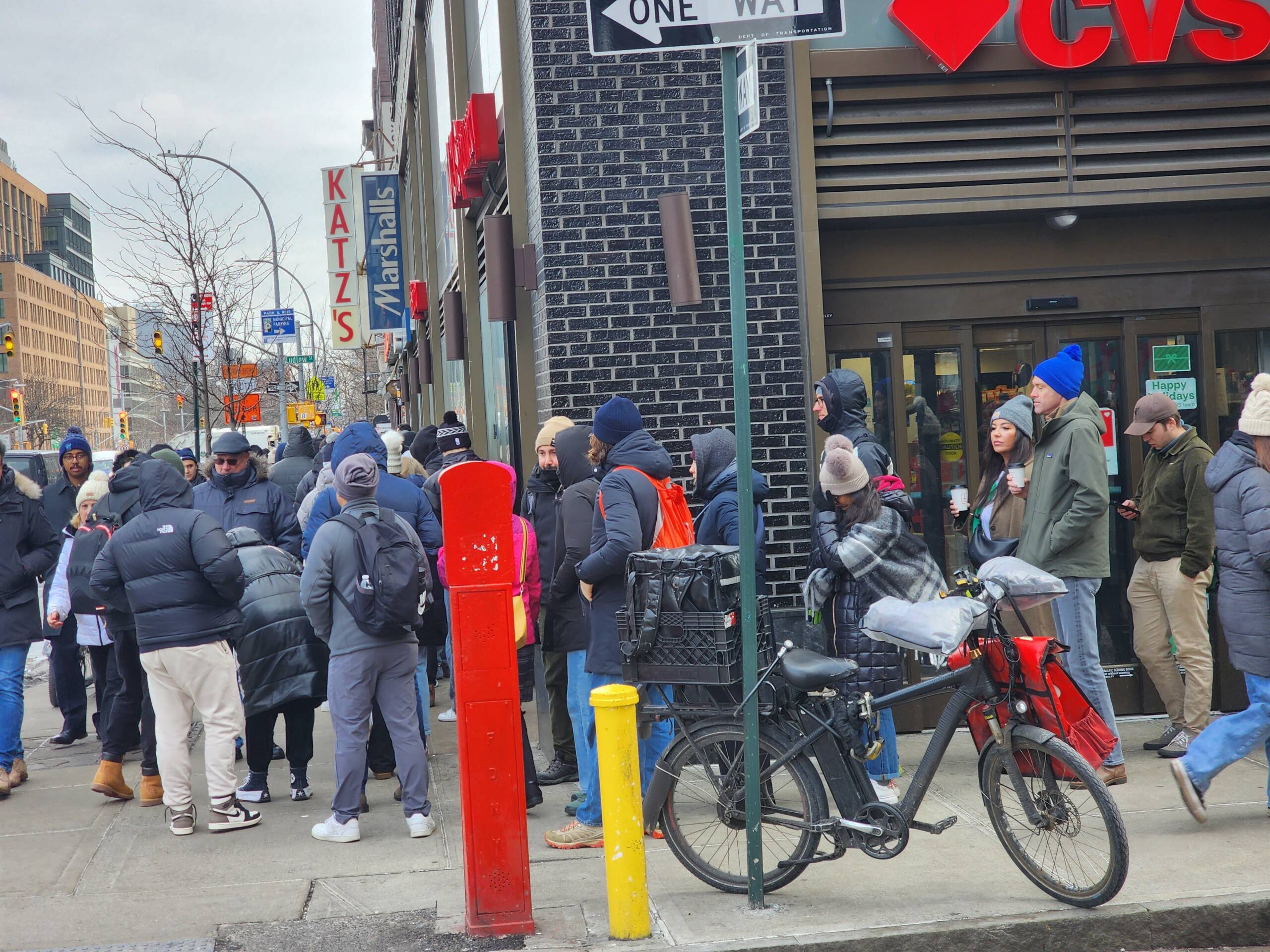
New Yorkers choose to stand in this line because Katz’s Delicatessen is not just a deli, it’s a cultural landmark where appetite, nostalgia, and myth overlap. This is the place that immortalized one of cinema’s most famous moments, when Meg Ryan’s character faked an orgasm at a small table while Billy Crystal watched in stunned admiration in When Harry Met Sally, prompting the deadpan line, “I’ll have what she’s having.” That scene didn’t just make Katz’s famous; it cemented the idea that food here is visceral, overwhelming, borderline obscene in its pleasure. People don’t come only to eat; they come to participate in a story they already know by heart. Standing in line is part of stepping into that script, a kind of off-camera buildup before the main act.
The pastrami is the real star, and it earns the wait with almost arrogant confidence. Katz’s pastrami sandwiches are legendary because they refuse restraint. Thick, hand-carved slabs of pepper-crusted beef collapse into soft rye bread, warm enough that the fat melts just as you lift it. No decorative plating, no clever reinterpretation, no influencer-friendly minimalism. This is excess with purpose. The meat is smoky, aggressively seasoned, tender to the point of surrender, and stacked so high it dares you to unhinge your jaw. You don’t nibble a Katz’s pastrami sandwich; you commit to it. The line outside functions as a kind of calibration period, giving your body and expectations time to catch up with what’s coming.
There’s also something deeply New York about the collective acceptance of discomfort in pursuit of authenticity. This city does not reward convenience alone; it rewards endurance when endurance leads somewhere meaningful. Waiting outside Katz’s in winter becomes a small badge of honor, a story you’ll tell later, a proof point that you didn’t shortcut the experience. Locals know this, tourists learn it quickly. In a place where you can get almost anything delivered instantly, choosing to stand still on a cold sidewalk is a conscious rejection of ease. It says: some things are better when they’re not optimized.
By the time you finally step inside, ticket clenched tightly like a boarding pass, the line has already done its work. You’re primed, slightly irritable, very hungry, and fully aware that you’re about to eat something that generations before you have eaten in almost exactly the same way. When the cutter slaps a slice of pastrami onto the counter for you to taste, juicy and steaming, the wait snaps into focus. The sidewalk, the cold, the line, the movie scene, the legend—it all collapses into that single bite. And suddenly the question isn’t why New Yorkers stand in line at Katz’s. It’s why anyone would expect them not to.
Leave a Reply