It starts as a simple curiosity — a glimpse of silver crowns glinting under exhibition lights or a flash of deep indigo fabric embroidered with impossibly tiny stitches — and suddenly there’s a journey unfolding across mountain ranges, borders, and river valleys. The Hmong, sometimes called Miao in China, are one of those cultures that don’t live neatly inside the lines nations have drawn. Their story stretches across southwestern China, northern Laos, the misty highlands of Vietnam, and the green slopes of northern Thailand, and following it feels a bit like chasing the echo of an ancient song that survives because generations refused to let it fade.
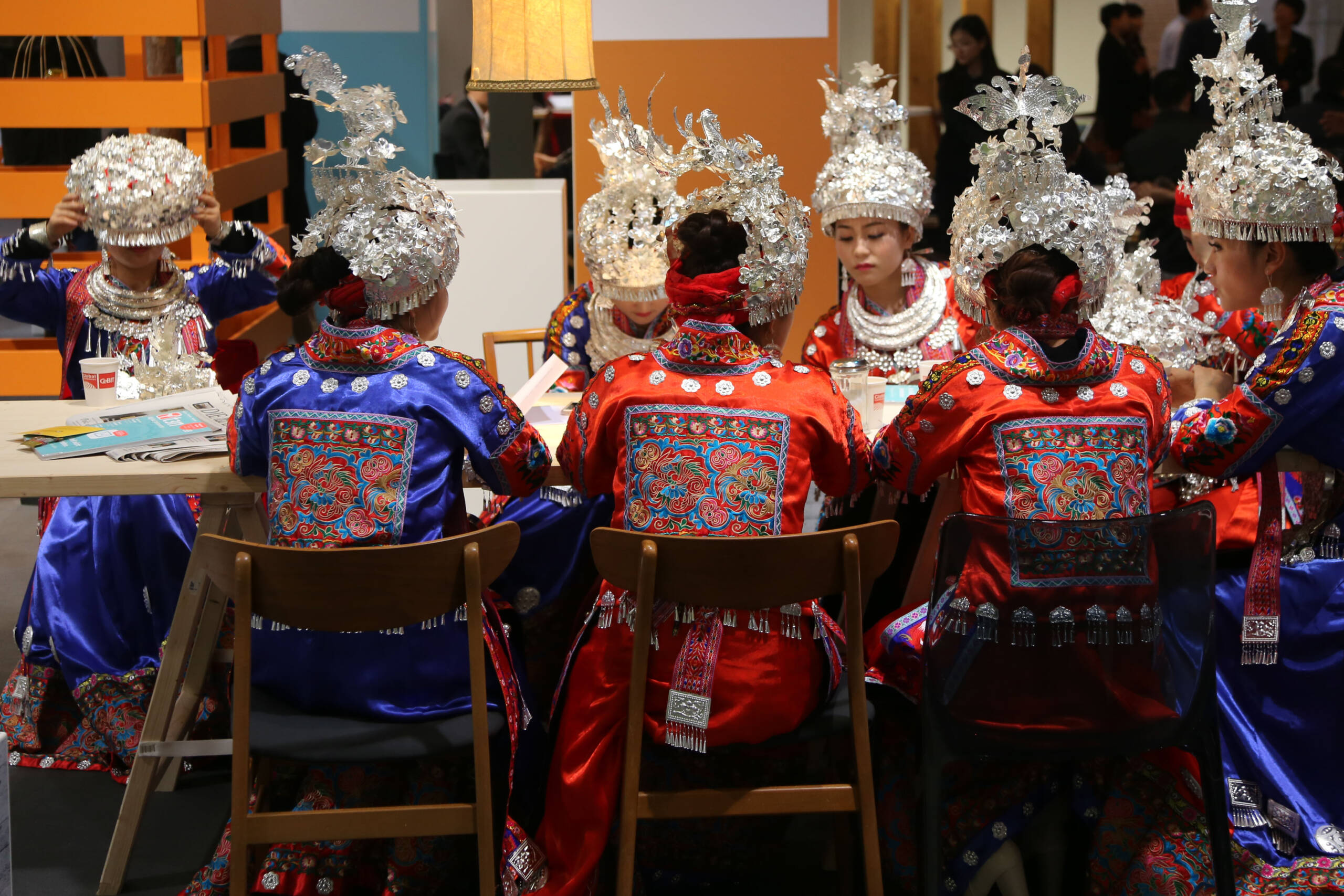
The journey almost always begins in Guizhou or Yunnan, where Hmong villages cling to terraced hillsides wrapped in fog. Morning smells like woodsmoke, and somewhere a woman with steady hands and a quiet stare is hammering silver into crescent-shaped necklaces. Festivals here don’t feel staged — drums, reed pipes, embroidered skirts swinging in circles, and those towering silver headdresses that look like chandeliers balanced on human heads. If you’re lucky enough to be there during Sisters’ Rice Festival or New Year, everything becomes louder, brighter, and more intimate, like you’ve wandered into a story rather than a tourist site.
Eventually, curiosity pushes you south into Laos, where the pace softens and the landscape grows wilder. Hmong villages here feel quieter, sometimes remote, reached by winding mountain roads that test patience and suspension. Kids wave, dogs look suspicious, and suddenly someone invites you into a home without ceremony. Indigo-dyed fabrics hang like memory along bamboo walls, and silver jewelry is still treasured — but the style is slightly different, more personal, less ceremonial. You start noticing how Hmong identity shifts with geography — same roots, different branches.
Crossing into northern Vietnam, especially around Sapa, brings another turn. Markets here feel like an explosion of color: bright embroidery, bold patterns, coins sewn into headscarves, and vendors negotiating prices with that half-amused expression that says they already know you’ll buy something. The Hmong communities here are incredibly visible, woven into the rhythm of daily life, and meeting them — especially on trekking routes carved into rice terraces — feels like part of the landscape rather than an arranged cultural encounter.
By the time the road leads into northern Thailand, around Chiang Mai, Mae Chaem, or the mountains bordering Myanmar, the story shifts again. Many Hmong here arrived as refugees decades ago — families uprooted by wars that redrew borders but didn’t erase identity. Their embroidered fabrics carry symbols of memory, migration, protection. Sometimes it feels like the craft itself remembers what the world wanted them to forget.
Not every moment along this route is postcard-perfect. Sometimes it’s muddy roads, language barriers, awkward misunderstandings, and long stretches of silence you don’t quite know how to interpret. But somewhere between handcrafted silver, handwoven cloth, ancient ceremonies, and the everyday small gestures — shared tea, a shy smile, a grandmother threading a needle without looking — you understand why people travel for culture, not just scenery. And the surprising part is that you don’t just observe the Hmong heritage; you start tracing it, like a thread that crosses mountains and borders yet remains unbroken. It’s the kind of journey that sits with you long after the suitcase is unpacked.