The Cloisters did not appear in Upper Manhattan by accident, nor was it the product of vague romantic nostalgia. Its creation was deliberate, expensive, controversial in places, and very much a product of early-20th-century American ambition. The driving force behind it was John D. Rockefeller Jr., who funded the project almost entirely and donated both the land and the building to The Metropolitan Museum of Art. Rockefeller was not collecting medieval Europe as décor; he believed deeply in public institutions and saw art, architecture, and landscape as moral and educational forces. In the 1920s and 1930s, as New York asserted itself as a global capital, Rockefeller wanted a place where Americans could encounter medieval art in an environment that felt structurally and spiritually coherent, not just as isolated objects on white walls.


The intellectual foundation, however, came from George Grey Barnard, whose role is often simplified or skipped altogether, unfairly. Barnard was a sculptor, not a museum administrator, and between roughly 1906 and 1913 he traveled extensively through rural France, acquiring medieval architectural fragments—cloisters, capitals, doorways, reliefs—from monasteries that were abandoned, damaged, or dismantled in the aftermath of the French Revolution and subsequent secularization laws. These were legal purchases, though later generations would debate the ethics and aesthetics of such acquisitions. Barnard assembled his finds into a private museum in Washington Heights called “The Cloisters,” opened in 1914. It was chaotic, atmospheric, and deeply imaginative, more romantic ruin than scholarly reconstruction. When Rockefeller visited, he recognized both its flaws and its potential.
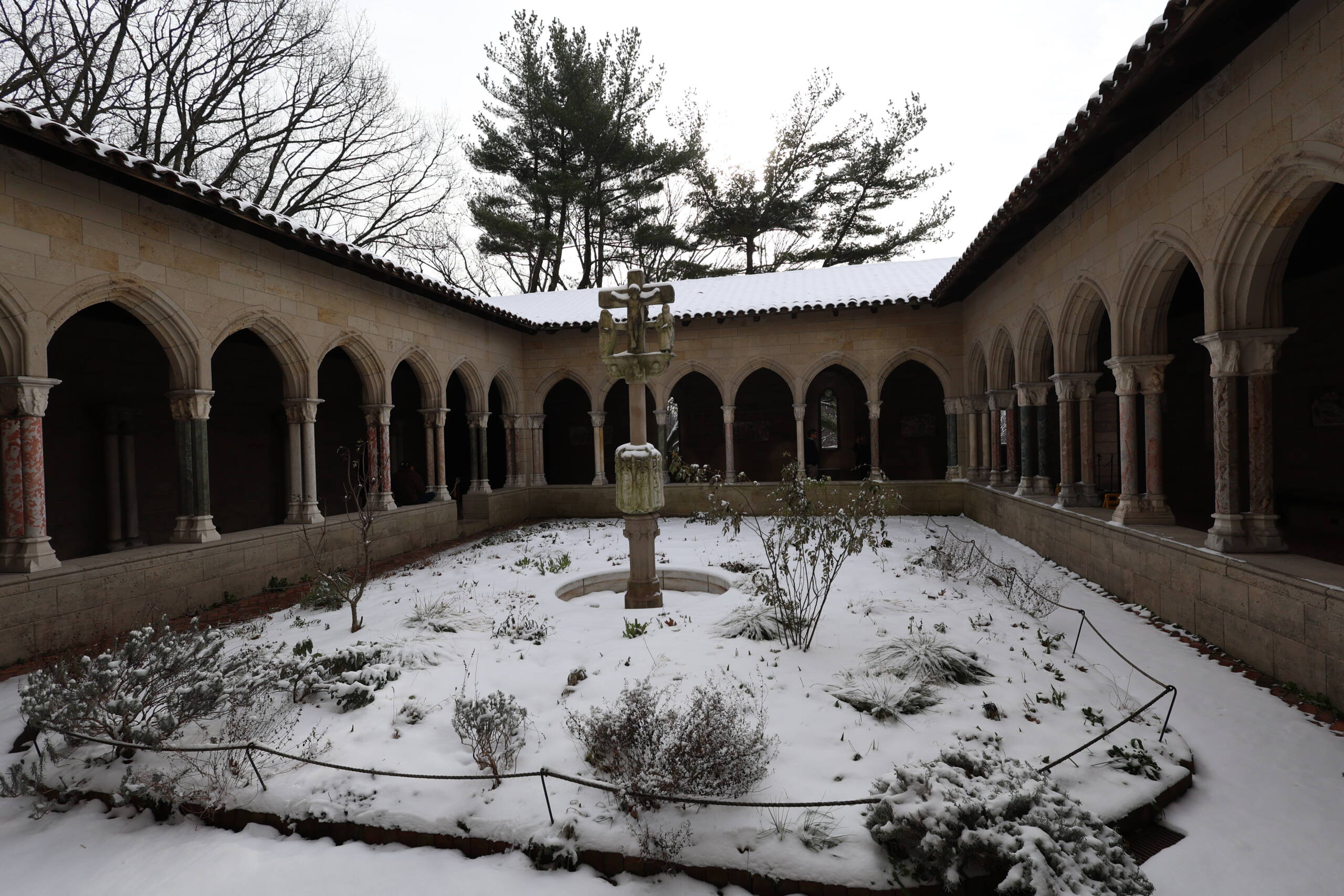
The modern Cloisters, as visitors know it today, were conceived after Rockefeller purchased Barnard’s collection in 1925 and placed it under the care of the Met. Construction began in the early 1930s, and the museum officially opened to the public in 1938. The building was designed not as a single medieval structure transplanted wholesale, but as a composite—an architectural synthesis created by scholars and architects using authentic medieval elements from multiple European sites. Cloisters from Saint-Michel-de-Cuxa, Saint-Guilhem-le-Désert, Trie-sur-Baïse, and Froville were integrated into a newly designed framework that respected medieval proportions, materials, and spatial logic without pretending to be a literal reconstruction. The stone is real; the arrangement is interpretive. That distinction is essential to understanding why the Cloisters work.
Equally important is the setting. Rockefeller insisted that the museum be surrounded by landscape, not streets, which led to its placement in Fort Tryon Park, overlooking the Hudson River. The idea was not historical accuracy—no medieval monk ever saw the Palisades—but psychological continuity. The isolation, elevation, and greenery were meant to prepare visitors before they ever reached the door, easing the transition from modern city to pre-modern world. Even today, that approach matters. You arrive slightly out of breath, slightly quieter, already halfway removed from Manhattan’s tempo.
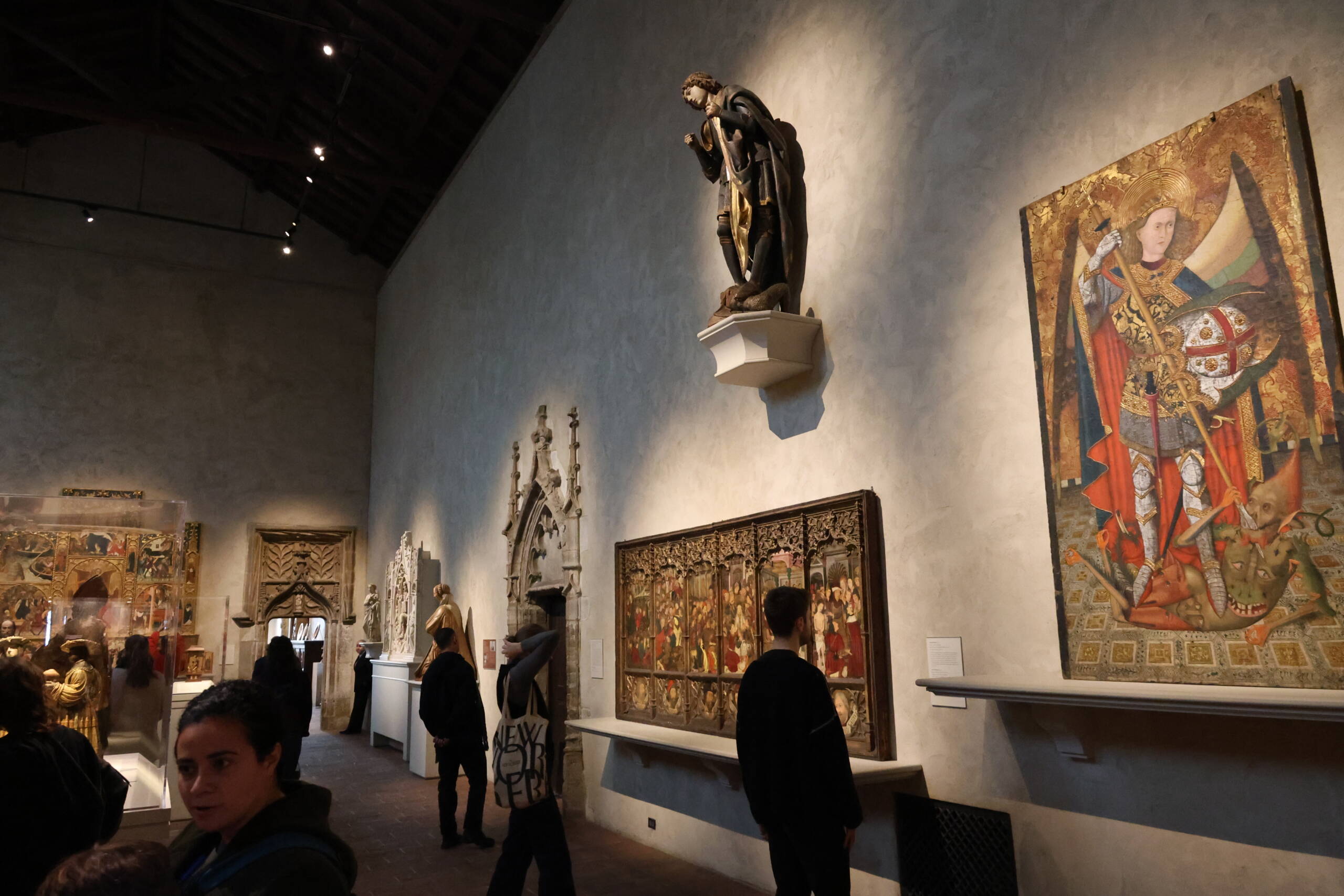
Inside The Met Cloisters, the philosophy becomes tangible. Romanesque halls are heavy and grounded, Gothic rooms rise higher and feel lighter, and cloister gardens function as spatial pauses rather than decoration. Tapestries were given rooms with controlled daylight because they were never meant to be viewed under harsh artificial light. Stone sculpture is placed above eye level where it originally belonged, restoring its intended relationship to the body. Even the cold you feel moving between interior galleries and open courtyards in winter is intentional, a reminder that medieval spaces were not thermally comfortable, but experiential.
What makes the Cloisters remarkable—and still occasionally misunderstood—is that it is neither a replica nor a ruin. It is an argument made in stone: that fragments, when treated with respect and scholarship, can form a truthful historical experience even when displaced geographically. Rockefeller provided the means, Barnard provided the raw material, and the Met provided the discipline to transform a private vision into a public institution. The result is not medieval Europe reborn in America, but something more honest and more interesting—a 20th-century American interpretation of the medieval world, built with medieval hands still visible in every block.
Seen this way, the Cloisters are not a curiosity at the edge of the city but a statement. They reflect a moment when the United States believed it could inherit, preserve, and reinterpret global culture responsibly. Walking through them today—especially in winter, when stone, silence, and snow sharpen the illusion—you are not stepping into the Middle Ages. You are stepping into a carefully constructed bridge between centuries, built deliberately, thoughtfully, and with full awareness that history is something we assemble, not something we simply find.
Snow changes the approach before it changes the building. The cobblestones curve gently upward, slick and dark with meltwater, while thin white lines settle into the gaps between stones like quiet punctuation. Ahead, the medieval tower of the Cloisters rises with a seriousness that feels almost un-New York, its Romanesque windows cut deep into thick stone, indifferent to traffic cones and scaffolding wrapped in translucent plastic. Red vertical banners hang against the grey walls, their modern typography an oddly honest contrast, admitting that this place is both a museum and a time machine. Bare branches frame the sky, and everything feels hushed, as if the city has stepped back a pace to let something older speak first.
Inside, the transition is immediate and physical. The light drops, the air cools, and the walls close in just enough to slow your walk without asking permission. One gallery opens into another like chapters written centuries apart but bound into the same book. Carved stone figures lean forward from high brackets, frozen in gestures of prayer or warning, while large medieval panels glow softly under controlled light, their golds and reds still stubbornly alive. Visitors move carefully, voices lowered, coats still half-zipped as if unsure whether they are indoors or merely sheltered. The ceiling beams run dark and heavy overhead, and the space smells faintly of old wood and stone—maybe imagined, but convincing all the same.
Then come the tapestries, which change everything. Rooms widen, floors gleam with reflected window light, and suddenly walls are alive with forests, animals, hunters, and symbols that refuse to explain themselves quickly. The famous unicorn scenes feel less like illustrations and more like environments, dense with leaves and motion, their deep greens echoing the winter trees visible through leaded windows. The contrast is striking: outside, branches are bare and sharp against the sky; inside, vegetation is eternal, woven into wool and silk, immune to season. People stand farther back here, instinctively, as if the images need breathing room. Footsteps soften, conversations dissolve into murmurs, and time stretches in a way New York rarely allows.
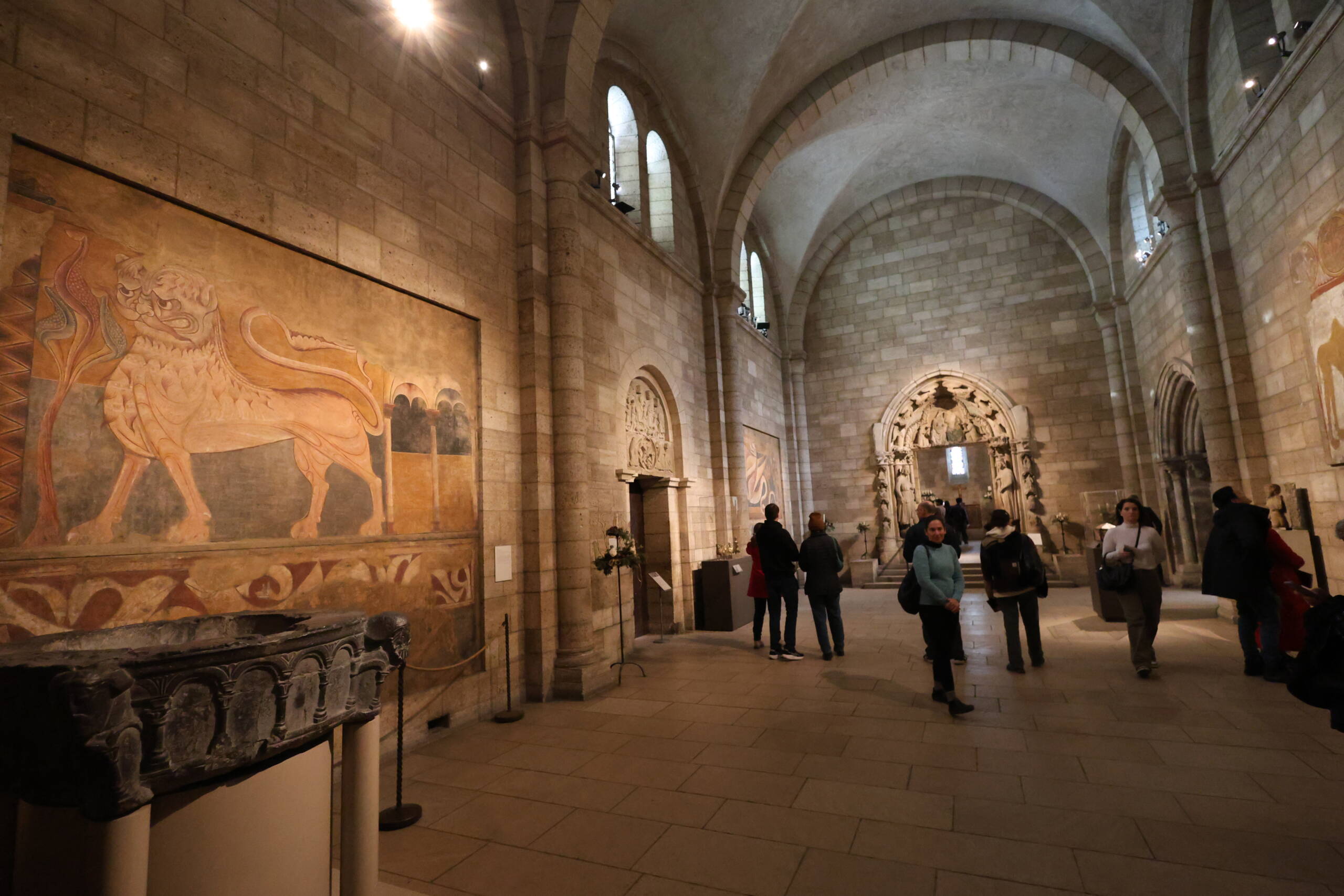
The lower halls return to stone and weight. Rounded arches repeat rhythmically, drawing the eye forward toward carved portals that once belonged to monasteries scattered across Europe. Painted beasts stride across ancient walls—lions, griffins, creatures half-real, half-symbol—still guarding thresholds long after their original doors vanished. The geometry is calming: thick columns, balanced vaults, symmetry that feels earned rather than designed. Visitors drift in small groups, pausing, resuming, occasionally looking up in quiet surprise. No one rushes. Even phones come out less often here, which feels like a small miracle.
The cloister garden itself sits at the center like a held breath. Snow blankets the low plants, softening their shapes into something almost abstract, while a stone cross rises from the middle, pale and steady. Arcades wrap the courtyard on all sides, their columns varied in color and age, telling subtle stories of reuse and rescue. Beyond the walls, tall trees loom, reminding you that this hill still belongs to Manhattan, even if the centuries say otherwise. It’s cold, yes, but the kind that sharpens rather than bites, and standing there you feel suspended between places—Europe and America, past and present, museum and monastery.
Leaving the Cloisters always takes a moment. The city returns slowly, like sound fading back in after a pause. Streets reappear, traffic resumes, phones buzz again. But something stays with you—the memory of stone under snow, of woven forests glowing indoors, of silence that wasn’t empty but full. The Cloisters don’t compete with New York’s energy; they sidestep it entirely. And that, oddly enough, makes them feel essential.
Leave a Reply