This image from IMTM 2026 is a neat, almost textbook example of how cruise brands market aspiration through structure, and how the romance of the open sea is deliberately staged inside fluorescent-lit exhibition halls. The MSC Cruises and Explora Journeys pavilion doesn’t try to overwhelm. It doesn’t rely on flashing screens or loud promises. Instead, it builds authority through restraint. Deep navy panels, generous spacing, clean typography, and a calm visual hierarchy do the work quietly, signaling scale, confidence, and permanence. This is important, because cruise marketing at trade shows is rarely about selling a specific itinerary on the spot. It’s about reassuring agents, tour operators, and partners that the brand is stable, premium, and easy to sell six or twelve months down the line.
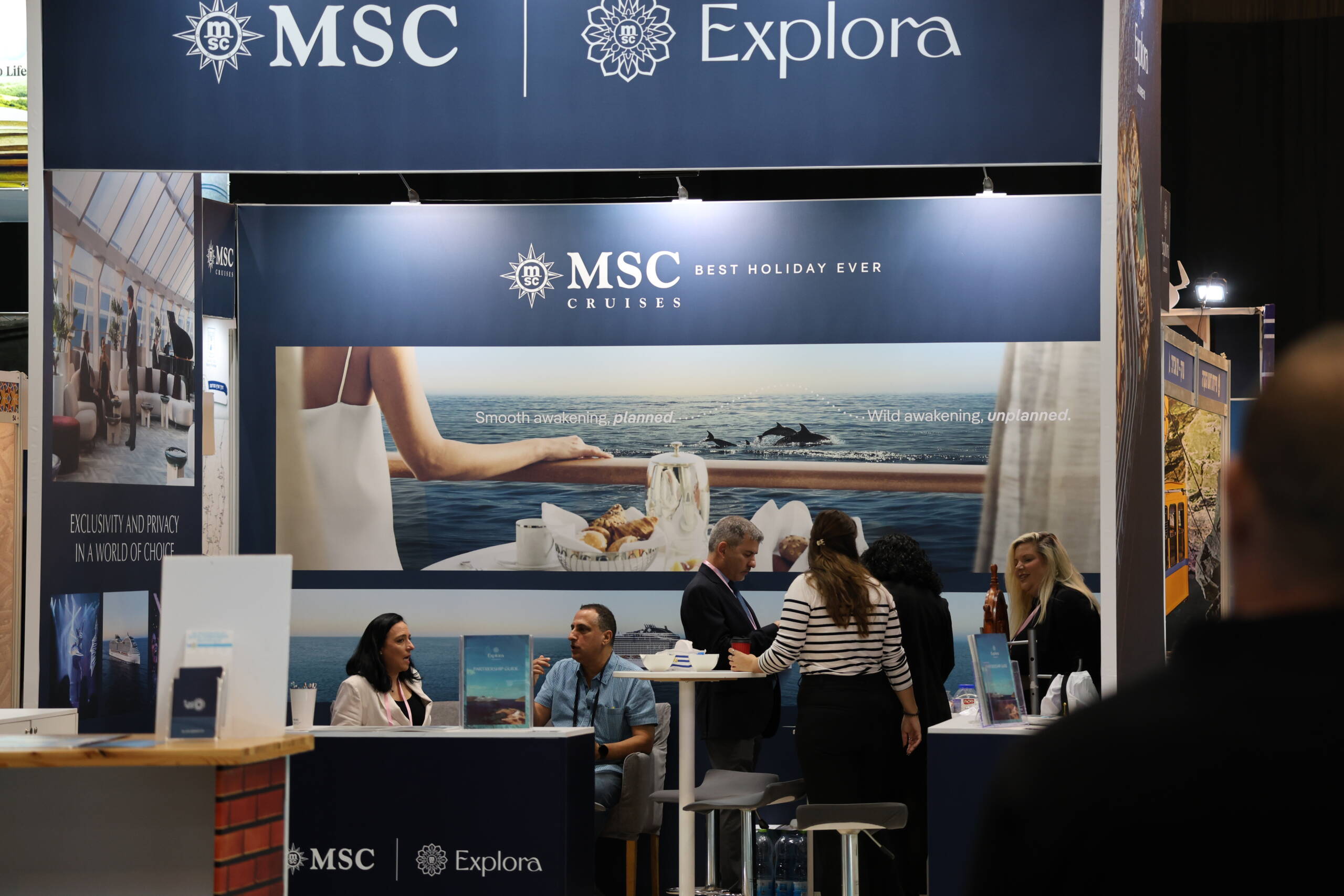
At the center of the stand, a wide photographic banner shows a breakfast table set against an open sea, dolphins surfacing just beyond the ship’s railing. The image is not accidental. It compresses the entire cruise promise into a single frame: nature at arm’s length, comfort in the foreground, surprise safely contained. Even the slogan avoids urgency. “Smooth awakening, planned” versus “wild awakening, unplanned” suggests that whatever unpredictability exists, it has already been curated. This kind of visual language is especially effective in trade-show environments, where attendees are saturated with competing destinations and need instant emotional shorthand. Cruises, unlike hotels or city tourism boards, must sell motion, duration, and trust all at once. A static image has to imply a moving experience without creating anxiety.
What makes the photograph particularly revealing is what happens below that banner. The foreground shows the real transaction layer of cruise marketing: people sitting, standing, leaning in, talking. No one looks rushed. Coffee cups sit casually on high tables, brochures are present but not pushed. The conversations appear measured, almost routine, which is precisely the point. For cruise lines, trade shows are about normalization. They are about making a complex product feel familiar, repeatable, and low-friction for intermediaries. The calm body language, the absence of hard selling, and the almost lounge-like posture of participants all communicate that this is a mature product category, not a novelty.
Cruise brands also use trade shows to reinforce segmentation. MSC Cruises and Explora Journeys share the same physical space here, but the branding subtly separates them. MSC represents scale and accessibility, while Explora leans into quiet luxury. Presenting them together allows the company to signal breadth without confusion: one ecosystem, multiple price points, unified operational strength. For agents walking the floor, this matters. It simplifies portfolio decisions and makes cross-selling easier. A single conversation can cover multiple client profiles, from family travelers to high-end experiential seekers.
Another understated but crucial aspect visible in the image is the booth’s verticality. The branding rises high above eye level, ensuring visibility across the hall, but the interaction zone remains human-scale. This reflects a broader cruise marketing strategy at trade fairs: dominate visually from a distance, but soften the experience up close. Cruises are long commitments for travelers and reputational commitments for agents. The marketing environment has to feel safe, predictable, and professional. Loud spectacle might attract attention, but it can undermine trust.
Seen through this lens, the image becomes less about ships or destinations and more about process. Travel trade shows like IMTM are not where dreams begin; they are where dreams are packaged, standardized, and redistributed. Cruise lines participate not because they expect immediate bookings, but because absence would signal weakness. Presence, consistency, and visual coherence are the real currencies. This pavilion says, without ever stating it directly, that the cruise product is ready, reliable, and already selling itself.
In that sense, the photograph captures cruise marketing at its most honest. The sea exists on the wall, perfectly lit and carefully framed, while the business of turning that sea into contracts happens quietly below. The magic is not lost; it’s simply deferred. First to the agent, then to the brochure, then to the traveler standing at a real railing months later, coffee in hand, believing—perhaps without realizing why—that this was always going to work.
Leave a Reply