The photo sets the tone before the argument even begins. A brightly lit national pavilion rises inside a cavernous exhibition hall, all clean lines, pale wood panels, and glowing white signage that repeats the slogan “Emotions Are Georgia” from every angle, suspended like a promise above the crowd. Large, high-resolution screens show postcard versions of the country: snow-covered mountain ridges, a historic city perched on a cliff, sunlit landscapes carefully chosen to feel calm, open, welcoming. At ground level, neat white desks line the stand, each branded with municipal logos, including Batumi, and staffed by quietly attentive representatives. An Israeli flag sits on one of the tables, a small but telling signal of diplomatic normalcy. Around the pavilion, neighboring booths advertise Jerusalem and other destinations, all of it framed by trusses, spotlights, and the neutral gray-black ceiling of a major international tourism fair. The scene feels orderly, apolitical, almost soothing, which is exactly why the unease creeps in a moment later, because the distance between trade-show presentation and geopolitical reality can be uncomfortably wide.
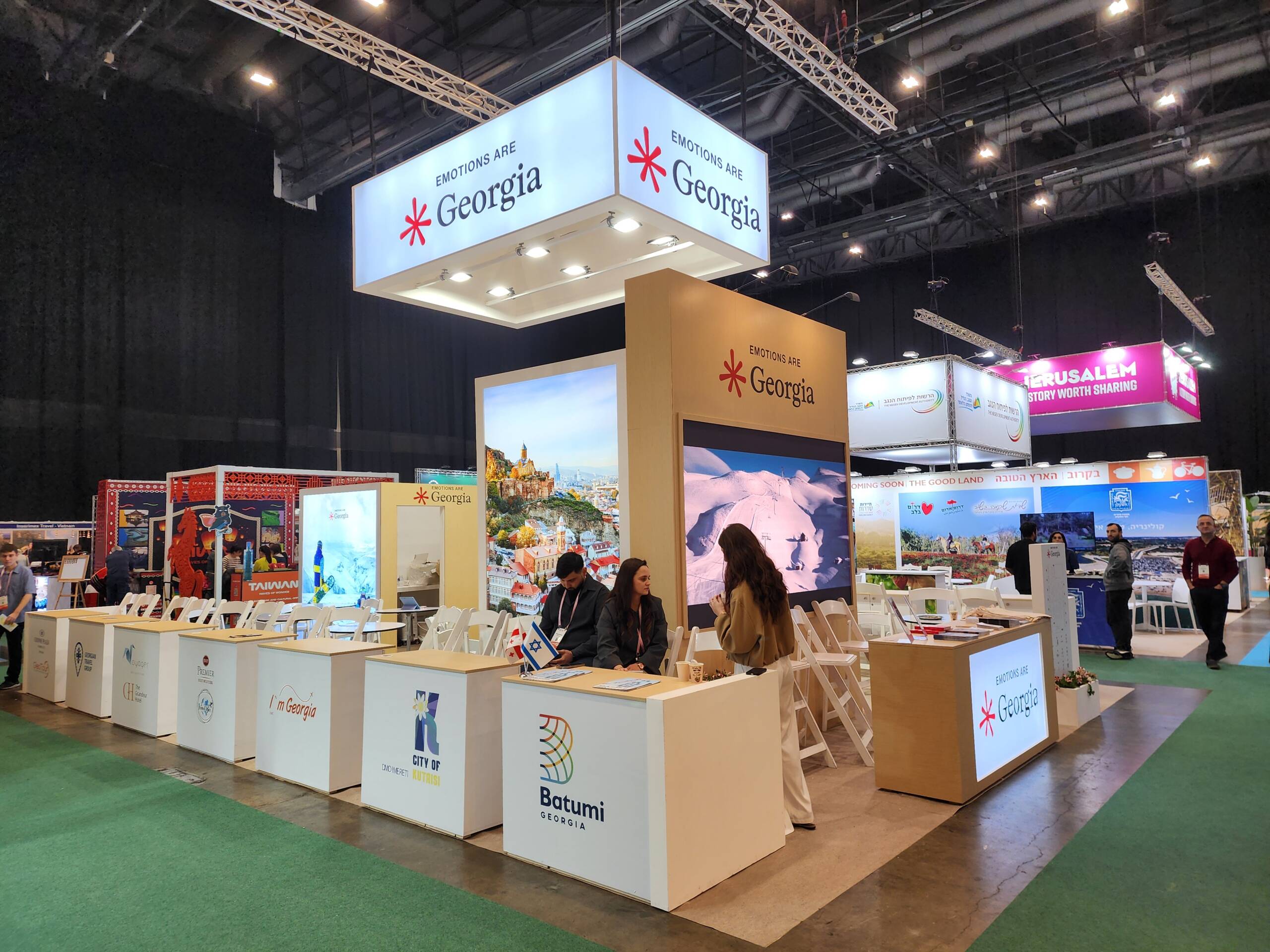
When people ask whether visiting Georgia is risky, the question is rarely about crime, infrastructure, or even day-to-day safety. It is about alignment, leverage, and worst-case scenarios that don’t show up in glossy brochures. Georgia markets itself as European-leaning, culturally open, and eager for Western tourism, and much of that is genuinely true at the societal level. At the same time, it sits in a geopolitical pressure zone dominated by Russia, with occupied territories, economic dependence, and a ruling elite that must constantly calibrate how far it can drift from Moscow without triggering consequences. That tension doesn’t usually affect a short-term visitor walking through Tbilisi or the old streets of Batumi, but it matters when thinking in hypotheticals rather than averages.
The uncomfortable scenario some travelers raise is not about being pickpocketed or harassed, but about state-level behavior in a crisis. In a world where authoritarian systems increasingly treat foreign nationals as bargaining chips, the fear is not irrational. The precedent exists. China detained Canadian citizens shortly after the arrest of a senior executive from Huawei, a case widely understood as hostage diplomacy dressed up as law enforcement. In such systems, the legal process is flexible, the definition of “national security” elastic, and the individual traveler ultimately irrelevant compared to strategic leverage. The concern some people voice about Georgia is whether, under sufficient pressure, it could become a permissive environment for Russian intelligence activity, including surveillance, intimidation, or in extreme cases, coerced cooperation.
That said, calling Georgia a simple vassal state misses important nuance. It is not Belarus. Its population is overwhelmingly hostile to Russian domination, its civil society is active, and its government still cares deeply about its international image, tourism revenue, and relations with the West. Kidnapping Western tourists would be catastrophic for Georgia’s economy and political standing, and there is no evidence that such actions are tolerated or institutionalized. For the average traveler, the statistical risk remains very low, far lower than the ambient risks people routinely accept when visiting far larger and more openly authoritarian countries. Yet risk perception isn’t purely statistical; it’s also ethical and psychological. Some travelers, myself included, draw hard lines around regimes and gray-zone states not because danger is likely, but because the consequences of being wrong are asymmetric and personal.
So the answer depends less on Georgia as a destination and more on the traveler’s own threshold for geopolitical ambiguity. If you are comfortable separating a country’s people, landscapes, and cuisine from the strategic games played above them, Georgia can feel no riskier than many other emerging destinations. If, however, you consciously avoid states operating under the shadow of authoritarian patrons, where legal protections ultimately bend to power rather than principle, then the polished pavilion, the smiling delegates, and the mountain panoramas won’t fully quiet that instinct. The trade-show image promises emotions; the real question is whether peace of mind is one of them.
Leave a Reply