This image settles into you slowly, the way Haifa itself does if you give it half a chance. The mosque rises from honey-colored stone with that unmistakable green dome catching the sun, not shouting for attention, just holding it. The minaret is slender and calm, stacked with pale blocks that feel worn in the good way, like they’ve been warmed by decades of hands and weather. You can almost trace the texture with your eyes, every joint between stones visible, every window arched with a patience that modern buildings never quite manage. The sky is a deep, unapologetic blue, the kind Haifa gets on clear days when the sea breeze has swept everything clean. On the right edge, a tree leans into the frame, its sparse leaves half-gold, half-dusty green, as if unsure whether it’s still summer or already thinking about autumn. Down below, life gathers close to the walls: people sitting, talking, waiting, the street bending gently as it disappears, a few signs and poles reminding you this is not a museum scene but a living city that keeps moving even when it looks still.
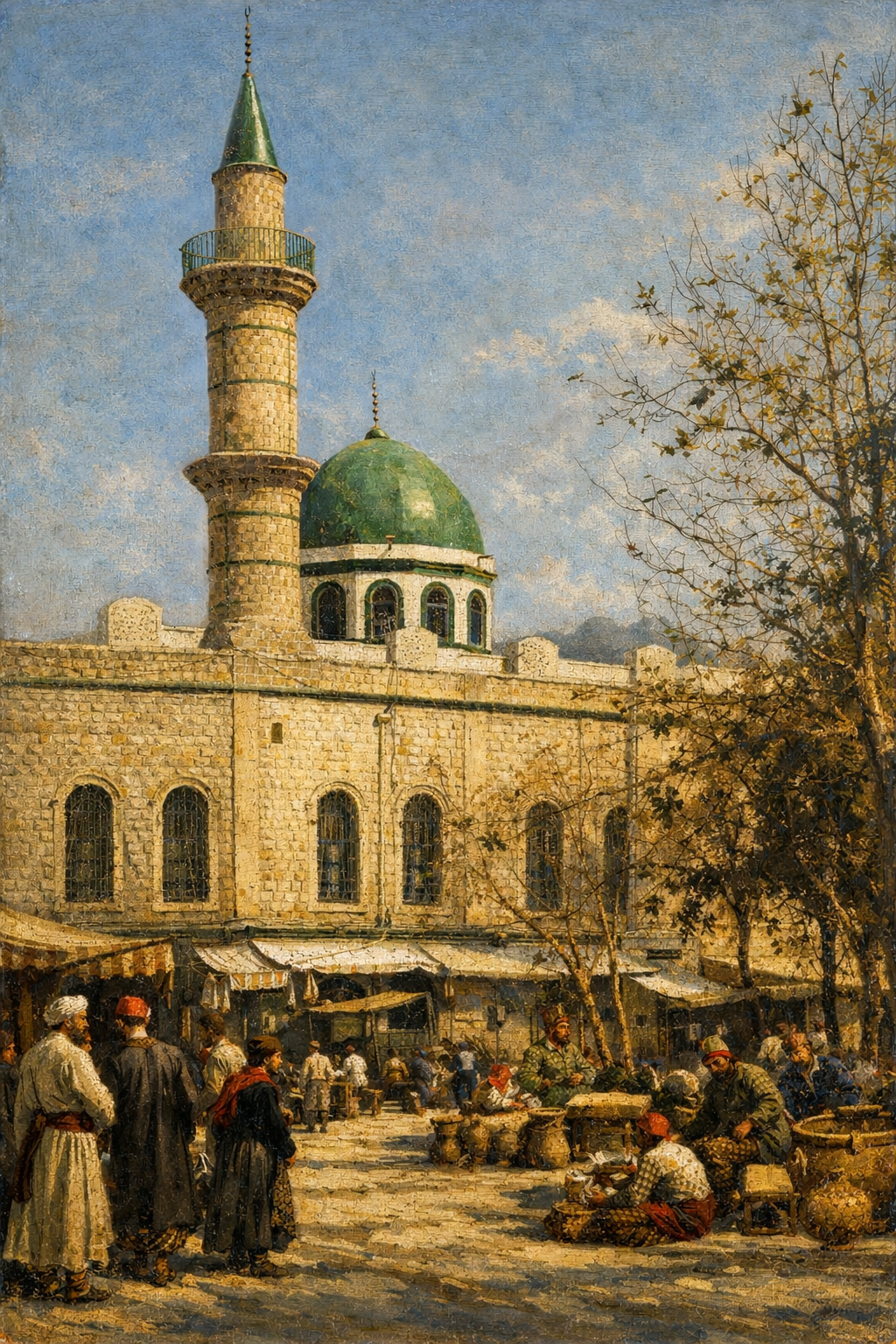
This is Haifa at street level, far from the postcard angles of the terraces and the panoramic lookouts. Neighborhoods like Wadi Nisnas carry this layered feeling where Arab, Jewish, Ottoman, British, and modern Israeli timelines overlap without asking permission. The mosque, likely familiar to locals who pass it daily without lifting their phones, becomes a quiet anchor rather than a spectacle. Markets hum nearby, cafés spill chairs onto sidewalks, conversations switch languages mid-sentence, and nobody seems bothered by the mix because the mix is the point. Haifa doesn’t perform coexistence; it practices it, imperfectly, casually, sometimes stubbornly, but always in plain sight. Standing here, you sense how the city slopes from Mount Carmel down toward the Mediterranean, how gravity and history both pull things together.
Traveling in Haifa often means slowing your pace without planning to. You arrive thinking you’ll check off a few sights, and suddenly you’re lingering, watching light slide across stone façades, listening to the echo of footsteps, noticing how green domes, tiled roofs, and pale limestone coexist without clashing. This scene captures that balance better than any skyline shot ever could. It’s a reminder that Haifa’s real charm lives in these ordinary moments: a bend in the road, a sacred building woven into daily routines, a patch of shade offered by a tree that’s seen it all before. You don’t rush through places like this. You let them sit with you, and somehow, they do.
Leave a Reply