• Skip to main content
  • Skip to secondary menu
  • Skip to footer

Travel Marketing

Travel and Tourism Trends

  • Sponsored Post
  • Travel Event Calendar
  • Travel Market
  • Travel Magazine
  • About
  • Contact

Blending In: How Not to Look Like a Tourist in Lisbon

September 20, 2025 By admin Leave a Comment

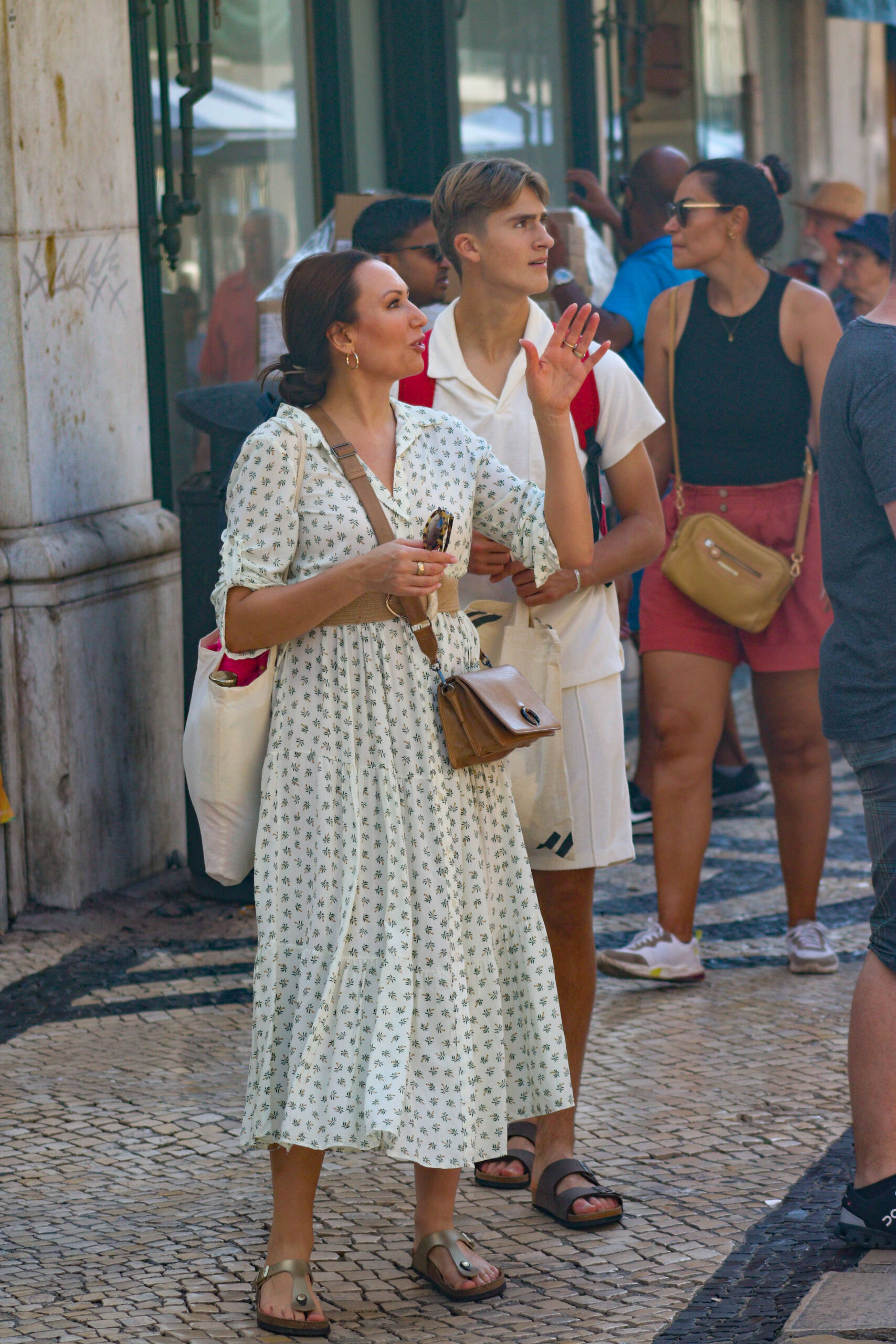
The scene on Rua Augusta is a familiar one: tiled pavements shimmering in the midday light, a slow-moving crowd weaving between cafés and boutiques, and the subtle hum of multiple languages echoing off stone façades. In this photo, a woman in a flowing patterned dress gestures animatedly while a younger companion scans the street ahead. They look engaged, curious, and exactly like what they are—visitors. And while there is no shame in traveling, there is a delicate art in avoiding the telltale markers that make one an easy target for scamsters and pickpockets, especially in European capitals like Lisbon.
Blending In: How Not to Look Like a Tourist in Lisbon

The first rule is to resist over-gesticulating with guidebooks, maps, or phones. Tourists often pause mid-street to point, discuss directions, or snap photos in ways locals rarely would. In the image, the raised hand and absorbed expression read as fascination, but also as distraction—exactly the window petty thieves look for. A quieter way to navigate is to study your route beforehand, duck into a café for recalibration, or use discreet earbuds for audio guides instead of stopping in the middle of a busy pedestrian artery.

Fashion is another subtle signal. Locals in Lisbon, even in the summer heat, rarely wear overtly “practical” outfits designed for all-day wandering. Comfortable sandals are a necessity, yes, but pairing them with understated clothing helps balance function and anonymity. Neutral colors, fabrics that breathe but don’t scream “holiday dress,” and crossbody bags worn forward-facing all help. Notice the small brown crossbody in the photo—it’s well chosen, as it keeps belongings close, though ideally it should rest at the front of the body when in a crowd. Backpacks, especially worn loosely on both shoulders, remain the most obvious beacon to a pickpocket.

Behavior, though, is the strongest giveaway. Locals tend to move with purpose, even if leisurely. Tourists linger, stall, and cluster. The easiest way to sidestep that signal is to adopt a rhythm of walking with intention, even if you’re still figuring out where to go. A confident stride not only reduces unwanted attention but also weaves you more naturally into the city’s flow.

Lisbon rewards those who blend in. Its cafés, tiled alleys, and lookout points are better savored when you feel less conspicuous, less on guard, and more attuned to the city’s cadence. Looking like a local is not about denying you are a traveler—it’s about ensuring your curiosity doesn’t make you vulnerable. And sometimes, the most sophisticated souvenir you can bring home is the ability to move through a foreign city as though you’ve always belonged there.

Filed Under: News

Reader Interactions

Leave a Reply Cancel reply

Your email address will not be published. Required fields are marked *

Footer

Recent Posts

  • St Mark’s Basilica in Venice: The Gold Mosaics Are Dimmer Than the Photographs Suggest
  • China Fines Trip.com $770 Million for Locking Hotels Into Exclusive Deals
  • Château de Monbazillac, Dordogne: A difficult childhood. One château too many.
  • Fora Hits $1 Billion Valuation as AI Transforms the Future of Travel Planning
  • The Open Kitchen Experience: Dining Where You Can Watch the Cooking
  • Holland America Line Adds Flåm and Hellesylt to Five 2027 Norway Fjord Cruises
  • La Cité du Vin, Bordeaux: The Building That Looks Like Wine in a Glass
  • EU Border Delays: ETIAS Pre-Travel Authorization Pushed to Late 2026 as EES Chaos Continues
  • Toledo’s Old Town: A Mudéjar Watchtower Hiding an Antiques Shop
  • Piazza del Duomo, Catania: Where a Black Lava Elephant Guards Sicily’s Baroque Heart

Media Partners

  • Virtual Travel Guide
  • Ancient Rome
The 18th-Century Fountain Hidden Inside Bordeaux’s Customs Museum Courtyard
The Bilbao Effect, 500 Years Early: Jerónimos Monastery And The Guggenheim
Bilbao’s Quiet Renaissance: From Industrial Port to Design Destination
Lisbon’s Seven Hills: A Walking Guide That Tells You the Truth
New Orleans: An American City That Plays by Different Rules
Ha Long Bay Without the Cruise Brochure
Istanbul at the Threshold: A City That Has Always Been Two Things at Once
Iceland’s Ring Road: What the Drive Teaches You That No Photograph Can
Marrakech’s Medina: How to Read a City That Was Not Designed for You
Torres del Paine: What You Are Actually Getting Into
Water Across the Empire: Roman Aqueducts and the Hydraulic Logic of Conquest
The Oath of the Horatii: David's Roman Republic in Paint
Jean-Léon Gérôme: The Victorian Gaze on Rome
Ostia: The Port That Fed Rome
Roman Naval Warfare: The Sea They Called Their Own
The Roman Grain Ship: How Rome Fed Itself Across the Sea
Trajan's Column: Rome's Greatest Comic Strip
Caesarea Maritima: A Roman City Built from Nothing
Damnatio Memoriae: Rome's War on Memory
Faustina the Younger: The Woman Behind the Philosopher Emperor

Media Partners

The Immersive Experience in the Museum World
Japan, China, and Taiwan: A New Triangle of Risk — and a Window of Opportunity for Japan
Ghost Kitchens as Infrastructure: The Shift from Restaurants to Intelligent Food Networks
The Zoom Divide Nobody Saw Coming
The Perfect Budget Content-Creator Kit
Reimagining Prague’s Tourism Future Through Immersive Media and VR Museums
Israel’s Urban Paradox: Tel Aviv Moves, the Rest Stand Still
American Express Global Business Travel (GBTG): Understanding the Business and the Investment Case
Why the Canon R8 Paired With the New RF 45mm f/1.2 Lens Quietly Becomes the Content Creator’s Sweet-Spot
The Future of Travel: A $15.5 Trillion Industry

Copyright © 2026 Travel Marketing

Media Partners: Timey · Publishing House · Ancient Rome · Photography · Calendarial · Transportational