Walking into the central hall of the The Metropolitan Museum of Art always feels slightly unreal, like stepping into a pause rather than a place. The image captures that moment perfectly: the vast, light-soaked space unfolding under a steel-and-glass ceiling that seems to hover rather than rest. Sunlight filters down in clean, wintery sheets, softening the pale stone walls and catching on marble shoulders, bronze lamp posts, and the slow movement of people who instinctively lower their voices here. It’s not silent—far from it—but the sound has weight, a museum murmur made of footsteps, distant conversation, a map unfolding, a bench creaking under someone settling in. You can almost hear it just by looking.
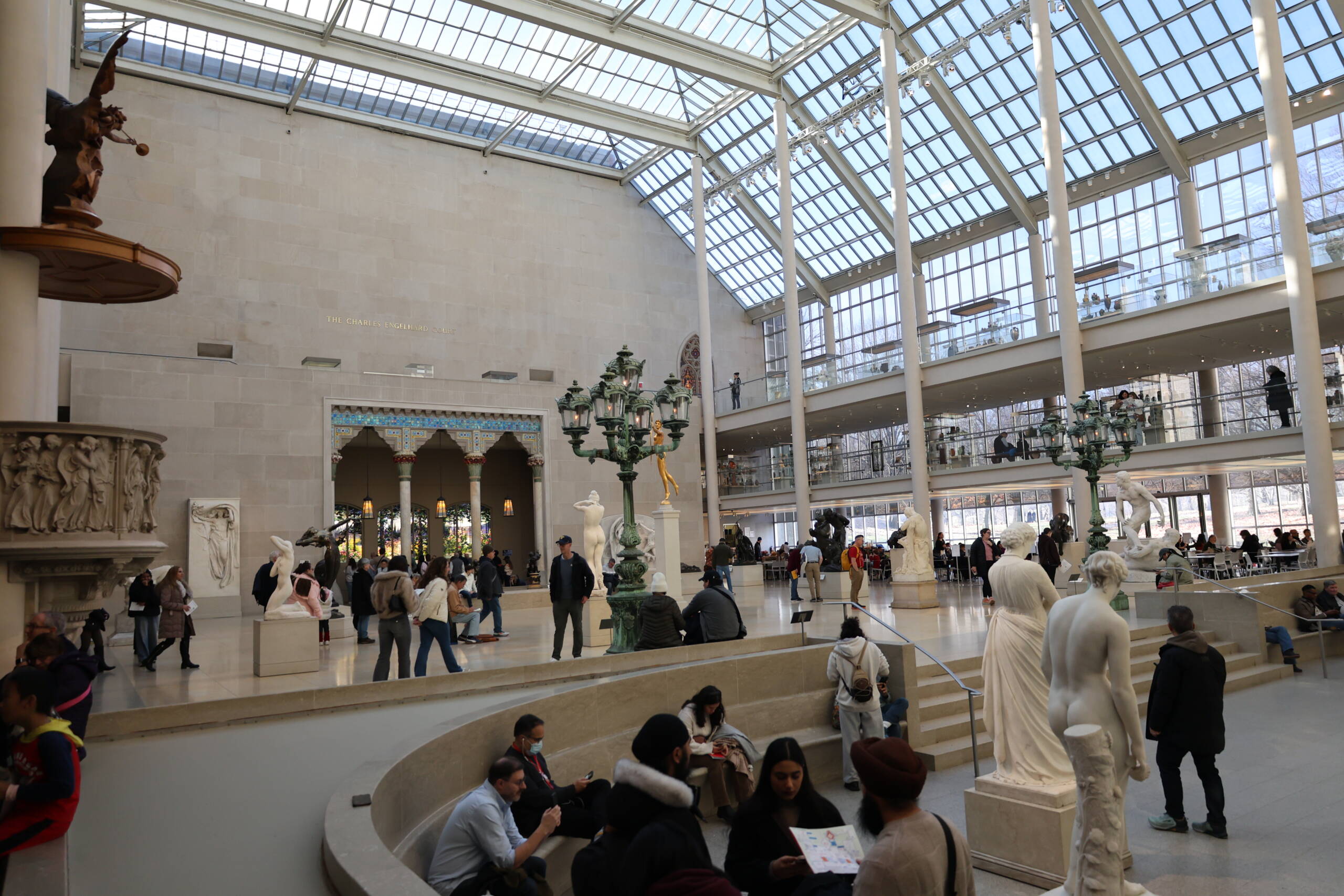
What draws the eye first is scale. The hall is enormous, yet it never feels aggressive. Classical sculptures stand calmly at human height while the architecture does the heavy lifting above them, columns rising cleanly into the grid of the roof. Those ornate green lampposts, decorative and theatrical, feel like survivors from another city altogether—Paris maybe, or a forgotten European square—now improbably planted among ancient gods and modern visitors in hoodies and backpacks. A gilded figure balances high on one of them, catching light in a way that feels deliberately mischievous, as if reminding you that museums don’t have to be solemn all the time. There’s a gentle contradiction everywhere: marble bodies carved for eternity sharing space with people checking their phones, resting their legs, deciding where to go next.
The image also does something subtle that travel photos don’t always manage—it shows the Met as a lived-in place. People sit along the curved stone benches, leaning into conversations or studying folded maps like they’re planning a small expedition rather than a gallery visit. Others drift between statues, half-looking, half-wandering, which honestly feels like the right way to experience this museum. No rush, no checklist, just letting the rooms pull you in unexpected directions. In the background, you can glimpse upper walkways and glass railings, modern insertions that quietly acknowledge the building’s ongoing evolution. The Met isn’t frozen in time; it keeps adapting, stretching, layering centuries the way New York layers neighborhoods.
For a traveler, this moment matters because it captures what the Met does best: it absorbs you without demanding performance. You don’t have to be an art historian or even particularly focused. You can come in from Central Park cold, tired, slightly overstimulated by the city, and let this space recalibrate you. Stand under that roof, feel how small and steady everything becomes, and suddenly New York slows down just enough to breathe. That’s the real souvenir here—not a specific artwork, not even a gallery—but the feeling of being suspended for a while between history and the present, light and stone, motion and pause.
Leave a Reply